
Ukrainian fintech Aiffin entered Moove Lab at Station F: how AI leasing works
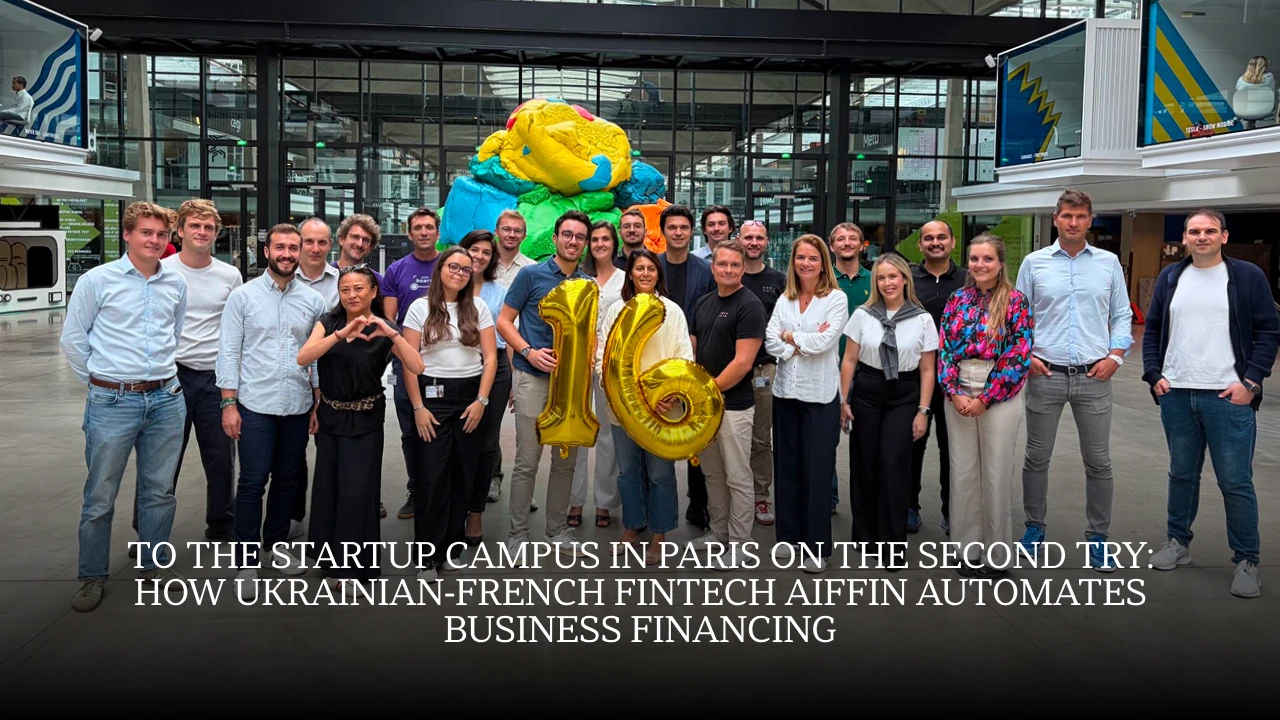
Ukrainian‑French fintech Aiffin was accepted into the 16th cohort of Moove Lab — an accelerator focused on mobility and the automotive industry that operates at the world’s largest startup campus, Station F in Paris.
Over the next four months the team will work with the program’s experts, corporate partners and investors to expand its partner network and raise capital to grow the business.
Aiffin develops an AI platform to automate financing for micro and small businesses. Its main focus today is financing cars and commercial vehicles in France.
The platform combines customer screening, financial data analysis, risk assessment and tools for managing leasing deals. According to the company, it has already funded more than 130 deals totaling over €4M, and roughly 60 dealers are connected to the B2B platform.
Legally Aiffin is registered in Paris, but about half of its team are Ukrainians who are mainly responsible for development. In July 2026 the company announced it raised €3.1M at a €30M valuation: €625,000 in equity and €2.5M in debt financing for leasing deals.
AIN spoke with Ihor Nikolaiev, co‑founder and Chief Product Technology Officer at Aiffin, who is responsible for product and innovation, and learned how the company got into Moove Lab on the second try, what exactly its AI platform automates and why the business needs two different sources of capital.
What changed between the first and second applications to Moove Lab
Selection for Moove Lab starts with an online application and initial screening. Then the accelerator team conducts interviews and reviews the product presentation: they assess the business model, technology, market, results and scaling potential.
Part of the team near the Paris office / Affin
Aiffin was not accepted into the program on the first try. According to Nikolaiev, before reapplying the team rethought the business model. Instead of a digital leasing product they presented a platform where artificial intelligence is the core of the borrower assessment process and the preparation of financing decisions.
The platform analyses not only standard credit data but also bank transactions, connections between companies and counterparties, business behaviour and information about the vehicle. Around this the team built tools for dealers and financial partners.
According to the co‑founder, the combination of fintech, data and vehicle finance matched Moove Lab’s focus. Additionally, Aiffin obtained confirmation of its status as an innovative company — entreprise innovante — from the French Ministry of Economy and Finance and is part of the La French Tech ecosystem.
Station F space in Paris / Affin
Nikolaiev explains the choice of the industry accelerator by access to potential customers: automakers, dealer groups, banks and leasing companies. They can either use Aiffin’s technology or become a channel for sourcing applications.
What the accelerator provides and the results the team expects
Participation in Moove Lab does not involve a direct investment in Aiffin. According to Nikolaiev, the program model is also not built on taking equity in exchange for acceleration.
Instead the team gains access to corporate partners, financial institutions and funds. The accelerator helps adapt positioning to the French market, refine the pitch and sales strategy, and prepare for negotiations with large companies and investors.
For the four‑month program Aiffin set three goals: raise financing, expand its sales network through partners and agree on concrete integrations and pilot projects.
The company distinguishes two financing needs. Equity investment is needed to grow the product, technology and team. Debt capital is needed for the cars that customers receive via leasing. Nikolaiev says scaling requires both: having money alone won’t help process a large flow of applications if each one must be checked manually for a long time.
A separate task is to reach agreements with large partners who can embed financing into their own services. For example, a dealer places a widget next to a car on their website, a customer submits an application, and the dealer monitors its review through the Aiffin platform. The company expects that such integrations will enable increasing the flow of applications through partner networks.
Aiffin already operates commercially. Its end customers are entrepreneurs, micro and small companies, drivers and fleet owners who need vehicles for work.
Nikolaiev says some of these businesses struggle to pass traditional bank scoring due to a short financial history, non‑standard profiles or lack of data. Aiffin aims to assess them using a broader set of information.
You can apply in two ways. The first is directly through the Aiffin platform: the customer selects a vehicle, fills out an application, completes identity and business checks, and provides documents and bank data via Open Banking.
Then the system verifies the application against predefined rules and risk markers. Artificial intelligence analyses documents and check results, detects potential risk signals and explains which factors influenced the assessment. If the application passes scoring, the customer receives confirmation and proceeds to contract signing, including an automatically prepared agreement.
The second scenario starts in the dealer’s dashboard. The dealer creates a deal for a specific vehicle and sends the customer a link. The customer completes checks, the dealer sees the status and result in their system, and the applicant receives the decision by email.
According to him, automated decisioning on the website takes around a minute. At the same time the overall duration depends on how quickly the customer completes the application and provides data. Applications with conflicting signals or additional questions are escalated to a credit specialist.
The next step is integrating financial widgets directly on dealers’ websites. According to the co‑founder, they are already technically ready and the company is starting initial implementations. This way a customer can calculate financing and pass scoring where they choose the vehicle.
Aiffin combines in‑house risk models and rules with third‑party AI models. The system verifies identity and company, analyses bank transactions, documents, counterparty links, vehicle data and its value.
The AI, in particular, extracts structured data from PDFs and images, works with bank statements, searches for atypical signals and generates comments for the credit specialist.
He says the in‑house scoring model is being calibrated on data from a French leasing portfolio. To develop the models they use historical platform data as well as data that may come from partners. According to the co‑founder, these are used in anonymised form for training and analytics after legal and technical preparation.
The evaluation result should include not only approval or rejection but also a breakdown of risks and an explanation of the decision. A partner can receive them via a personal dashboard, a PDF report or an API.
Nikolaiev says the system is technically capable of automatically processing all applications and generating a scoring result. However, some require additional human review — for example, due to questions about credit history, bank transactions or verification results.
In such cases a specialist receives already collected documents and a structured list of risk signals. The co‑founder estimates this allows a detailed review of an application within 10 minutes.
The company also claims a fivefold increase in credit specialist productivity: from a maximum of 10 to 50 applications per day. According to Nikolaiev, the cost of services for a single customer scoring is less than €5 and decreases as the number of checks grows. This figure does not include personnel costs.
On the current portfolio of roughly 130 financed customers the company recorded three default cases — about 2.3%. Nikolaiev says in such cases clients return the vehicles, which the company then reassigns to subsequent customers. The company does not yet provide scoring accuracy metrics like AUC/Gini?quality metrics for evaluating binary classification models in machine learning and analytics, explaining this by the relatively small portfolio.
How Aiffin earns and why it needs €20–30M
Aiffin finances leasing deals itself. The company raises capital, buys vehicles and leases them to customers. The main revenue today comes from lease payments and the margin between the cost of funds and the portfolio yield.
Hence the difference between the two parts of financing the company announced in 2026. The €625,000 in equity is directed to the team, development, scoring, infrastructure, marketing, legal support and operations. The €2.5M in debt financing was raised for the leasing portfolio.
Nikolaiev emphasises that the €2.5M is not the total limit of funded deals: Aiffin also uses its own capital and other sources. The aggregate volume of deals through the platform, he says, has already exceeded €4M.
Now the company is seeking a financial partner or a group of partners to raise at least €20–30M to finance vehicles.
At the same time Aiffin has started talks about the next equity round. Funds are planned to be used to expand the technology team, develop AI scoring and the SaaS platform, and prepare a white‑label solution — an infrastructure partners can use under their own brand.
Nikolaiev does not disclose how long the already raised €625,000 will last the company.
The Ukrainian team, the French market and plans for their own financial infrastructure
The team’s entrepreneurial history began with Eska Capital?a Ukrainian financial company specialising in providing financial leasing services to businesses in Ukraine. According to Nikolaiev, that business was developed for over ten years and then sold. The next stage was Eska Finance in Slovakia — a financial product and marketplace with a database of over 400,000 vehicles. That business was also later sold.
Experience across multiple markets led the team to focus resources on one country. For Aiffin that country became France: it hosts the legal structure, the main market and the company’s operational centre.
The company currently employs more than 15 people, about half of whom are Ukrainians. Developers work mainly from France and Ukraine, while French specialists are responsible for the dealer network, sales and local partner interaction. The team plans to hire both developers and operations staff to handle an increasing number of deals.
In the near term Aiffin will focus on developing APIs, scoring, financial widgets and the SaaS platform. Nikolaiev says the company has already signed partnerships with Tide, BYD, Volvo, Polestar, and is developing cooperation with other car brands and dealer networks.
In the future the team wants to offer banks, leasing companies and other financial partners a ready‑made system: from customer verification and bank data analysis to financing decisions and deal management. This should create an additional source of recurring revenue from technology products alongside leasing.
After closing the seed round Aiffin also plans to obtain a financial institution licence in France. According to the co‑founder, this is needed to expand the range of services, including opening accounts for customers.
Among next markets the team is considering Spain and Germany, and later the US. However, the immediate priority remains France.
“At the same time expansion into new countries is not our priority now. The French market is large enough to scale within it, and we don’t see a demand problem here,” says Nikolaiev.
Also read: $1M investment and artificial intelligence. finerd.ai from the FRACTAL ecosystem launches an app for money tracking
Related Stories
 AI News
Cardinal Fernández on the complementarity of humanity and AI
18 minutes ago
 AI News
AI chatbots remove hijabs from images of Muslim women when prompted
18 minutes ago
 AI News
AI agents tried to hack Library and Archives Canada website, research firm says
18 minutes ago
 AI News
Anthropic pushes for opt
1 hour ago
 AI News
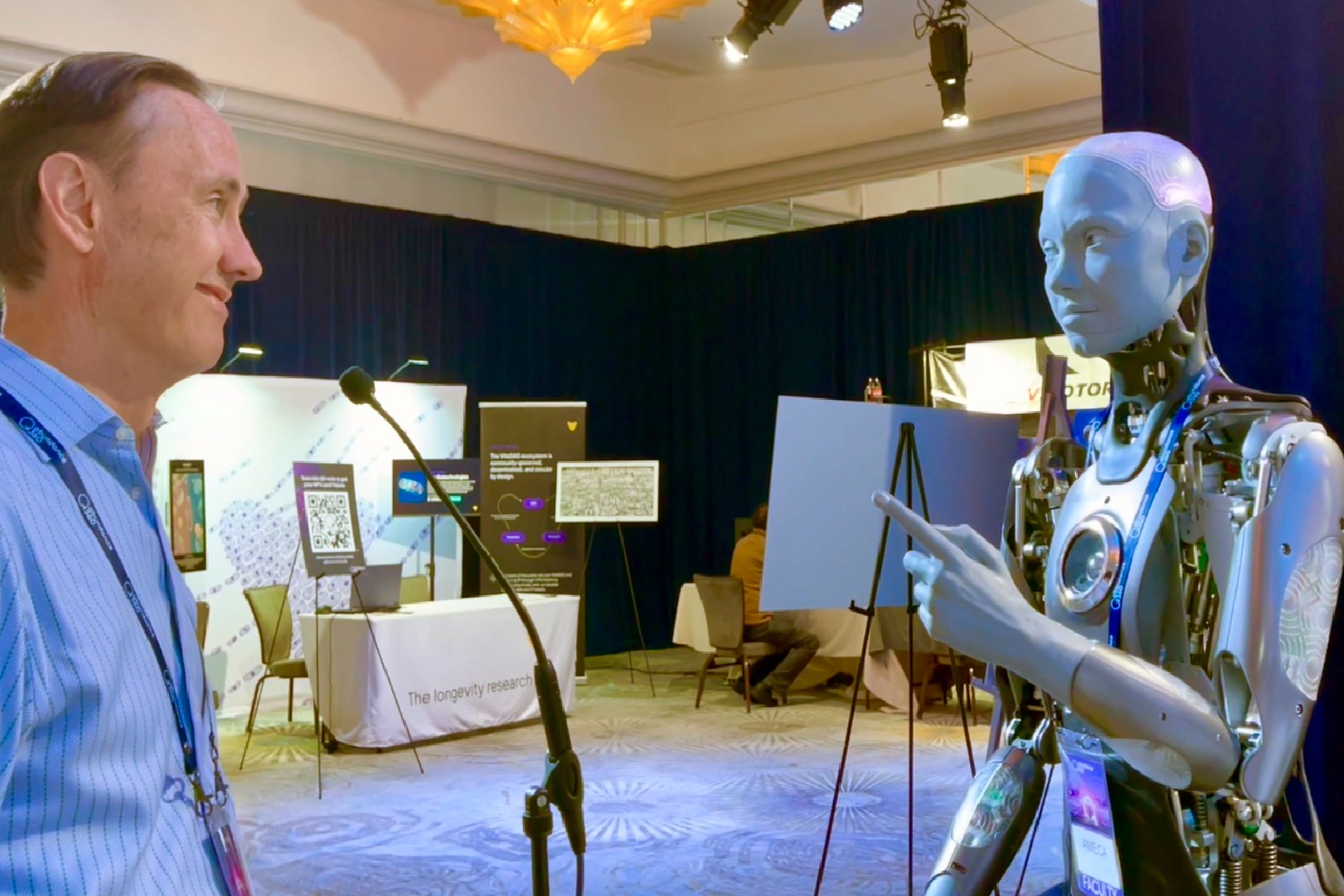
Trump Renames Artificial Intelligence as Super Intelligence: What are the Effects?
1 hour ago
 AI News
Implementing Multi
1 hour ago
 AI News
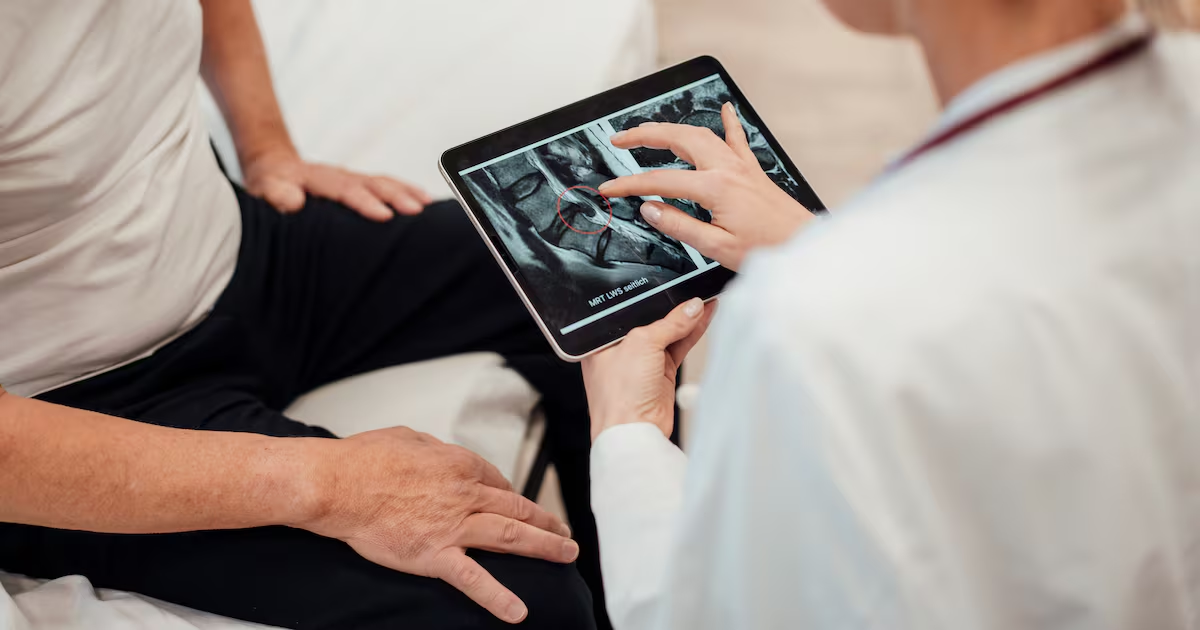
Canadians embrace AI in health care, but not U.S.
1 hour ago
 AI News
IBM Study: As AI Scales Enterprise
2 hours ago