
Trump Renames Artificial Intelligence as Super Intelligence: What are the Effects?
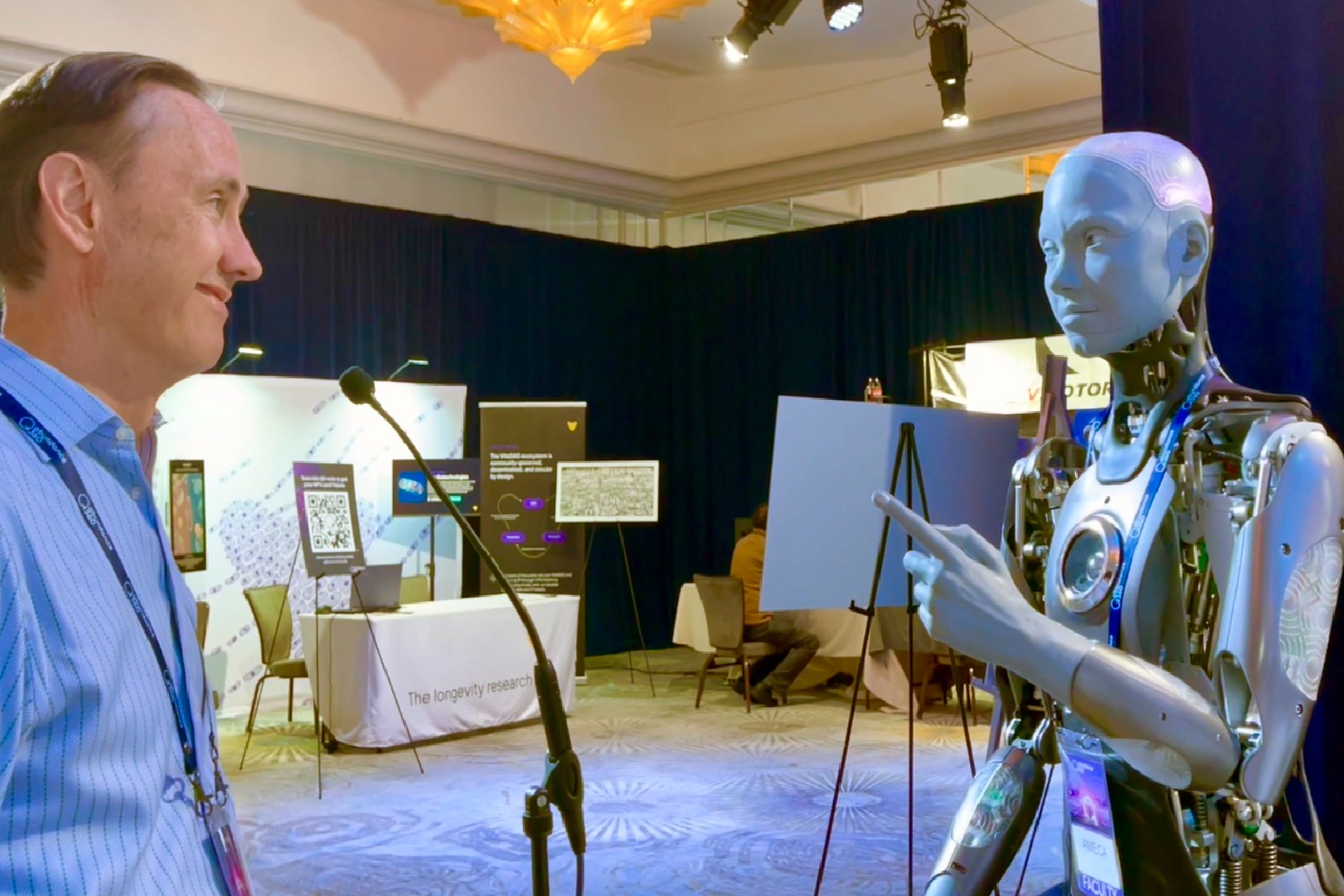
Trump has just renamed artificial intelligence. Artificial intelligence has a new name in the U.S. federal government because President Donald Trump has ordered government agencies to stop using the terms “artificial intelligence” and “AI” and instead refer to the technology as “Super Intelligence” and “SI.”
The change was formalized through an executive order signed by Trump on Sept. 29, 2026, titled “Inaugurating the Era of Super Intelligence.” The order instructs federal departments and agencies to use the new terminology in official correspondence, public communications, websites, reports, policy documents, and other nonstatutory materials.
But despite the sweeping language, the United States has not technically renamed artificial intelligence as a global field of technology. The executive order applies to the federal executive branch, while existing laws and previously issued regulations, contracts, and other documents containing the term “artificial intelligence” remain in place.
The order also gives the White House 60 days to propose a federal definition of “Super Intelligence.”
Trump renames artificial intelligence: Was it his initiative?
The answer is largely yes. Trump publicly proposed changing the name before issuing the executive order. During his Sept. 22 address to the United Nations General Assembly, he said “artificial” made the technology sound fake and announced that U.S. government documents would use “super intelligence” instead. The White House subsequently turned the proposal into official policy.
Trump had also used social media polls to test alternative names, including “Superior Intelligence” and “Extreme Intelligence,” before settling on “Super Intelligence.” The final decision, therefore, originated with the president rather than with an international scientific body or a broad agreement among AI researchers.
The terminology is also significant because “superintelligence” already has a specific meaning in AI research. Philosopher Nick Bostrom, whose work has strongly influenced discussions about advanced AI, defined superintelligence as an intellect that is much smarter than the best human brains across practically every field.
That means the terms are not necessarily interchangeable in technical discussions. “Artificial intelligence” describes a broad family of technologies, while “superintelligence” has generally been used to describe a hypothetical or future level of machine intelligence that substantially exceeds human capabilities.
California chooses a different name
The terminology change has already produced a notable counterexample inside the United States. California Gov. Gavin Newsom signed an executive order on Sept. 30 requiring state agencies to continue using “artificial intelligence” and “AI.” The move came immediately after Trump’s federal order and creates a clear difference between federal and state terminology.
As a result, Americans may now encounter different official names for essentially the same broad category of technology depending on whether they are dealing with the federal government or California.
Colombia has seen political renaming before
The idea of changing the name of a country, institution, or political project to reflect a new vision is not new in Colombia.
One striking historical example involves Tomas Cipriano de Mosquera, who served four times as president. During the civil conflict of the early 1860s, Mosquera officially changed the country’s name from the Confederacion Granadina to the United States of Colombia in 1861. The name was subsequently incorporated into the political order established by the Convention of Rionegro in 1863.
The comparison is not about the substance of the two changes. Colombia’s 19th-century name change accompanied a profound restructuring of the country’s political system, while Trump’s 2026 order is primarily a change in terminology within the U.S. executive branch.
The similarity is the political power of naming. In both cases, a government leader sought to associate an existing reality with a different concept and vocabulary.
For AI, however, the broader world is under no obligation to adopt the new terminology. International organizations, technology companies, researchers, and other governments continue to use “artificial intelligence” as the established term.
For now, “Super Intelligence” is therefore best understood as the official terminology of the Trump administration’s federal government, rather than a universally accepted replacement for artificial intelligence.
See all the latest news from Colombia and the world at ColombiaOne.com. Contact our newsroom to report an update or send your story, photos and videos. Follow ColombiaOne on Google News, Facebook, Instagram, TikTok and subscribe here to our newsletter.
Related Stories
Industry Advocates Testify on Risks of Artificial Intelligence
1 hour ago
 AI News
Rice University launching AI master's program
1 hour ago
 AI News
Pope Leo: the Church needs artists
1 hour ago
 AI News
SuperX AI Technology Limited (SUPX) Stock Price, News, Quote & History
2 hours ago
 AI News
Trump to appoint Jay Clayton as AI czar: report
2 hours ago
 AI News
Maryland Gov. Wes Moore Tees Up State Leaders’ AI Regulation Plan
2 hours ago
 AI News
Executive Order Rebrands AI as “Super Intelligence” and Signals Potential Federal Legislative Changes
2 hours ago
 AI News
As AI Changes the Workplace, CU Denver Prepares Students to Navigate What Comes Next
3 hours ago