
Turkey is turning former Atatürk Airport terminals into massive startup hub: report
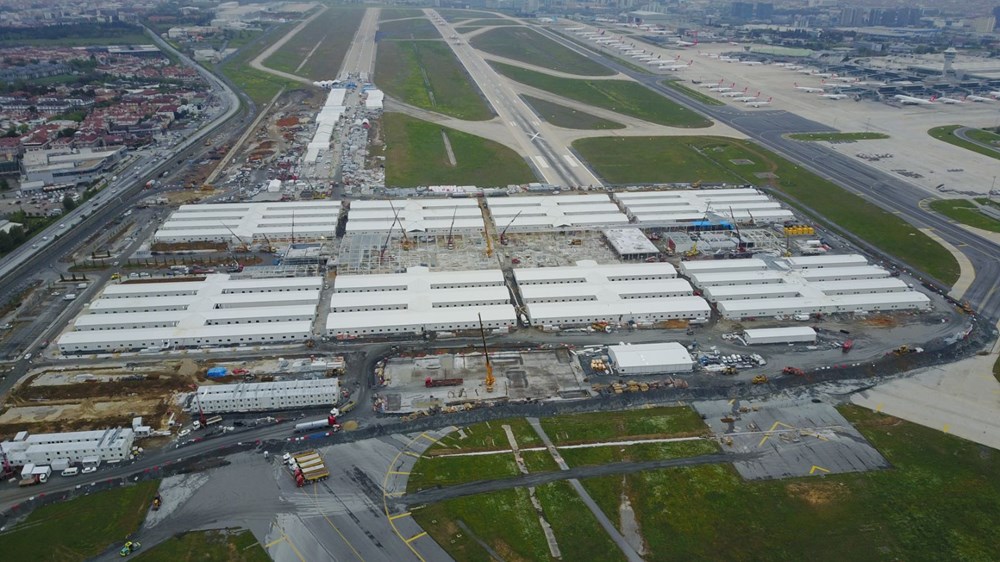
Turkey is converting the former passenger terminals at İstanbul’s Atatürk Airport into a sprawling startup campus that officials say will eventually become the world’s largest entrepreneurship hub, Middle East Eye (MEE) reported.
The project is being developed at the now-closed Atatürk Airport, which served as İstanbul’s main international gateway until commercial passenger operations were transferred to the newly built İstanbul Airport in April 2019 as part of the government’s plan to create a new global aviation hub.
Called Terminal İstanbul, the project will transform approximately 200,000 square meters (2.15 million square feet) of terminal space into offices, incubation centers, co-working areas and meeting facilities for startups, investors and accelerator programs.
MEE, which was granted exclusive access to the site, said the first phase is scheduled to open in August. It will initially provide 5,000 square meters (53,820 square feet) of space for 50 startups and other initiatives, with officials expecting that number to reach 100 by the end of the year.
Erkam Tüzgen, chief executive of Bilişim Vadisi, which is leading the initiative, told MEE that the initiative aims to bring entrepreneurs, investors and international accelerator programs together in an ecosystem designed to help Turkish startups gain access to funding and expand into global markets.
Terminal İstanbul signed a two-year strategic partnership agreement with Techstars İstanbul in December 2025. Under the agreement, Techstars İstanbul will open an office at the complex and run acceleration programs, mentoring initiatives, Startup Weekend events and investor-access programs.
Shanghai state-owned Capital Investment, a Chinese government investment company managing roughly $47 billion in assets, has also agreed to open an office at the site, allowing it to work directly with technology startups seeking investment.
Flat6Labs, a major startup accelerator operating across the Middle East and North Africa, signed an agreement in June to join the project. Venture capital firms Disrupt and Enhance Ventures, Uzbekistan’s UzVC and Saudi Arabia’s Small and Medium Enterprises General Authority, known as Monsha’at, are also in talks to establish a presence there.
The closure of the Atatürk Airport and the demolition of sections of its runways to make way for a public park and a pandemic hospital drew criticism from opposition politicians, urban planners and professional organizations. Critics argued that strategically important aviation infrastructure should have been preserved.
Although scheduled passenger services ended in 2019, Atatürk Airport remains open for limited operations, including general aviation and aircraft maintenance.
MEE reported that Terminal İstanbul has attracted relatively little of the criticism generated by the airport’s closure and runway demolitions, partly because the abandoned terminal buildings had remained without a clear purpose for years.
The government is promoting the project as part of a wider effort to attract foreign entrepreneurs and investment, including businesses that might otherwise choose Gulf commercial centers such as Dubai.
In June, Ankara introduced a tax regime offering exemptions of up to 20 years to certain foreign investors who become residents of Turkey, along with additional tax relief for technology startups.
Tüzgen said parliament is expected to pass legislation allowing companies to be established digitally. Terminal İstanbul also plans to offer a one-stop service center handling immigration, taxation and social security procedures for foreign businesses and their employees.
The airport’s existing VIP terminal would provide another advantage, allowing investors traveling by private jet to land beside the complex, hold meetings and depart without formally entering the country, according to MEE.
Some investors interviewed by the news outlet nevertheless expressed reservations about relocating to Turkey, citing frequent regulatory changes, concerns about the rule of law and the complexity of the country’s immigration system.
Economic conditions could present a further obstacle. Despite tighter monetary and fiscal policies introduced since 2023, Turkey continues to struggle with high inflation, which is expected to remain close to 30 percent at the end of the year.
Project officials say Terminal İstanbul’s size, location, international partnerships and streamlined administrative services could nonetheless help establish İstanbul as a regional technology center capable of competing with Dubai and other global startup hubs.
Related Stories
 Business
Robot factories and hypersonic missiles: JPMorgan Chase’s first $5 billion of defense investments
1 day ago
 Business
Police say a car has hit an Australian lawmaker, critically injuring her; the driver was arrested
1 day ago
 Business
Boomi acquires Israeli startup Elementary for $43 million
1 day ago
 Business
Mega chicken farm expansion plan withdrawn
1 day ago
 Business
Data Breach at Hankyu Hanshin Department Store Common ID System Affects Nearly All 1.26 Million Members
1 day ago
 Business
Global Startup EXPO and Nippon Startup Awards 2026: METI Showcases Japan's Deep
1 day ago
 Business
FANCL and Attenir Suffer Data Breach Affecting 780,000 Customers, Exposing Addresses, Names, Phone Numbers
1 day ago
 Business
DeepSeek Quietly Ships V4.1-Flash
1 day ago