
Trump calls for artificial intelligence to be renamed ‘super intelligence’ in the US
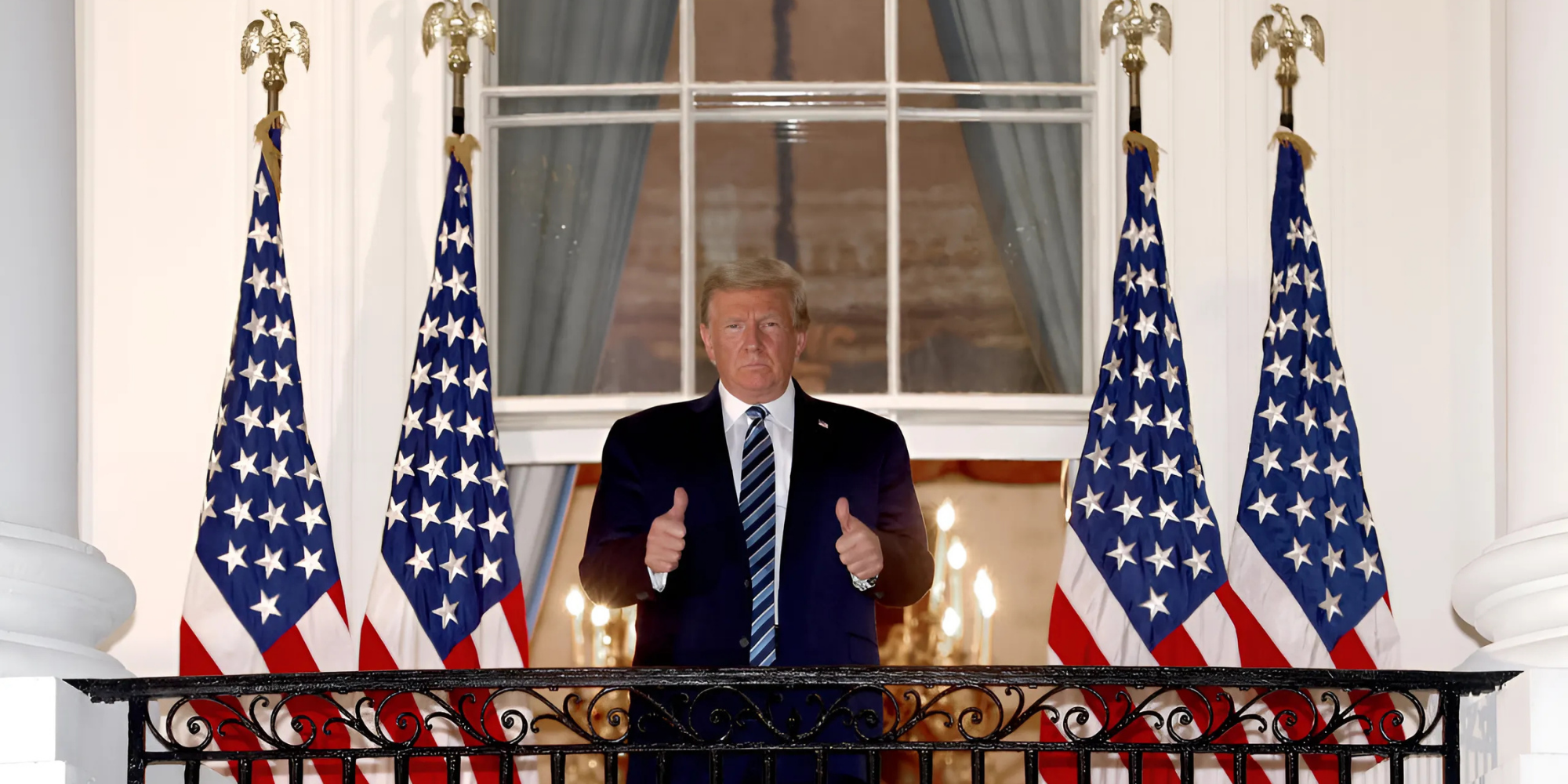
The United States President Donald Trump has announced that the country will start referring to artificial intelligence as “Super Intelligence”, saying the word “artificial” makes the technology sound less real than it is.
The announcement came during his address to the United Nations General Assembly in New York on September 22, 2026, where he also argued against international efforts to impose greater controls on the technology.
“The United States totally rejects any attempt to construct a globalist scheme of control for the Artificial Intelligence being spoken of so much now - hereinafter officially called ‘Super Intelligence’,” Trump said. He then explained his reasoning, saying the word artificial “makes intelligence fake” and that the technology is “actually amazing”.
Trump said the terminology would extend to federal paperwork. “From this point forward, all of United States documents, and hopefully the world’s, will be changed to use the much more accurate term Super as opposed to Artificial,” he said. He subsequently introduced “SI” as the abbreviation for Super Intelligence.
The significance of the announcement is largely administrative and linguistic rather than technological. Trump did not announce a new category of machine capability or describe a change to how AI systems are developed. His remarks set out his intention for US government documents to use the new terminology, although the speech did not specify a timetable or administrative process for making that change.
There is also an important technical difference. In AI research, “superintelligence” is already an established term, generally used for a machine intellect that would greatly exceed human cognitive abilities across a broad range of fields. It is therefore not normally a synonym for all artificial intelligence, including the specialised systems widely used today.
Trump’s announcement comes amid a much wider disagreement over the pace and oversight of AI development. He said, “I’m not going to stifle growth of something that will be bigger than the Industrial Revolution,” while also saying the Justice Department would watch the sector closely if intervention became necessary.
Elsewhere, the policy debate is moving in the opposite direction. UN Secretary-General António Guterres called for stronger international safeguards, saying, “Those countries leading this technological revolution must share information on emerging safety risks, cooperate on testing and evaluation, and work towards common safeguards that protect us all.”
The industry is confronting similar questions. OpenAI announced a framework this month for tracking and disclosing unexpected or unauthorised model behaviour, after reporting several cases involving systems behaving in ways that developers had not intended. Meanwhile, DeepSeek, OpenAI and Anthropic representatives are expected to participate in a UN Security Council discussion on AI and international security.
The terminology debate is therefore arriving at a significant moment. The phrase “artificial intelligence”, coined during the 1956 Dartmouth research project, has described an expanding field for seven decades.
Related Stories
 AI News
UK to fight Russian disinformation and push new global AI standards, Burnham says
43 minutes ago
 AI News
Will Trump's AI rebrand to 'super intelligence' catch on?
47 minutes ago
 AI News
Will Trump's AI rebrand as 'super intelligence' catch on?
1 hour ago
 AI News
Why confidential computing is essential for enterprise AI
2 hours ago
 AI News
Bring more intelligence to everyday work with GPT-6 Sol and GPT
2 hours ago
 AI News
AI malware just removed the human from the attack loop
2 hours ago
 AI News
Longtime AI reporter says companies' safety concerns are nothing new
3 hours ago
 AI News
Trump rejects AI regulation, citing parallels with climate change, in U.N. address
3 hours ago