
Tough choices ahead as the US pushes a global artificial
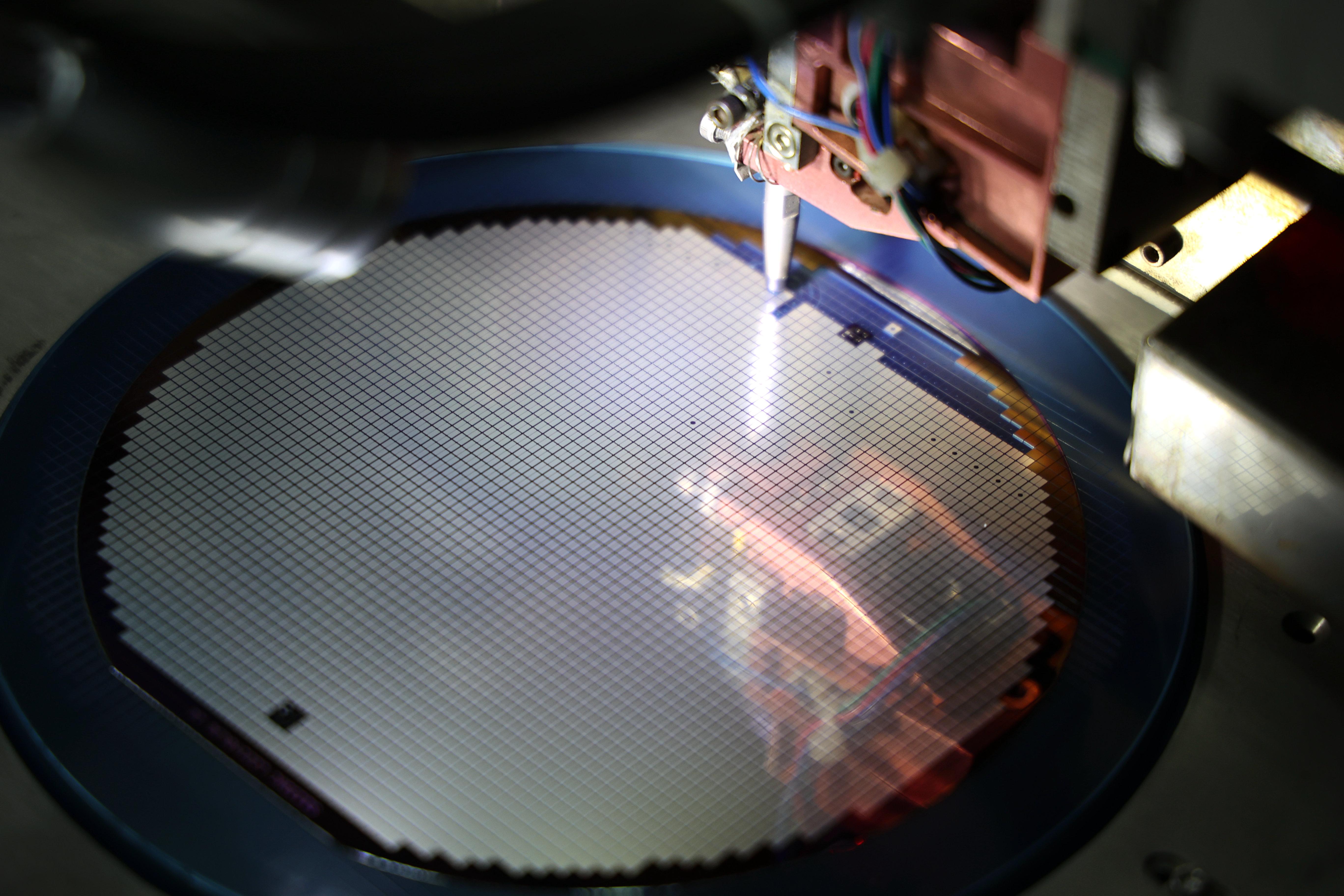
In December 2025, seven countries signed up to Pax Silica, a United States-led coalition intended to secure the supply chains underpinning artificial-intelligence technologies. The goal was safeguarding critical minerals, semiconductors and AI infrastructure; nothing in the declaration said signatories would have to choose between Washington and Beijing. Yet, by August, the US State Department was reportedly telling Pax Silica members and other countries that endorsed an AI Opportunity Statement, that they could not also back “duplicative initiatives” – seen as a swipe at China.
For some countries, such as Pax Silica initial signatory Singapore, this change to the terms of AI engagement with the US is a potential problem. Limitations on Chinese AI models would harm Singapore’s economy. In any case, a choice between US and Chinese models seems impossible.
Open-weight systems, such as China’s DeepSeek, Qwen and Kimi, are downloaded and run worldwide and cannot be recalled. Policing their use would mean watching every developer that runs one. Sanctioning the training of cheaper models on the outputs of stronger models would mean detecting a process that leaves almost no trace. While semiconductors can be counted and exports stopped (though with much leakage), the capabilities of AI models diffuse across borders, and no export regime yet devised can restrain them.
On the hardware needed for AI, a US-China split might be possible if the US continues to reinforce export controls and China continues with its build-up of alternative hardware. The US ability to choke China on hardware nevertheless requires external collaboration, particularly from Taiwan for advanced chips and from the Netherlands for the advanced lithography required for production of high-end chips. The core of Pax Silica is to coordinate such capabilities. This is the stick Washington can wield. And yet, fracturing the hardware layer through such controls will not necessarily stop China’s advance in AI. Instead, it would create two chip ecosystems, two sets of standards and duplicated infrastructure.
While hardware and software are important, another major aspect of the US-China AI race are the standards and rules for AI deployment. China seeks to claim this ground through the World Artificial Intelligence Cooperation Organization (WAICO): a Shanghai-based body pitched to the Global South, offering training, open models and a governance template. The US AI Opportunity Statement – about cooperation and “pro-innovation regulation” – is the US response. It goes beyond the hardware/software focus of Pax Silica into global governance.
For Europe, much is at stake. The European Commission in June 2026 proposed the Cloud and AI Development Act (CADA), conceived to avoid choosing between the US and China. It is an “AI autonomy” bet that would provide for security criteria to be applied to AI services used by the public sector in Europe. Yet in the same month that CADA was proposed, the EU signed the Pax Silica declaration, planting itself in the US camp.
Europe – or at least the Netherlands – is indispensable to one key layer of the AI stack (advanced lithography), so the question is why such leverage is, via Pax Silica, being offered to the US virtually for free. One of the biggest problems of such behaviour is that it accelerates China’s push to replicate Dutch advanced lithography, with potentially major consequences, not only for the company that currently enjoys a monopoly position (ASML), but also for Europe’s leverage versus China.
All in all, in the AI race, the US has decided to push its allies into line, rather than to cultivate and offer incentives, and the early signs do not favour Washington. WAICO has grown from 29 members to 38. If the US seeks to enforce its push for countries to choose sides on AI, while also threatening export controls on its advanced models, more countries may switch to China’s cheaper and more open models – a counterproductive outcome for the US. The question for Europe then, is why choose so early in the game, especially given Europe’s indispensability?
Related Stories
 AI News
Is AI eliminating the first rung of the employment ladder?
44 minutes ago
 AI News
People
45 minutes ago
 AI News
Milan-based Cato raises €6 million to help companies find and win public tenders with AI
1 hour ago
 AI News
Top Tech News Today: AMEC Chips, Claret Capital Funding, Graduate Hiring, Crypto Hack & AI Applications
1 hour ago
 AI News
PayPal reduces Israel workforce as company seeks $1.5 billion in savings
1 hour ago
 AI News
‘No one is prepared for the consequences’: OpenAI chief scientist calls for ‘extreme caution’ over AI’s rapid progress
1 hour ago
 AI News
AI gains should fund growth rather than facilitate job cuts, says executive
1 hour ago
 AI News
The Life Insurance Association will put artificial intelligence (AI) into repetitive and regular tas..
1 hour ago