
Top 15 Fastest Growing Startups in the World (2026)

The fastest growing startup in the world right now is Anduril Industries, the defense technology company founded by Palmer Luckey, which reached a $28 billion valuation in 2024 after securing major U.S. Department of Defense contracts and has continued its steep growth trajectory into 2026. AI infrastructure, defense tech, and climate energy companies dominate the current list of fastest-growing startups by valuation growth and revenue acceleration.
Why This List Matters to Founders and Operators
Tracking the fastest-growing startups is not just a spectator sport. The companies on this list are signaling where capital, talent, and customer demand are concentrating right now.
For founders, each story here contains a replicable pattern: a structural shift in an industry, a defensible technology moat, or a distribution insight that unlocked scale faster than anyone expected. For operators, this list is a map of the competitive pressures heading toward every established sector.
Understanding what drove growth in these companies, whether that is government procurement, enterprise software contracts, or consumer behavior shifts, gives business builders a concrete edge when making product, hiring, and partnership decisions.
The 15 Fastest Growing Startups in the World
Anduril Industries Valuation: $28 billion (2024 funding round); revenue growing triple digits year over year
Anduril Industries builds autonomous defense systems, including drone interceptors and AI-powered surveillance infrastructure, for the U.S. military and its allies. The company raised $1.5 billion in August 2024 at a $14 billion valuation, then saw its implied valuation double through secondary market activity and new contract awards by early 2026.
Its growth is driven by a shift in U.S. defense procurement toward software-first weapons platforms rather than traditional hardware vendors.
Strategic takeaway: Entering a regulated, high-barrier market with a software-first product that existing incumbents cannot quickly replicate is one of the most defensible growth strategies available.
CoreWeave Valuation: $23 billion at IPO (March 2025); revenue approximately $1.9 billion in 2024
CoreWeave is a specialized cloud computing provider that rents GPU (graphics processing unit) clusters to AI companies that need massive amounts of computing power for model training. The company went public on Nasdaq in March 2025 and had grown revenue by more than 700% year over year before its listing.
Its business model is essentially a landlord for AI infrastructure, charging a premium for on-demand access to Nvidia GPU clusters that hyperscale clouds like AWS cannot always supply quickly enough.
Strategic takeaway: When a new technology category creates a supply bottleneck, building the picks-and-shovels infrastructure layer is often faster to revenue than building the end application itself.
xAI Valuation: $50 billion (2024 Series B); active user growth among the fastest in the AI sector
xAI is Elon Musk’s artificial intelligence company, founded in 2023, which develops the Grok large language model integrated into the X (formerly Twitter) social platform. The company raised $6 billion in its Series B round in 2024 at a $24 billion valuation, with subsequent funding pushing its valuation to $50 billion by late 2024.
Distribution through X’s existing user base of hundreds of millions gave xAI a customer acquisition channel that most AI startups would spend years and billions of dollars to build.
Strategic takeaway: Embedding a new product inside an existing platform with a captive user base can compress years of growth into months, particularly when the platform owner controls both the product and the distribution.
Anthropic Valuation: $61 billion (2025 funding); annualized revenue surpassing $1 billion in 2024
Anthropic is an AI safety company founded by former OpenAI researchers that develops the Claude family of large language models. The company crossed $1 billion in annualized revenue in 2024, faster than almost any enterprise software company in history, backed by major investments from Amazon and Google.
Its differentiation as a safety-focused AI lab has resonated with enterprise customers in regulated industries, including finance, healthcare, and legal services.
Strategic takeaway: Positioning a product around a credible constraint (in this case, safety and reliability) that competitors are not emphasizing can open enterprise procurement doors faster than raw capability benchmarks alone.
Oklo Revenue-stage company; stock price grew over 300% in the 12 months following its April 2024 SPAC listing
Oklo is a next-generation nuclear fission company developing small modular reactors (SMRs), compact nuclear power plants designed to be built faster and cheaper than conventional nuclear plants. It went public via a SPAC (special purpose acquisition company) merger in April 2024 and benefited from a surge in demand signals from data center operators seeking carbon-free baseload power for AI workloads.
Oklo has signed letters of intent with multiple large technology companies for future power purchase agreements, validating demand well ahead of its first reactor deployment.
Strategic takeaway: Securing demand commitments in the form of letters of intent or offtake agreements before a product is commercially available is a powerful way to de-risk investor skepticism about long-cycle hardware businesses.
Stripe Valuation: $70 billion (2023-2025 range); revenue estimated above $15 billion in 2024
Stripe is a payments infrastructure company that processes online transactions for businesses of every size, from solo creators to large enterprises like Ford and Amazon. While founded in 2010, Stripe’s revenue growth accelerated dramatically through 2024 and 2025 as e-commerce and software-as-a-service billing continued to expand globally.
The company has delayed its IPO multiple times but remains one of the most valuable private technology companies in the world, with growth rates that still outpace most public fintech competitors.
Strategic takeaway: Building infrastructure that sits underneath other fast-growing industries means your growth compounds with the growth of your entire customer base, not just your own sales motion.
Abridge Valuation: $850 million (2024 Series C); deployed in over 100 U.S. health systems by early 2026
Abridge is an AI-powered clinical documentation company that listens to physician-patient conversations and automatically generates structured medical notes inside electronic health record (EHR) systems. The company raised $150 million in February 2024 at an $850 million valuation and rapidly expanded its footprint across major academic medical centers.
Its integration with Epic, the dominant EHR platform used by most large U.S. hospitals, gave it immediate access to an installed base that would have taken years to reach through direct sales alone.
Strategic takeaway: Partnering with the dominant platform in an industry to distribute your product is often faster and cheaper than building a parallel sales channel, especially in highly regulated sectors with long procurement cycles.
Crusoe Energy Valuation: $2.8 billion (2024 Series D); revenue growing over 200% year over year
Crusoe Energy is a company that builds data centers powered by wasted natural gas, specifically gas that would otherwise be flared (burned off) at oil well sites. Its growth accelerated when AI companies began seeking both affordable and lower-emission computing capacity simultaneously.
Crusoe’s model turns an environmental liability (flared gas) into a productive asset, which gives it an unusual cost structure compared to traditional data center operators.
Strategic takeaway: Finding a use case for a resource that others are literally destroying can create a durable cost advantage that is extremely difficult for well-capitalized competitors to replicate.
Harvey Valuation: $3 billion (2024); annualized revenue run rate exceeding $100 million by late 2024
Harvey is an AI platform built specifically for legal professionals, helping lawyers at major law firms conduct research, draft contracts, and analyze documents. The company scaled to a $100 million annualized revenue run rate faster than almost any B2B (business-to-business) software startup on record.
Its focus on a single high-value professional vertical, rather than a general-purpose AI tool, allowed it to build deep workflow integrations that generic AI products could not easily replicate.
Strategic takeaway: Vertical AI products that integrate deeply into a profession’s specific workflows can command premium pricing and generate stickier retention than horizontal tools that compete on breadth.
Figure AI Valuation: $2.6 billion (early 2024); followed by reported valuation approaching $7 billion in late 2024
Figure AI develops humanoid robots designed to perform physical labor in warehouses, manufacturing facilities, and logistics environments. The company raised $675 million in February 2024 from investors including Microsoft, Nvidia, and OpenAI, and signed a commercial deployment agreement with BMW.
Its approach of targeting a specific, high-cost labor problem in industrial settings gave it a clearer path to revenue than robotics companies pursuing more speculative consumer applications.
Strategic takeaway: Identifying a precise labor cost problem with a quantifiable dollar value per unit makes it significantly easier to sell a hardware product at scale than pitching general-purpose automation.
Vast Valuation in excess of $1 billion (confirmed 2023); commercial space station contracts secured with NASA
Vast is a commercial space station company that won a NASA contract in 2023 to develop Haven-1, the world’s first commercial space station module, set for launch on a SpaceX Falcon 9 rocket. The company’s growth has been driven by NASA’s Commercial Low Earth Orbit Destinations program, which is transitioning astronaut operations away from the International Space Station.
Vast’s positioning as the leading non-SpaceX beneficiary of the commercial space station transition gave it a government revenue anchor that de-risked its otherwise capital-intensive business.
Strategic takeaway: Winning an early government contract in a nascent market can provide the credibility and cash flow needed to attract private customers who otherwise would not risk working with an unproven vendor.
Xaira Therapeutics Valuation and funding: raised $1 billion at launch in April 2024
Xaira Therapeutics is an AI-driven drug discovery company that launched in 2024 with $1 billion in initial funding, one of the largest biotech seed rounds ever recorded. The company uses generative AI models to design novel protein structures and potential drug candidates at a pace that traditional computational biology cannot match.
Its founding team includes researchers from leading AI and structural biology institutions, giving it scientific credibility that typically takes years of publication history to establish.
Strategic takeaway: Combining AI capability with deep domain expertise in a field where errors have life-or-death consequences creates a moat that pure AI generalists cannot easily cross into.
Together AI Valuation: $1.25 billion (2024 Series B); growing developer customer base rapidly
Together AI is a cloud platform that lets developers run, fine-tune, and deploy open-source large language models without managing their own GPU infrastructure. The company raised $106 million in its Series B round in 2024 as demand surged from enterprise teams that needed AI capabilities but could not afford or justify building their own model training infrastructure.
Its focus on open-source model compatibility positioned it as an alternative to proprietary AI APIs from OpenAI and Anthropic, capturing a segment of the market that prefers flexibility and lower lock-in.
Strategic takeaway: Serving the segment of a market that is actively avoiding the dominant vendor is a repeatable go-to-market strategy, particularly when the dominant vendor’s strength (proprietary control) is also its weakness (lock-in risk) for certain buyers.
Waymo (independent growth trajectory) Trips completed: over 150,000 paid robotaxi rides per week reported in late 2024
Waymo is Alphabet’s (Google’s parent company) autonomous vehicle subsidiary, which operates paid robotaxi services in San Francisco, Los Angeles, Austin, and Phoenix. While not an independent startup, it operates as a standalone business unit with its own growth metrics that rival or surpass dedicated AV startups.
Waymo’s weekly paid ride volume grew by more than tenfold between early 2023 and late 2024, making it by far the fastest-scaling commercial autonomous vehicle service in the world.
Strategic takeaway: Remaining in a long development cycle without commercializing too early, and then deploying only after the technology meets a high reliability bar, can produce a steeper growth curve when launch finally happens than iterating publicly through lower-quality early versions.
Terawatt Infrastructure Raised $1.1 billion in debt and equity financing (2024); one of the largest EV charging infrastructure raises globally
Terawatt Infrastructure is a company building large-scale electric vehicle charging depots specifically for commercial fleets, including trucking companies, delivery services, and transit operators. It secured over $1 billion in financing in 2024 to accelerate construction of charging facilities across the United States.
Fleet operators represent a more predictable and higher-volume customer than individual consumer EV drivers, which gives Terawatt a more bankable revenue model for infrastructure-scale financing.
Strategic takeaway: Choosing a B2B customer segment within a consumer-facing trend often unlocks access to larger contract sizes, longer commitments, and infrastructure-grade financing that consumer-focused competitors cannot access.
Comparison Table: Fastest Growing Startups (2026)
| Rank | Company | Category | Key Figure | Notable Milestone | | — | — | — | — | — | | 1 | Anduril Industries | Defense Tech | $28B valuation | Major DoD contracts, autonomous weapons systems | | 2 | CoreWeave | AI Infrastructure | $23B IPO valuation | 700%+ revenue growth pre-IPO, March 2025 listing | | 3 | xAI | AI Models | $50B valuation | Grok model, X platform distribution | | 4 | Anthropic | AI Safety | $61B valuation | $1B+ annualized revenue, Amazon and Google backing | | 5 | Oklo | Nuclear Energy | 300%+ stock growth post-SPAC | SMR developer, data center power agreements | | 6 | Stripe | Payments Infrastructure | $70B valuation | $15B+ estimated 2024 revenue | | 7 | Abridge | Healthcare AI | $850M valuation | 100+ U.S. health systems, Epic integration | | 8 | Crusoe Energy | Climate Tech / Data Centers | $2.8B valuation | 200%+ YoY revenue growth | | 9 | Harvey | Legal AI | $3B valuation | $100M+ annualized revenue run rate | | 10 | Figure AI | Robotics | $7B reported valuation | BMW deployment, $675M raised | | 11 | Vast | Space Tech | $1B+ valuation | NASA Haven-1 contract | | 12 | Xaira Therapeutics | Biotech / AI Drug Discovery | $1B raised at launch | Largest biotech seed round of 2024 | | 13 | Together AI | AI Infrastructure | $1.25B valuation | Open-source model deployment platform | | 14 | Waymo | Autonomous Vehicles | 150,000+ paid rides/week | Fastest-scaling commercial robotaxi service | | 15 | Terawatt Infrastructure | EV Infrastructure | $1.1B financing raised | Commercial fleet EV charging at scale |
Artificial intelligence infrastructure and applications account for the largest share of the fastest-growing startups in 2026. Companies building AI models, AI-powered vertical software, and the GPU computing infrastructure that supports them represent at least seven of the fifteen companies on this list.
Startup growth can be measured by valuation increase, revenue growth rate, user or customer growth, or operational scale metrics such as rides completed or units deployed. This list uses a combination of these signals, prioritizing verifiable figures such as funding round valuations, reported revenue, and publicly disclosed growth rates.
Stripe has been the most consistently cited IPO candidate among major private technology companies. The company has reportedly prepared for public listing multiple times and, at an estimated valuation of $70 billion, would represent one of the largest technology IPOs of the decade if it moves forward.
The majority of the fastest-growing high-valuation startups
Related Stories
 AI News
I’m a father of three who studies the impact of artificial intelligence: this is what parents need to know about AI
22 minutes ago
 AI News
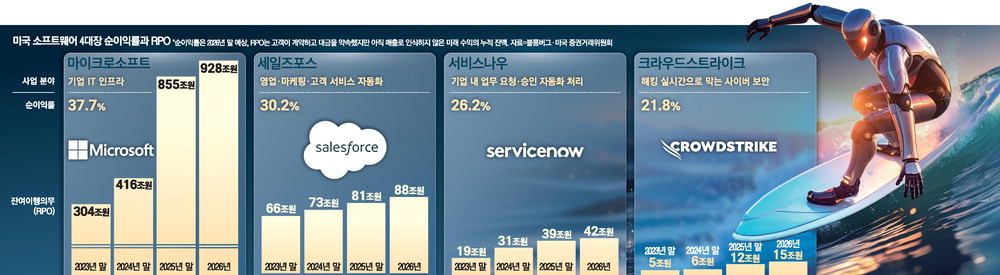
"Artificial intelligence (AI) is saving American software companies, not killing them." The so
1 hour ago
 AI News
Artificial intelligence answers: what is the expected result of the London derby?
1 hour ago
 AI News
Bewildering new tech rules face students across US
1 hour ago
 AI News
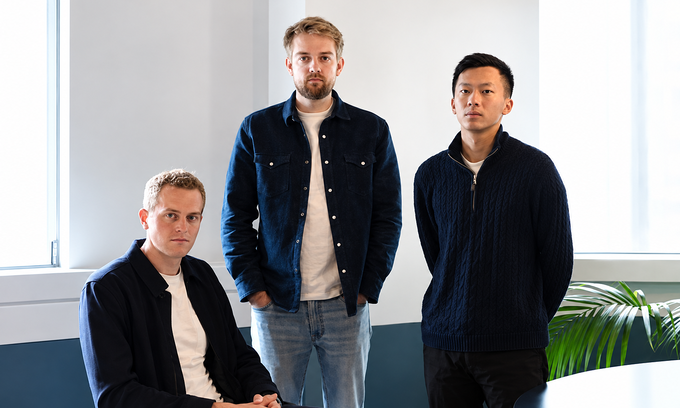
Oxford dropout and two Fluidstack co
2 hours ago
 AI News
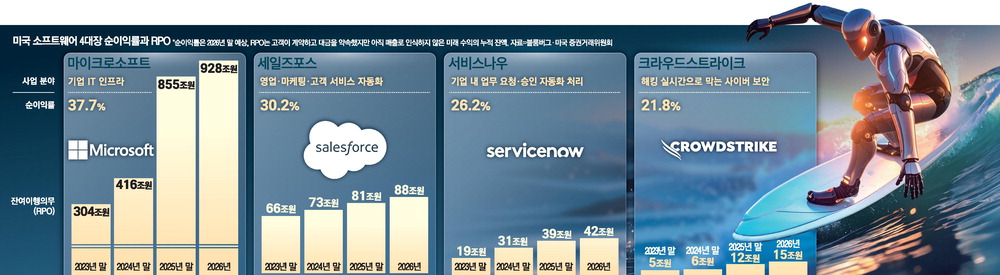
"Artificial intelligence (AI) is saving American software companies, not killing them." The so
2 hours ago
 AI News
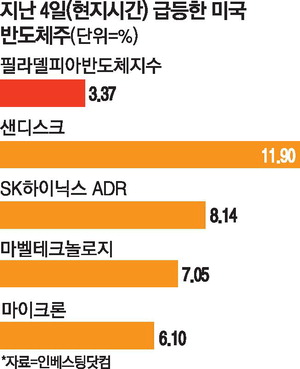
OpenAI's next-generation artificial intelligence (AI) model 'GPT
2 hours ago
 AI News
Miriam Shor Says She Has Never Used ChatGPT: 'Ask How Much Water It Uses Every Time You Use It'
2 hours ago