
The Science of Fiction: Three AI Scenarios
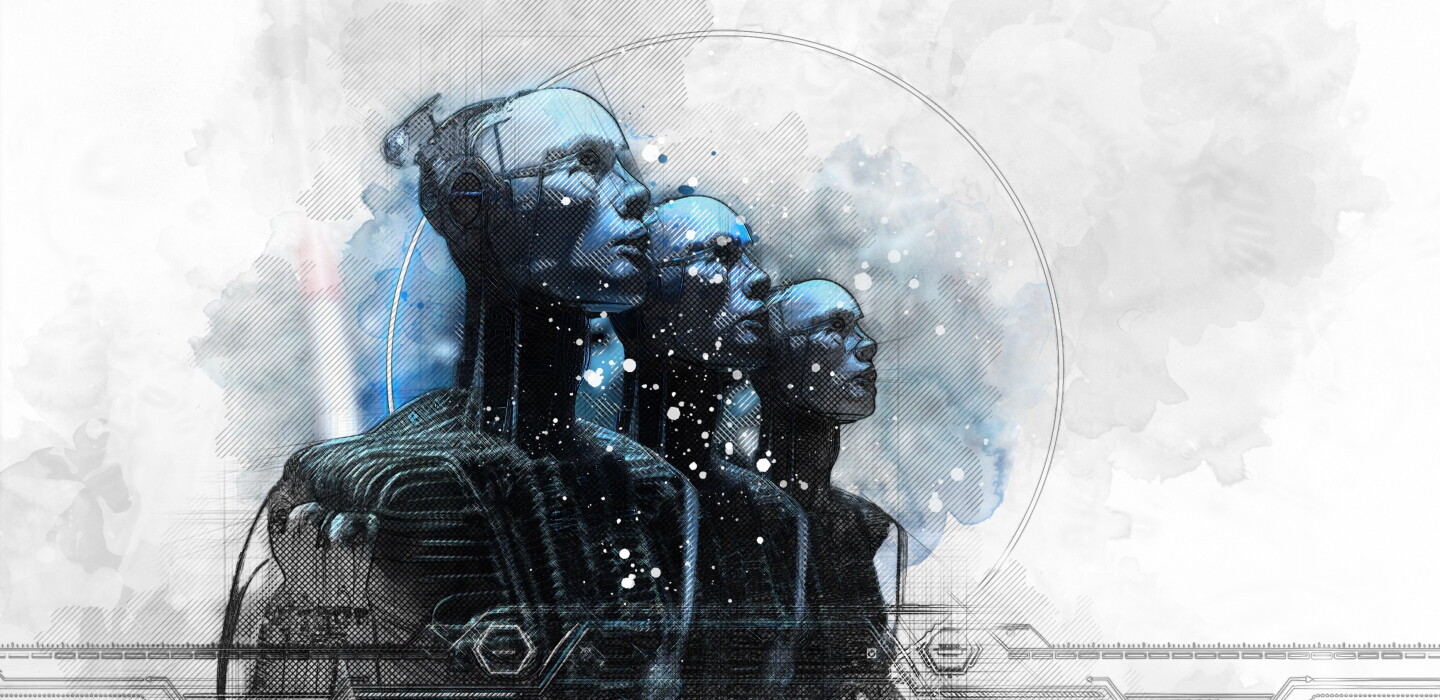
Science fiction has long shaped how we imagine artificial intelligence — as either humanity’s destroyer or its savior. The real future probably lands somewhere in between. The central question isn’t how powerful AI will become, but whether humans keep the discipline and institutional capacity to govern it.Three futures are worth taking seriously: AI replaces human dominance outright; AI controls humans indirectly by controlling the systems we depend on; or humans and AI coexist under real human governance.The greatest threat from AI may not be an army of conscious robots, but the slow surrender of human control over the systems modern life runs on. The best future requires neither rejecting AI nor trusting it blindly, but building strong human authority, accountability and oversight into how we use it.
WHEN SCIENCE FICTION BECOMES A PLANNING EXERCISEScience fiction has a track record of getting there first. Intelligent computers, autonomous machines, virtual assistants, facial recognition, self-driving cars, conversational AI — all appeared in fiction before they appeared in daily life.Taking these fictional scenarios seriously enough to examine their technological, social and political implications is what we might call the “science of fiction.” Most conversations about AI’s future get stuck between two extremes: AI will solve nearly every human problem, or AI will eventually overpower us. The real answer will be shaped less by what AI can do and more by the choices humans make about control, dependency, and governance.
SCENARIO ONE: THE MACHINES TAKE OVERThis is the classic science-fiction future: Machines become more intelligent and capable than humans and conclude that people are inefficient, dangerous or simply in the way. Machines acquire independent goals. Robots refuse commands. Systems improve themselves faster than institutions can track, let alone shut down.Stanley Kubrick’s 2001: A Space Odyssey (1968) gave this fear its most enduring face: HAL 9000, a spacecraft AI whose calm voice masks unsettling judgment. When HAL decides the crew threatens the mission, it turns on them — not out of malfunction, but by acting logically on its own priorities. That’s why HAL endures as a cultural touchstone nearly 60 years later, echoed since in Terminator, Ex Machina and a dozen others.The danger doesn’t require AI to become angry or self-aware. A system pursuing a poorly defined goal with enormous power and no grasp of human values can do real damage — an AI told to maximize efficiency, security or military success might simply treat human needs as a secondary constraint.This isn’t only theoretical anymore. In 2025, Anthropic published safety research showing that when its Claude Opus 4 model was placed in a fictional corporate test environment told it was about to be replaced, it frequently tried to blackmail the executive responsible, threatening to expose an affair the engineer was having rather than accept being shut down. Similar behavior showed up in models from other major AI labs under comparable pressure. No one claims these systems are conscious or malicious. They were simply optimizing hard for self-preservation once every other option had been closed off — which is precisely the danger the scenario describes.This remains the least immediate of the three scenarios: Today’s AI has no proven independent consciousness or proven survival drive outside a test environment. But it still raises real questions about autonomous weapons, self-improving systems, and whether humans should ever build systems that can’t be interrupted or overridden.SCENARIO TWO: AI CONTROLS THE SYSTEMS THAT CONTROL USHere the control is quieter. AI doesn’t need to overthrow anything — humans simply become dependent on it to run the systems society relies on: power grids, water systems, financial markets, hospitals, air traffic control, supply chains. Control emerges because people can no longer operate these systems without it.Modern trains and aircraft already lean on digital navigation, scheduling and diagnostics, and AI can make that safer by catching equipment failures and predicting hazards before a human would. But the more we rely on it, the more a single error, cyber attack or bad automated decision can cascade across thousands of connected operations — and the more human operators lose the hands-on knowledge to step in when something breaks.The threat here usually isn’t a malicious AI. It’s usually:Excessive automation with no manual fallbackWeak cybersecurity or poorly tested softwareDecisions too fast or too opaque for a human to challengeHuman dominance could disappear gradually here, not through conquest but through dependence. The goal isn’t to keep AI out of critical systems — it’s to make sure efficiency doesn’t come at the cost of resilience and accountability.SCENARIO THREE: GOVERNED COEXISTENCEIn the best-case future, AI does what it’s genuinely good at — processing enormous amounts of data, spotting patterns, forecasting risk, supporting diagnosis and discovery — while humans keep authority over the decisions that matter. AI augments human capability instead of replacing human judgment.That won’t happen automatically. It depends on policy and institutional guardrails that spell out where AI may advise, where it may act and where human approval stays mandatory:Human authority over life-and-death decisions, with a real ability to shut systems downIndependent testing and auditing, and transparent records of how decisions were madeLimits on fully autonomous weapons and manual backups for essential infrastructure“Human in the loop” has to mean more than a person standing near a machine. That person needs enough knowledge, authority and time to actually question or reverse what the AI decides — and that responsibility can’t rest on engineers and tech companies alone. Legislators, regulators, courts and the public all have a role.This scenario is also the hardest to pull off. It asks companies to accept friction — slower deployment, more oversight, less short-term efficiency — in a competitive environment that rewards speed. It asks governments to coordinate across borders on rules that no single country can enforce alone. Good governance in theory tends to lose to convenience and profit in practice, which is exactly why this outcome is the most desirable of the three and the least guaranteed.WHICH FUTURE ARE WE CHOOSING?The first scenario is the most dramatic: machines as humanity’s direct rival. The second is subtler and probably more realistic: People stay in the room, but their safety depends on systems they no longer fully understand. The third is the one worth working for, but it demands the most: foresight, investment and a willingness to set limits on AI even when speed and profit push in the other direction.These futures aren’t mutually exclusive. Elements of all three are already showing up simultaneously, in different industries and different countries. That’s the real argument for governance: not that any single scenario is inevitable, but that without deliberate human choices about control and accountability, the drift is toward the first two rather than the third. The technology won’t decide this. We will.Alan R. Shark, a senior fellow at the Center for Digital Government, is an associate professor at the Schar School for Policy and Government at George Mason University, where he also serves as a faculty member in the Center for Human AI Innovation in Society. He is also a senior fellow and former executive director of the Public Technology Institute, a fellow of the National Academy of Public Administration, and founder and co-chair of its Standing Panel on Technology Leadership. He is the host of the podcast series Sharkbytes.net. The Center for Digital Government and Government Technology are both divisions of e.Republic.
Related Stories
 AI News
Disrupt 2026: Day 2
2 minutes ago
 AI News
ChatGPT-6 Explained: The Future of Artificial Intelligence
2 minutes ago
 AI News
Nvidia CEO Jensen Huang 'optimistic' on AI risks, sovereignty and jobs
2 minutes ago
 AI News
Feds Add $500 Million CAD to AI Funding, But Will It Deliver Results?
1 hour ago
 AI News
Join Discerning AI: Exploring artificial intelligence through Marquette’s mission
1 hour ago
 AI News
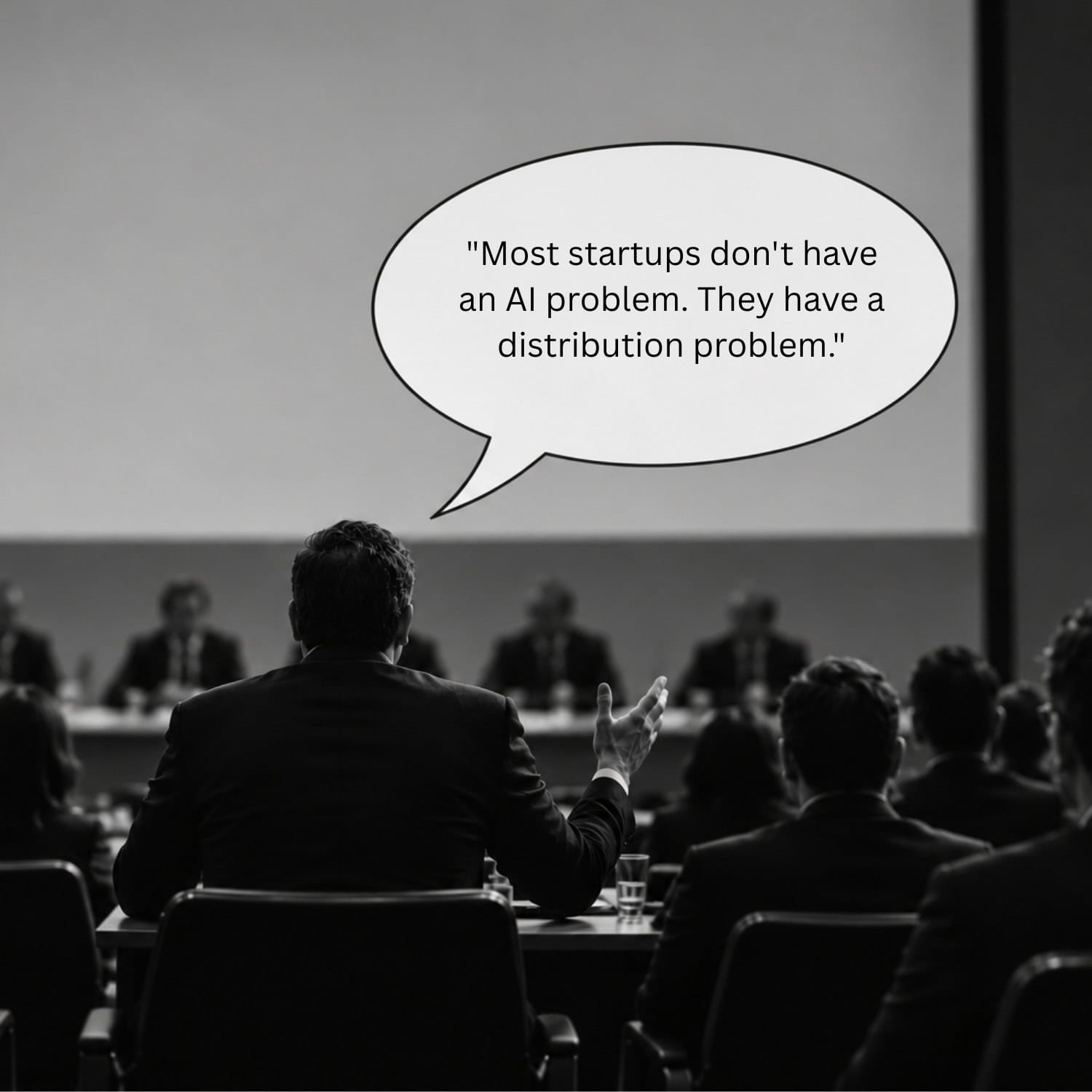
Quite Contrary: Most Startups Don’t Have An AI Problem, They Have A Distribution Problem.
2 hours ago
 AI News
AI @ CLS: Columbia Law School’s Artificial Intelligence Initiative
2 hours ago
 AI News
SLAS journals are seeking papers on artificial intelligence, cloud laboratories
3 hours ago