
The G7, Pope Leo XIV, Trump And The Battle To Govern Artificial Intelligence
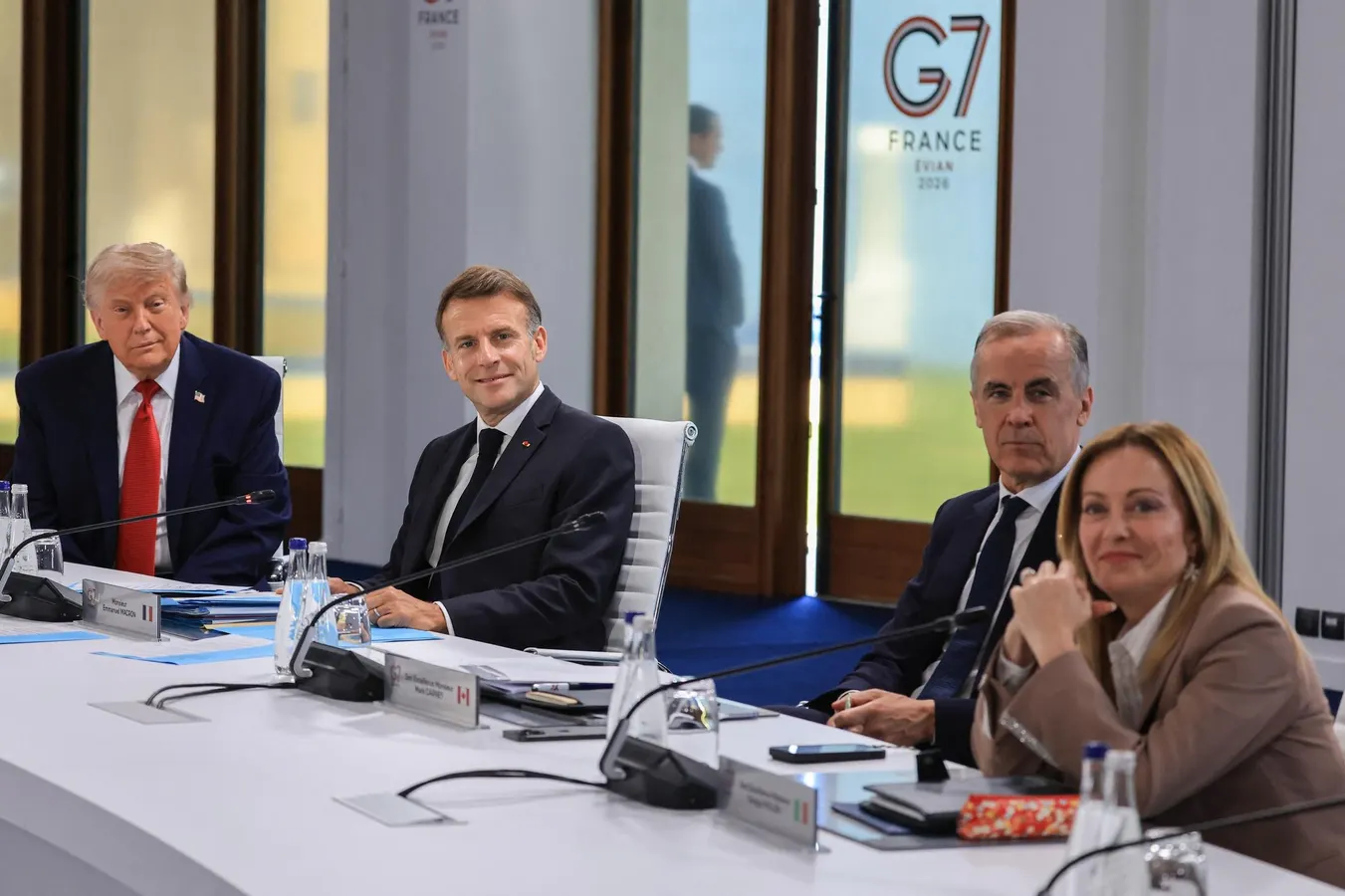
When world leaders gathered in Évian, France, for the 2026 G7 Summit, artificial intelligence stood alongside trade, national security and geopolitics as one of the defining issues on the agenda. Equally telling was the presence of leaders from some of the world's most influential AI companies. Artificial intelligence is no longer simply a technological breakthrough or a commercial opportunity. It has become a strategic issue worthy of discussion at the highest levels of international diplomacy.
Just weeks earlier, Pope Leo XIV had elevated artificial intelligence as one of the defining moral challenges of our generation, arguing that technological progress must never come at the expense of human dignity or moral responsibility. Across the Atlantic, the Trump administration has pursued a markedly different approach, issuing executive actions designed to accelerate American leadership in artificial intelligence by removing barriers to innovation and strengthening the nation's competitive position.
Taken together, these developments reveal something much larger. The battle to govern artificial intelligence has already begun. Unlike previous technological revolutions, however, this battle is not being fought solely among governments. For perhaps the first time in modern history, a transformative technology is being shaped simultaneously by political leaders, technology companies, religious institutions, national security strategists and geopolitical rivals. Each brings a different source of authority, expertise and influence, yet none possesses sufficient legitimacy or capability to govern artificial intelligence alone.
That reality should matter to every business leader because the outcome will shape far more than technology. It will influence economic competitiveness, national security, cybersecurity, military power and perhaps most importantly, how much authority society is willing to delegate to increasingly autonomous machines.
Artificial Intelligence Has Become A Matter Of Statecraft
The discussions in Évian demonstrated just how dramatically the role of artificial intelligence has evolved. Only a few years ago, AI was viewed primarily as an emerging commercial technology capable of increasing productivity and creating new business opportunities. Today, democratic governments increasingly recognize artificial intelligence as strategic infrastructure with direct implications for national security, economic resilience, critical infrastructure and geopolitical influence.
The G7's emphasis on trustworthy AI, secure deployment and international cooperation reflects a broader recognition that the race for artificial intelligence is no longer measured solely by innovation. It is also measured by trust. Democracies are attempting to establish governance frameworks that encourage innovation while preserving transparency, accountability and resilience against increasingly sophisticated cyber threats.
Equally significant was the role played by Silicon Valley. The participation of frontier AI companies underscored a profound shift in the relationship between governments and industry. Technology companies are no longer simply building products that governments later regulate. They are helping shape technologies that governments increasingly depend upon for economic growth, military readiness, scientific advancement and cyber defense. In many respects, the engineers building frontier AI models understand the capabilities and limitations of these systems better than the policymakers attempting to govern them. That reality makes collaboration essential, but it also raises difficult questions about accountability and influence.
Five Centers Of Power Are Emerging
The public debate surrounding artificial intelligence is often framed as a contest between innovation and regulation. That framing oversimplifies what is actually taking place. Five distinct centers of power are emerging, each attempting to shape the future of artificial intelligence according to fundamentally different priorities.
The first is political authority. Governments seek to protect democratic institutions, preserve economic competitiveness and establish international norms that allow artificial intelligence to flourish without creating unacceptable risks. The G7 represents that effort.
The second is technological authority. Silicon Valley has become something history has rarely witnessed: a collection of private companies whose decisions increasingly influence national security, global economics and international diplomacy. Organizations such as OpenAI, Google DeepMind, Anthropic, Microsoft, Palantir and NVIDIA are not simply developing software. They are defining the capabilities, safety mechanisms and deployment models of technologies that may shape society for generations.
The third is moral authority, represented most visibly by Pope Leo XIV and the Vatican.
At first glance, it may seem unusual that one of the world's oldest institutions has become one of the most vocal participants in one of the world's newest technologies. History suggests precisely the opposite. The Vatican rarely intervenes extensively in technological debates unless it believes technology fundamentally changes the human condition. The Industrial Revolution prompted Pope Leo XIII's Rerum Novarum, reshaping Catholic social teaching around labor, capital and human dignity. The nuclear age transformed papal teaching on war and peace. Biotechnology generated decades of ethical guidance surrounding genetic engineering and the beginning of human life. Artificial intelligence has now joined that remarkably short list.
Pope Leo XIV is not debating algorithms or software architectures. He is asking whether humanity is approaching a point where moral judgment, accountability and human agency are gradually being delegated to increasingly autonomous machines. Whether one agrees with the Church's conclusions is ultimately less important than recognizing the significance of its engagement. Institutions that have existed for nearly two thousand years tend to think in centuries, not product cycles.
The fourth center of power is national strategy. President Trump's approach reflects the belief that leadership in artificial intelligence has become inseparable from economic strength, military superiority and geopolitical influence. From that perspective, slowing American innovation does not simply affect the technology sector. It affects national competitiveness.
The fifth center of influence consists of America's adversaries. China, Russia, Iran, North Korea and sophisticated cybercriminal organizations are advancing artificial intelligence with very different priorities. They are integrating AI into cyber operations, military modernization, intelligence collection and influence campaigns with little regard for the governance debates occurring throughout the democratic world. While democracies work to establish guardrails, strategic competitors continue accelerating their capabilities.
Cybersecurity Is Where These Worlds Collide
These five centers of influence converge in one place: cybersecurity. Artificial intelligence is already transforming how organizations defend themselves. Security teams increasingly rely on AI to detect anomalous behavior, identify vulnerabilities, analyze malware and accelerate incident response. These capabilities are enabling defenders to process enormous quantities of information and respond to attacks at machine speed.
Unfortunately, adversaries are achieving many of the same advantages. Artificial intelligence is enabling attackers to automate reconnaissance, generate increasingly convincing phishing campaigns, identify software vulnerabilities more quickly and create more sophisticated malware. For perhaps the first time in the history of computing, both defenders and attackers are experiencing technological acceleration simultaneously.
The next phase will prove even more consequential. Agentic AI promises systems capable of planning, reasoning and executing increasingly complex tasks with limited human intervention. Future cybersecurity platforms will not simply recommend defensive actions. They will isolate compromised systems, modify network configurations, coordinate enterprise-wide responses and increasingly make operational decisions on behalf of human operators.
That evolution exposes the central governance challenge of the AI era. Questions that once belonged almost exclusively to engineers and security architects are rapidly becoming boardroom, legal and public policy issues, including:
These are no longer simply technical questions. They are questions of governance, public policy and ultimately, trust.
The Race To Build AI Is Becoming The Race To Govern It
History occasionally reaches moments when existing institutions struggle to keep pace with transformative technology. Aviation, nuclear technology and the internet each required governments, industry and society to establish entirely new governance frameworks. Artificial intelligence now demands a similar effort, but at a speed unlike anything humanity has previously experienced.
The debate over AI is often described as a choice between innovation and regulation. That is the wrong debate. The real challenge is governance. Who establishes the rules? Who defines acceptable risk? Who determines when machines should act independently? And who ensures that technological progress strengthens rather than weakens the societies it is intended to serve?
Those questions will not be answered by a single G7 summit, a presidential executive order or a papal declaration. They will be answered over the coming decade through collaboration, competition and inevitable tension among governments, technology companies, moral institutions and security leaders. The race to build artificial intelligence may define the next decade but the race to govern it may define the century.
Related Stories
 AI News
World Cup fans react to Canada's loss against Switzerland
16 minutes ago
 AI News
Wayward dock and boats found 300 km downstream from Edmonton
16 minutes ago
 AI News
Florida Walmart employee arrested after winning lottery ticket allegedly stolen
16 minutes ago
 AI News
UWindsor hits new heights in QS World rankings
16 minutes ago
 AI News
Trump's D.C. reflecting pool is the butt of online jokes. What happened?
17 minutes ago
 AI News
Canada spat leads India newspapers as trade minister works to reassure business
17 minutes ago
 AI News
'Not everything is about politics': Padma Shri Anil Kumar Rastogi explains why he didn't shake hands with...
17 minutes ago
 AI News
Maple Ridge’s Franklin named to Canada Cup team
17 minutes ago