
'The film of the year': Critics rave about Nathan Fielder's 'masterpiece' Elizabeth Holmes documentary
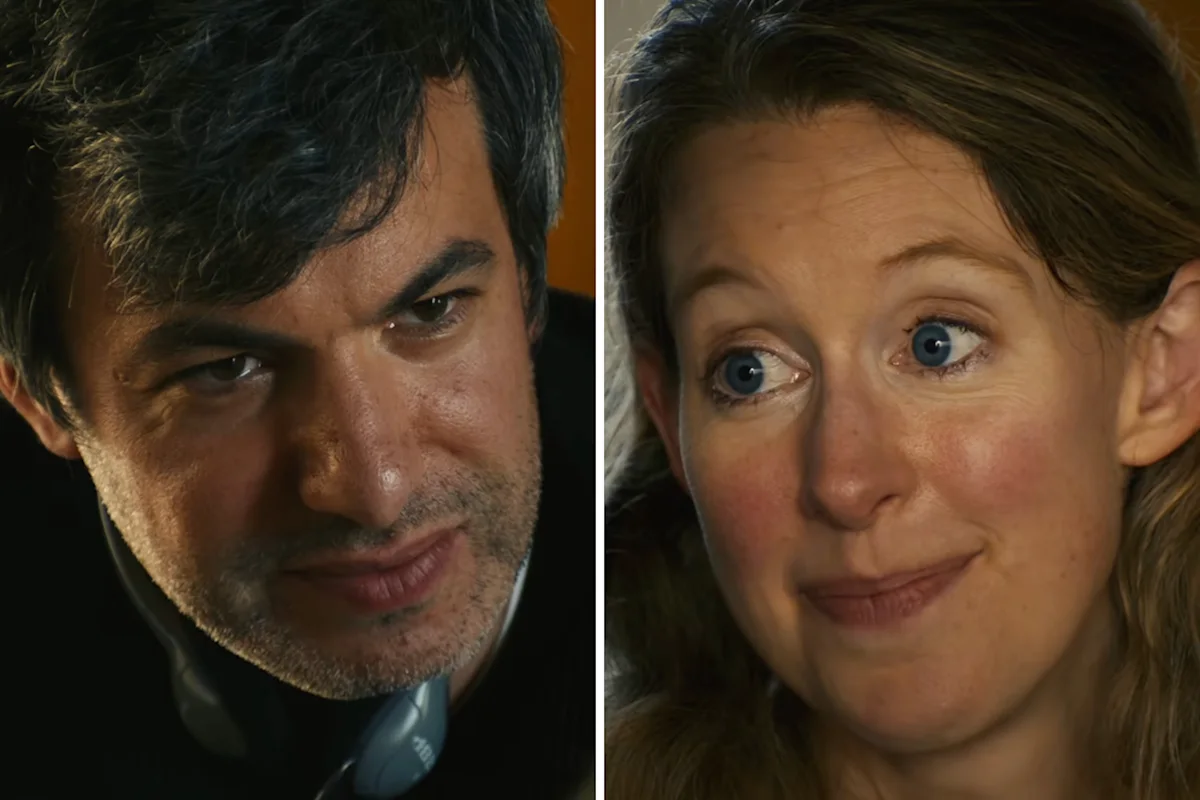
Nathan Fielder's documentary about Elizabeth Holmes arrives in theaters Friday, and some critics are already calling it one of the year's best movies — and one of the greatest documentaries ever.
You Can See Everything follows the Theranos founder in the weeks leading up to her 2023 imprisonment and the years that followed, after she was convicted of defrauding investors in her blood-testing startup.
The documentary was made largely in secret over a period of nearly four years, with its existence only revealed when it premiered at a surprise screening at the Telluride Film Festival in September.
Fielder, best known for the TV shows Nathan for You and The Rehearsal, has built a career around awkward encounters and elaborate social experiments. The new film was codirected by Lance Oppenheim, who made the recent Robert Pattinson movie Primetime.
Oppenheim has been reluctant to reveal much about the film ahead of its release, telling People, "I don't want to say anything that can skew people's perception of it because I feel like it's one of those movies that the more clean slate you are, the better."
While the documentary has received overwhelmingly positive reviews, critics haven't agreed on everything. Here's what they liked about You Can See Everything — and where they felt it fell short.
What did critics like about 'You Can See Everything'?
🍅 Rotten Tomatoes score: 100%
You Can See Everything has received near-universal praise, making it one of the year's best-reviewed movies so far.
The Daily Beast called the film an "all-time great mind-melter," with its critic Nick Schager adding, "It's not just the film of the year — it's a documentary that stands shoulder-to-shoulder with the form's all-time greats." Similarly, Vulture called it "the movie of the year" and suggested Holmes was "one of the greatest doc subjects of all time."
The Guardian's five-star review hailed the movie as a "modern masterpiece of deceit" that lives up to the hype, adding that it is "somehow more shocking, twistier, thornier and revealing than billed."
Fielder (left) directed the movie with Primetime filmmaker Lance Oppenheim.
Fielder is known for blurring the lines between reality and performance, and other reviews suggest the film takes a similarly unconventional approach. Variety called it "just about the furthest thing from a 'pure' documentary you've ever seen," while the Los Angeles Times said it was "far stranger than a conventional documentary."
TheWrap argued that the film "uncovers complex new layers to the Holmes saga," while Deadline's critic, Pete Hammond, said it was "unlike any I have ever seen" due to the level of access given to the subjects. Vanity Fair said it was "full of unexpected twists and turns and shocking reveals," with Fielder and Oppenheim having "incredible access" to Holmes and her partner, Billy Evans.
The A.V. Club called it "a stunning reevaluation of what documentaries are capable of," adding, "It's a wild ride, filled with more twists and turns than your average thriller."
What didn't critics like about 'You Can See Everything'?
Despite the glowing reviews, some critics had reservations about the documentary's nearly three-hour runtime and Fielder's treatment of Holmes.
The Washington Post's Shane O'Neill acknowledged that the film needs its lengthy runtime, but said it "doesn't fly by." "Even for the most hardcore cringe aficionado, it's a tough watch," he wrote, adding that by the second hour, he had developed a stomachache from the discomfort of watching it.
O'Neill warned that viewers unimpressed by the trailer were "in for a long night," though he ultimately called the film a masterpiece.
The New Yorker's Richard Brody questioned Fielder's treatment of Holmes, arguing that his confrontational style gives his work "an air of cruelty." Brody pointed to Fielder's "sarcastic" exchanges with Holmes, including moments when he "embarrasses" her in front of her parents.
Brody also criticized the film's editing, arguing that it "precludes the tension of continuous unfoldings." Nevertheless, he praised the finished documentary as "strangely, poetically, poignantly beautiful."
The trailer shows Fielder arriving at Holmes and Evans's home with a suitcase, ready to move in while filming the couple. "Does any part of you worry about me being here 24/7?" Fielder asks Holmes, to which she replies, "I don't think so."
"Well, what if I see something that makes you look bad?" he asks. Holmes smiles but does not answer.
Fielder asks Evans whether he was worried Holmes was "scamming" him when they first met. "A hundred percent, but what did she have to gain from me?" Evans replies.
"Well, isn't your family rich?" Fielder asks. "Yeah," says Evans, an heir to a hotel group. "I think there are a lot of different levels of wealth." Evans adds that he has "never" suspected Holmes of lying to him.
Fielder tells Holmes directly that he has a "weird feeling there's some things I'm not seeing." "It's because I don't have anything to hide," she replies.
The trailer ends with Holmes saying, "It took me a really long time to be OK with letting someone see me cry." A single tear then rolls down her cheek.
Related Stories
 Entertainment
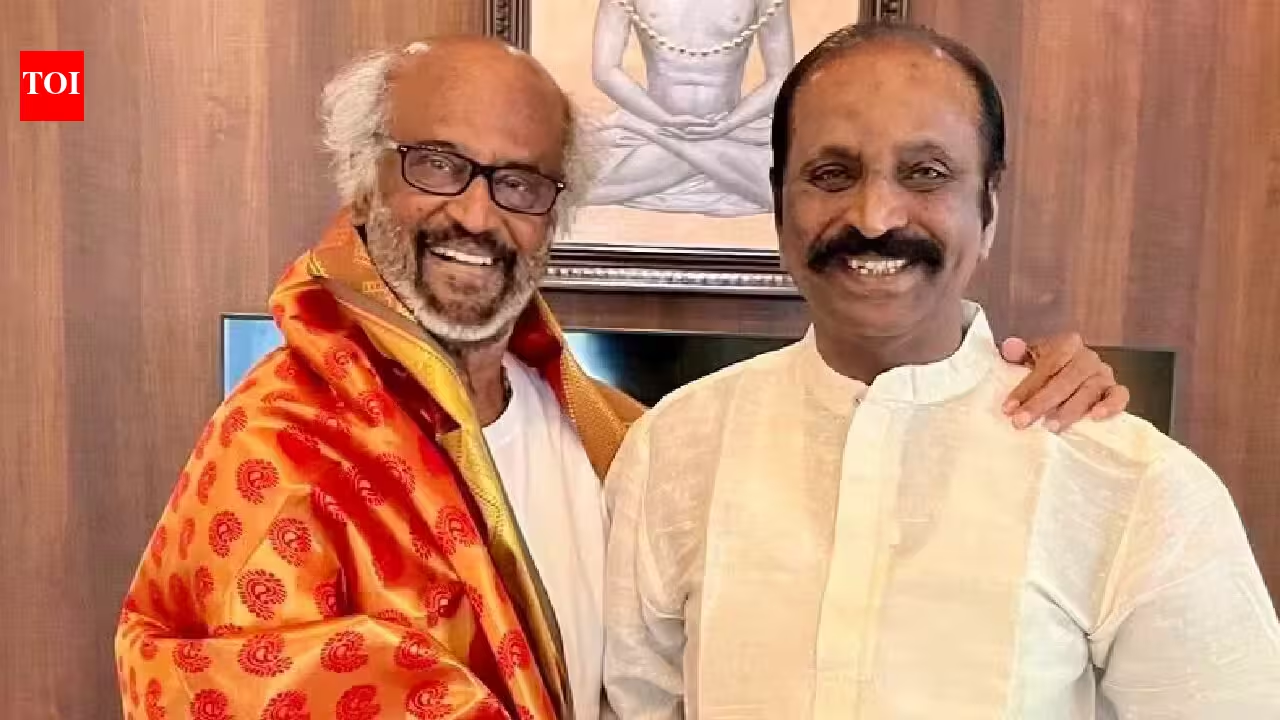
‘Whenever I meet Rajinikanth, my heart sings a melody’: Vairamuthu clarifies why he met the superstar ahe
4 hours ago
 Entertainment
Tom Cruise film Digger could lose $245m as The Social Recknoning also struggles at box office
4 hours ago
 Entertainment
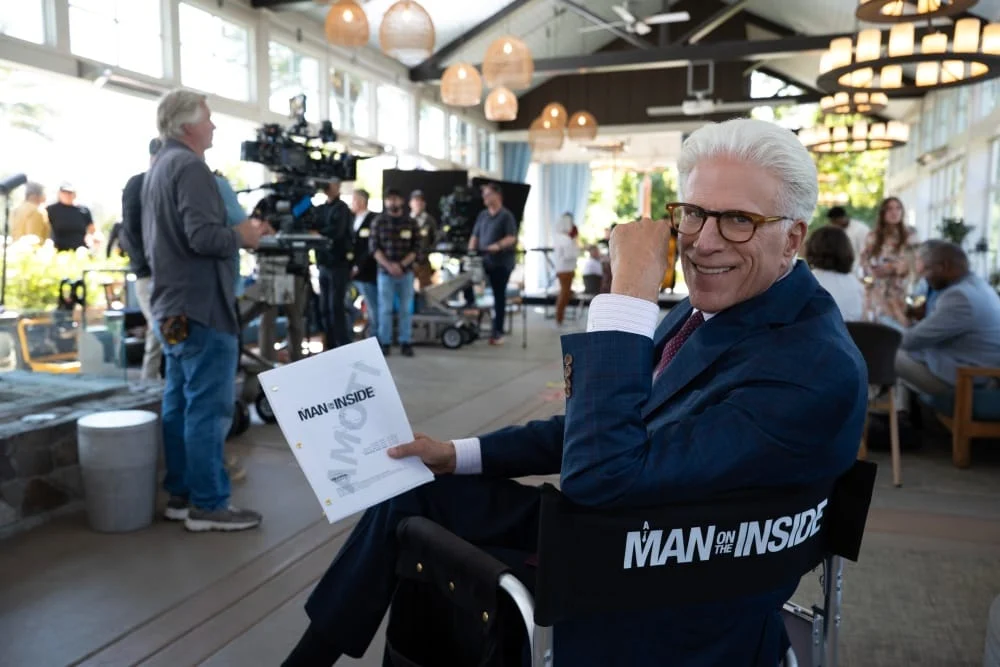
Netflix’s ‘A Man on the Inside’ Honors SF’s Film Noir Past In Final Season
23 hours ago
 Entertainment
The first 20 minutes of 'The Hunger Games: Sunrise on the Reaping' blew me away
23 hours ago
 Entertainment
Lili Reinhart On The Love Hypothesis Book To Screen Changes: "You Can't Put Every Single Thing In"
1 day ago
 Entertainment
Nova Scotia alcohol vending company expands to top American sports and entertainment venues
1 day ago
 Entertainment
Blackpink’s Lisa Manobal: How the K
1 day ago
 Entertainment
Festival organiser given second chance to hold event
2 days ago