
The energy problem of the AI data centre boom
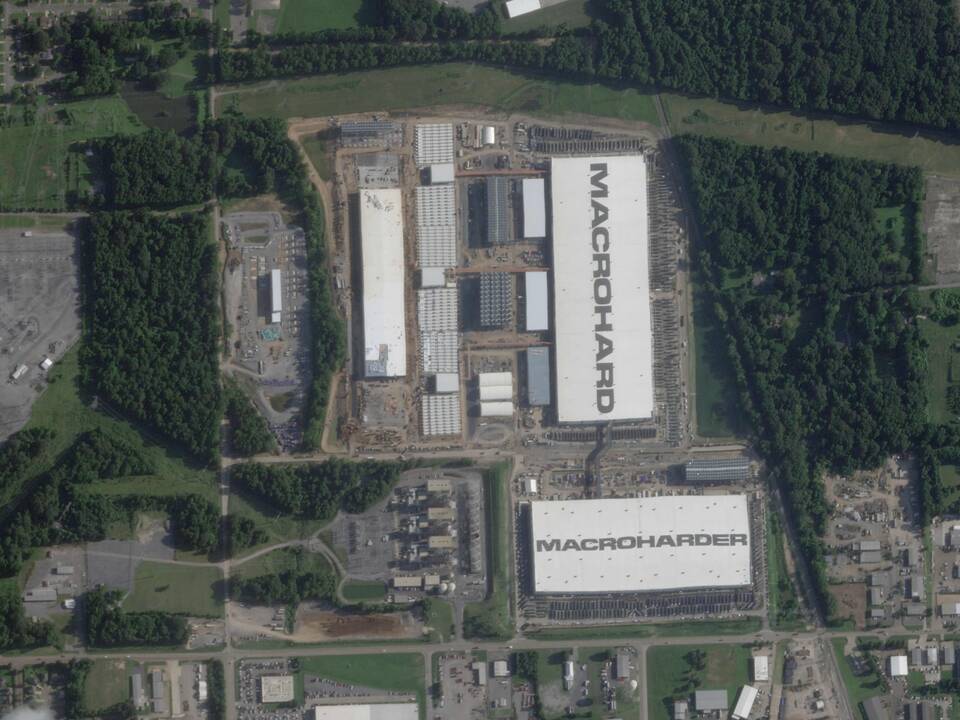
The proliferation of mammoth, resource-intensive data centres needed to power the artificial intelligence frenzy is putting grids under strain and provoking resistance from communities. The UN’s regional group for Europe wants countries to plan ahead.
The push to integrate artificial intelligence across the economy and its material and ethical implications has prompted a global debate, with governments and international organisations scrambling to develop a global response. But the AI boom is also a tangible and immediate problem – AI data centres are springing up faster than power systems can accommodate them. A report by the UN Economic Commission for Europe (UNECE) warns that developed countries are flying blind as they try to join the expansion.
Unlike traditional data centres, these warehouse-sized hyperscale facilities with thousands of servers require massive amounts of electricity to run, water to cool down and land to build on. Few governments have developed a comprehensive strategy to handle their growth, and backlash is growing.
“Very few people work in data centres; it carries huge energy and water demand, so local communities are asking what’s in it for us,” Dario Liguti, director of sustainable energy at UNECE, tells Geneva Solutions.
The report, released over the summer and due to be discussed by government and industry representatives on Tuesday at the UNECE’s expert group on cleaner electricity systems in Geneva, calls on governments to develop phased roadmaps for immediate risks while preparing for long-term challenges.
Global energy demand is rising as economies electrify transport and install more cooling systems for a warmer climate. AI is adding to that pressure. Electricity consumption by data centres is set to nearly double from 485TWh in 2025 to 950TWh by 2030, largely driven by AI facilities, according to the UNECE report. While it only makes up three per cent of global energy demand – the number is modest compared with other drivers – Liguti concedes – it’s the fastest-growing.
But the deeper concern, according to Liguti, isn’t the total but where facilities are being built. “You have areas such as North Carolina, Northern Virginia or Ireland, where you have explosive growth in the order of 20 to 30 per cent of electricity demand, because that’s where they are creating the data centres,” he says.
This concentration is happening due to companies being drawn by cheap energy, large tracts of land, permissive regulation and proximity to big cities. Some local authorities, eager to attract investments, have been courting tech giants like Google and OpenAI with major incentives. “Now those locations are experiencing the drawbacks of having such a high concentration of data centres there, which is putting a strain on local grids,” says Liguti.
Ireland offers a stark example. Data centres accounted for about 23 per cent of the country’s electricity consumption in 2025, up from five per cent in 2015. A moratorium on new connections was introduced in the Dublin area to ease the pressure but was later lifted. Environmental groups have called for a new moratorium, warning that the proliferation of data centres is further entrenching fossil fuel dependency.
In the US, one of the most glaring flashpoints is Memphis, Tennessee. SpaceXAI’s Colossus 2 data centre, which powers the company’s chatbot Grok, is facing lawsuits from environmental groups and residents over allegations that it has been running unpermitted methane gas turbines, causing pollution and noise. In Maryland, consumer groups say that AI data centre development is pushing up electricity costs, with residents expected to foot part of the bill for the grid infrastructure needed to power the new facilities.
Even larger projects are in the pipeline. Meta’s Hyperion campus in Louisiana occupies 910 hectares – 20 times the area of the Palais des Nations grounds. The project is planned to reach five gigawatts of computing capacity by 2032 – enough to power several million homes.
And opposition is spreading nationally. An analysis by private energy consultancy Carbon Direct found at least 46 AI data centre projects worth about $170 billion that had been delayed or cancelled between January 2024 and May 2026 in the US, following community opposition. A poll commissioned by climate publication Heatmap News this summer found that three-quarters of US respondents now oppose local data centre development.
The industry disputes this narrative, saying they have supported millions of US jobs and generated billions in tax revenue. But, according to Business Insider, experts are divided over the accuracy of those numbers and the nature of the jobs created, with most of them related to construction, maintenance and indirect local economy stimuli.
Liguti says consultations with local communities are critical to ensure acceptance. “There are many ways where a community can benefit from having a data centre,” he says, citing public services funded with tax revenue and waste heat from data centres used to warm homes, schools or for industrial facilities. “But it entails discussions and integrated planning so that all the stakeholders’ requests and demands are actually met.”
The UNECE’s report identifies a lack of transparency as one of the main problems. “There is huge debate around water and electricity usage by data centres, and we rely on data made available by the tech companies,” Liguti says. “How that data is measured and gets reported is not always harmonised, so aggregating it has proven difficult. That’s why in the press you see all sorts of conflicting claims.”
Liguti also warns of the long-term risk of stranded assets, as money is poured into expensive power plants, transmission lines and other infrastructure for an AI boom that may not develop as expected. “Predictions in terms of models’ capability from a few months ago have been surprisingly defeated by reality,” he says. “Who knows where AI will be in five years.”
While AI may quickly move on or out, the infrastructure can last for decades.
Still, UNECE’s report doesn’t tell countries to stop building. “We’re simply proposing to look at the data centres with a more medium- to long-term perspective – how they can be used as a real asset, as opposed to just something that consumes energy,” says Liguti.
Among its immediate recommendations, UNECE urges governments to require firms to disclose the full impact and cost of their projects, consult communities early and pause new developments where capacity is already tight. In the medium term, it says, states should ensure projects deliver tangible local benefits, like jobs, tax revenue and cleaner power. Longer term, UNECE argues that AI data centres should be treated as strategic infrastructure, governed by common international standards.
Liguti agrees that global rules are necessary given AI’s impacts across all aspects of life, but believes the energy dimension should stay in the hands of national governments, with regulations tailored to their own local contexts.
Geneva Solutions content is licensed under Creative Commons BY 4.0.
Related Stories
 AI News
The market’s betting AI will outrun bond yields, Fed rate hikes
14 minutes ago
 AI News
No breakthrough AI agreement between Trump and Xi during US
1 hour ago
 AI News
Although the use of generative artificial intelligence (AI) around the world is steadily increasing
2 hours ago
 AI News
China, U.S. agree to AI dialogue, tariff cuts on $30 billion in goods during Xi visit
2 hours ago
 AI News
Canonical is releasing Ubuntu kernel updates faster to counter AI bug hunting
3 hours ago
 AI News
AI minister says system deployment needs regulation, but no details yet
3 hours ago
 AI News
How to avoid looking lazy and rude with your new AI tools
5 hours ago
 AI News
'The AI
5 hours ago