
The Culture of Power: Why Politics Is Losing Its Purpose
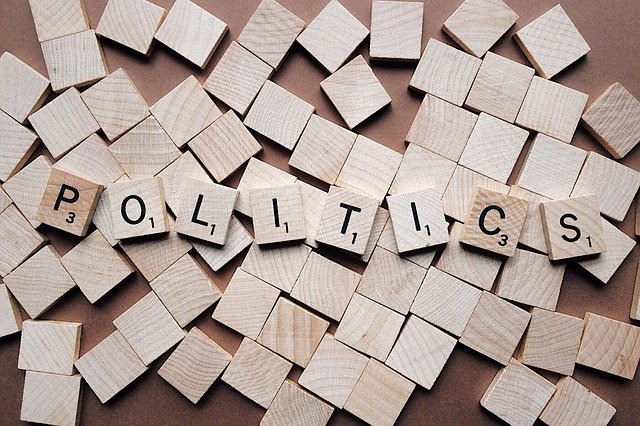
There is a growing sense across the world that something has shifted in the way politics is understood and practised. Across countries and the political spectrum, many people are experiencing a shared feeling of frustration and uncertainty.
The question being asked is no longer simply about which party should lead, which ideology should prevail, or which policies should be followed. It is something deeper — whether politics still remembers its original purpose: to serve people and promote the common good.
A recent Cambridge study covering 154 countries over several decades suggests that democratic dissatisfaction is now at its highest level since the mid-1990s. This does not necessarily mean people have rejected democracy itself. Rather, it reflects growing disappointment with systems that often feel distant, divided, and unable to respond to the human realities behind political debate.
Today, geopolitics is also being shaped by wider forces: the rise of populism, increasing distrust in institutions, growing social division, weakening international cooperation, and the expanding influence of technology.
Taken together, these changes point towards something deeper — not only a crisis of politics, but a crisis of vision.
When Politics Becomes Power Struggle
At the centre of this crisis is the question of power.
Politics has always involved power. Governments need authority to make decisions, protect citizens, and maintain order. The problem begins when power stops being a means of serving society and quietly becomes the goal itself.
More and more, politics today feels shaped by the need to win rather than the desire to serve. Leaders are often judged less by their ability to bring people together and more by their ability to defeat opponents, control narratives, and preserve influence in a political culture increasingly shaped by image and perception.
In Britain, for example, the high turnover of Prime Ministers in recent years exposed a deeper sense of political instability and internal struggle. The years following Brexit revealed not only disagreements over policy, but also deeper questions about identity, direction, and leadership. The frequent changes at the top created the impression of a political system increasingly driven by ambition and survival, where short-term political survival often outweighed long-term responsibility.
In the United States, political life has become increasingly defined by intense polarisation, personal loyalty, and conflict over the role and authority of institutions themselves. In parts of Europe and Latin America, rising polarisation has also challenged traditional ideas of cooperation, with movements often built around strong personalities and opposition to established institutions.
In many democracies, concerns have also grown around political centralisation, the weakening of institutional independence, strained relations between government and opposition, and the use of influence to protect authority rather than encourage accountability.
None of this belongs to one ideology or one country. Across the political spectrum, the same temptation appears: to protect power rather than to use it in service of the common good.
Pope Leo XIV and the Culture of Power
Pope Leo XIV, in his encyclical Magnifica Humanitas, gives language to something many people sense but struggle to name. He speaks of a “culture of power,” a way of thinking in which influence, control, and resources quietly become the real drivers of political and social life.
In that culture, power stops being questioned. It becomes assumed. It becomes the atmosphere everything operates in.
What is striking in the Holy Father’s reflection is that this does not remain confined to politics. It spreads. It shapes institutions, relationships, and even the way people imagine what is possible. Over time, it normalises the idea that the strongest voice is the most valid one, and that cooperation or dialogue is simply weakness in disguise.
The Holy Father also points to something more subtle but more troubling — the idea that there is “no alternative.” When that mindset takes hold, politics shrinks. It becomes managerial, cautious, and often cynical. Power becomes more centralised, political life hardens into competing ideological camps, and space for genuine dissent or dialogue narrows. The question quietly shifts from what is right? to what is realistic? And realism slowly becomes another word for resignation.
The deeper question is why this pattern keeps repeating itself. At this point, the issue moves beyond institutions or politics and touches something deeper in human life itself.
The Epistle of Saint James asks a direct question:
“What is the source of these conflicts and quarrels among you? Are they not the result of your passions that are at war within you?” (James 4:1)
His answer is unsettling. The power struggles or conflicts do not begin only outside us, but within us — in desire, in rivalry, in the need to possess, control, or secure what we do not yet have.
That does not mean individuals are to blame for global politics. But it does suggest that what we see “out there” is not disconnected from what is happening “in here.”
In this sense, Pope Francis had spoken of an “illusion of individualism”— a culture in which the self becomes the primary reference point for how we think, decide, and relate to others. None of this is entirely new, nor is it inherently wrong in itself. But when the self becomes the centre of gravity, it begins to quietly reshape perception: how others are seen, what is considered fair, and what is justified in pursuit of one’s own interests.
What begins as an inner disposition gradually becomes a social reality. A culture built around self-definition and self-protection does not remain private; it extends into collective life. Over time, it influences how societies organise themselves, how trust is built, and how power and conflict are understood.
In this way, the patterns that emerge in politics are not separate from this deeper human tendency, but often an expression of it.
When Politics Forgets Its Purpose
The danger is not only poor leadership or bad decisions. It is something deeper when politics begins to lose its sense of purpose.
When power becomes the main currency, everything else starts to adjust around it. Language hardens. Opponents become obstacles. Decisions become calculations. Even truth begins to bend under pressure, depending on what is politically useful at the time.
This does not happen suddenly. It settles in quietly, until it feels normal.
And yet, something in people recognises that it is not right. There is a reason many feel weary of political life today. It is not just disagreement — it is fatigue with a system that feels increasingly self-referential.
A Different Way of Thinking About Power
This is where Pope Leo’s challenge becomes not just a critique, but an invitation to imagine differently.
The Christian tradition does not pretend power can be removed from politics. It insists instead that it must be re-ordered. Power is not evil in itself, but it becomes dangerous when it stops serving anything beyond itself.
Pope Leo’ alternative is a “civilisation of love.” It sounds an awkward phrase at first, but it points to something concrete: a society where justice is not only declared but structured into how institutions actually function.
Love, in this sense, is not sentiment. It is responsibility made visible. It is the refusal to reduce people to tools in a political process.
Dialogue as a Different Kind of Strength
If a culture of power thrives on winning, then dialogue becomes almost countercultural.
Listening properly to someone you disagree with is not easy. It slows things down. It requires patience. It removes the comfort of simple certainty.
But without it, politics becomes a cycle of assertion and reaction — voices speaking past each other rather than to each other, with very little truly being resolved.
Negotiation, compromise, patience — these are not signs of political weakness. They are signs that politics is still recognisably human.
Politics will never be perfect. Human beings are too complex for that. But there is a difference between imperfection and distortion.
The real question is not whether politics involves power — it always will — but whether power remains accountable to something higher than itself.
Do we continue drifting into a culture where power becomes the measure of everything? Or do we recover a vision in which power means service, responsibility, and care for the common good?
That shift will not come from systems alone or from optics. It requires a deeper change in how we think — and how we see.
And perhaps that is the real challenge: not just changing politics, but remembering what politics is for.
Lavoisier Fernandes, born and raised in Goa, is currently based in West London. His faith is “work in progress”- and a lifelong journey. He has always been fascinated by the Catholic faith, thanks to his Salesian schooling. He’s passionate about podcasting, theology, the papacy, and volunteering. He has hosted ‘Talking Faith’ series for Heavens Road FM, Catholic Radio, connecting with ordinary men and women within the Catholic faith, other faiths and examining issues affecting both the Church and society. He has also been a host on Shalom World Catholic TV for two episodes of the ‘Heart Talk’ series. He presently contributes for the Goa Diocesan magazine Renevacao.
Related Stories
 Explainers
Astronomers discover a brand
3 days ago
 Explainers
Natalie Harp reportedly posted 150 pro
6 days ago
 Explainers
Personal care products are awash in unlabeled toxic chemicals, study finds
1 week ago
 Explainers
Trump laying groundwork to impose national emergency by sowing election distrust
1 week ago
 Explainers
Handy Helpers: Electric Underwater Tools and Manipulators
1 week ago
 Explainers
Build intelligent security for healthcare APIs with Amazon Bedrock
1 week ago
 Explainers
Car salesman becomes Belgian prince after royal lineage legally confirmed
1 week ago
 Explainers
Council with no leader faces government takeover
1 week ago