
The Blue Ridge Mountain mine powering the world’s digital economy
In a valley in the Blue Ridge Mountains of North Carolina, some 800 metres
above sea level, lie a few square kilometres that feed the global computer
The Spruce Pine mining district is estimated to supply more than 80 percent of the world's ultra-pure quartz, a key material for making the semiconductors on which computers and other complex electronic devices depend. They are also essential for solar panels.
"We're seeing the development of the components industry, and with it the need for materials of extremely high purity," says geographer Laurent Carroué, director of research at the French Institute of Geopolitics (IFG) at Paris VIII University.
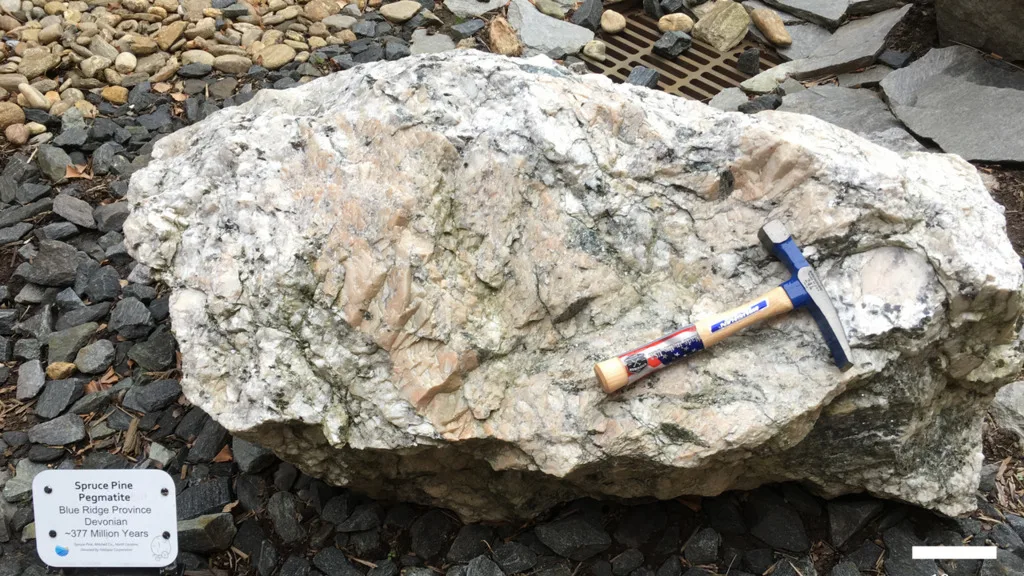
Spruce Pine produces some of the purest quartz in the world. Some 380 million years ago, major tectonic shifts occurred that generated intense heat deep below the surface of the Earth, creating silicon-rich magma that eventually cooled and crystallised. In this area, the process took place without water – and therefore without the trace impurities it can introduce.
This "truly rare phenomenon", as Carroué describes it, created quartz deposits that are 99.999 percent pure.
Extremely heat-resistant, high-purity quartz is used to make crucibles in which semiconductor-grade silicon is melted at temperatures of more than 1,400C. The refined silicon then crystallises and can be sliced into thin "wafers" that form the basis of microchips or solar cells.
The size and purity of Spruce Pine's deposits make them highly sought after by chipmakers and solar developers in the US and beyond.
A handful of private companies currently have mining rights, including Belgian group Sibelco and French-Norwegian venture The Quartz Corp. While The Quartz Corp announced last month it was closing its Spruce Pine plant indefinitely due to "persistent losses" in the solar industry, Sibelco doubled its production capacity between 2023-25 and is planning to invest another $500 million in expanding by 2027.
As Carroué points out, these operations are by nature "non-transferable and non-relocatable".
Quartz can also be found in other countries including Russia, Brazil and China, though the cost of extracting it is much higher. Europe has a supply in Norway, though production remains a fraction of Spruce Pine's output.
Earlier this year, researchers identified a new source of high-purity quartz in Chinese-controlled Tibet, with deposits of almost as high a grade as found at Spruce Pine. State-run media hailed the discovery as an opportunity to end China's dependence on imports from the US.
China produces the bulk of the world's rare earth minerals and according to Carroué, the sector "has become a point of contention with Washington, prompting the United States to start rehabilitating previously abandoned mines in the American West".
In September 2024, a natural disaster highlighted the risks of relying on a single source.
Hurricane Helene smashed into the southeastern United States, causing flooding from the Atlantic Coast to the Appalachians. Landslides felled trees, cut power and closed roads, causing Spruce Pine's mines to halt production.
While the disruption was short-lived, a prolonged closure would no doubt lead to scarcity and higher prices on global markets – especially as rapidly developing artificial intelligence continues to demand more and higher-performing chips.
If manufacturers are to diversify their quartz supply, Carroué says, it would mean "accepting minerals that are initially less pure, and financing heavy infrastructure" to refine them.
In the longer term, lab-grown synthetic quartz could provide an alternative. However, it is significantly more expensive than mining natural deposits.
In that case, the world's supplies of this critical material will no longer depend on geographical fortune, but on political and financial commitment.
This article has been adapted from the original version in French by Alexis Pignolet.
Related Stories
 World
World
Manchester United weigh up stunning move for Real Betis and ex-Tottenham forward Troy Parrott
5 days ago
 World
World
Israeli police arrest 10 following weekend attacks by settlers on journalist and diplomats
5 days ago
 World
World
Trump says suspension of Russia sanctions is to keep peace negotiations going
5 days ago
 World
World
Ukrainian drones strike St. Petersburg oil facilities | NHK WORLD
5 days ago
 World
World
Victoria Falls stadium in Zimbabwe nears completion for CWC27
5 days ago
 World
World
‘The world will be amazed:’ Iran’s commanders prepare for further war
5 days ago
 World
World
Festival opens with musket salute in Sakai, Osaka
5 days ago
 World
World
Trump's new pitch for Republican candidates — they're really good
5 days ago