
The Biggest Legal Battle in AI Music Just Took a Historic Turn... And It Could Change Every Song Generated by Artificial Intelligence.

The Biggest Legal Battle in AI Music Just Took a Historic Turn… And It Could Change Every Song Generated by Artificial Intelligence.
Imagine opening an AI music app.
« Create a rock song that sounds like my favorite band. »
A brand-new track starts playing.
The production sounds incredibly professional.
But then another question appears.
Where did the AI learn to make music that sounds so real?
For years, that question has divided the music industry.
Tech companies argued that AI was learning patterns, just like a human musician listening to thousands of songs throughout their life.
Artists replied with a completely different argument.
« You didn’t just listen. »
« You copied our work to train your machines. »
For the first time in Europe, a court has taken a major position.
On July 31, 2026, the Munich Regional Court ruled in favor of GEMA, Germany’s largest music rights organization, against the AI music platform Suno.
The court concluded that Suno had infringed copyright, marking one of the most significant legal decisions yet against a generative AI music company.
The biggest question wasn’t whether AI could compose music.
It was whether the way it learned to compose that music was legal.
Imagine spending fifteen years becoming a musician.
An AI trained on millions of tracks—including works protected by copyright—can generate something that feels remarkably close to your style.
That’s exactly what courts are now trying to answer.
But the story doesn’t stop in Germany.
The American Federation of Musicians, one of the largest musicians’ unions in the United States, has taken aim at something even more surprising.
But the major record labels themselves.
The union has criticized agreements involving AI technologies and major labels such as Universal Music Group and Warner Music Group, arguing that musicians and performers deserve transparency and fair compensation when their work contributes to AI systems.
Think about how extraordinary that is.
Artists and record labels stood together against piracy.
In some cases, artists are questioning the decisions made by the very companies representing their music.
Because AI has completely changed the conversation.
This isn’t only about copyright anymore.
If artificial intelligence becomes capable of producing millions of songs…
Or the musicians whose work helped teach the machine in the first place?
That’s exactly why these court cases matter.
They’re not just deciding the future of one company.
They’re writing the rules for an entirely new creative economy.
An economy where creativity can be generated in seconds…
But inspiration still comes from decades of human work.
Maybe the biggest misconception is thinking this is a fight between artists and artificial intelligence.
It’s a fight over who owns creativity in the age of AI.
Because if a machine can learn from millions of songs…
The real question isn’t whether it can make music.
It’s whether the people who gave it something to learn deserve a share of what comes next.
If AI-generated music is built on decades of human creativity… where does inspiration end… and intellectual property begin?
Related Stories
 AI News
MISTRAS Group Accelerates AI Strategy, Appoints Samer F. Sarrouh as Executive Director of Artificial Intelligence
41 minutes ago
 AI News
7 ways startups can stand out in the AI era
1 hour ago
 AI News
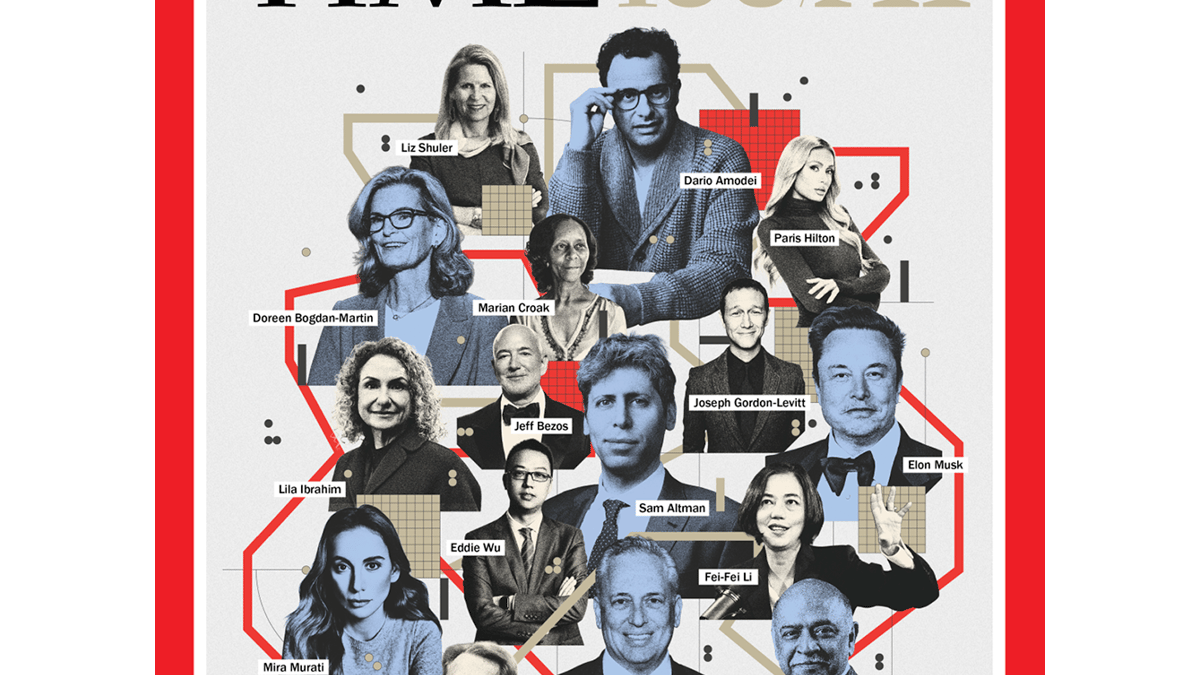
TIME Reveals the 2026 TIME100 AI List of the World’s Most Influential People in Artificial Intelligence
1 hour ago
 AI News
Filipino theologians explore how Church should respond to AI
1 hour ago
Google names 28 startups as part of second AI for Energy Accelerator program
2 hours ago
 AI News
❝The question is not whether AI writes, but whether humans still think
2 hours ago
 AI News
Angle Bush: The 100 Most Influential People in AI 2026
2 hours ago
 AI News
❝Why we need to make AI work for all, not just for good
2 hours ago