
Terry Newman: Has anyone told Carney he can do interviews with Canadian media?
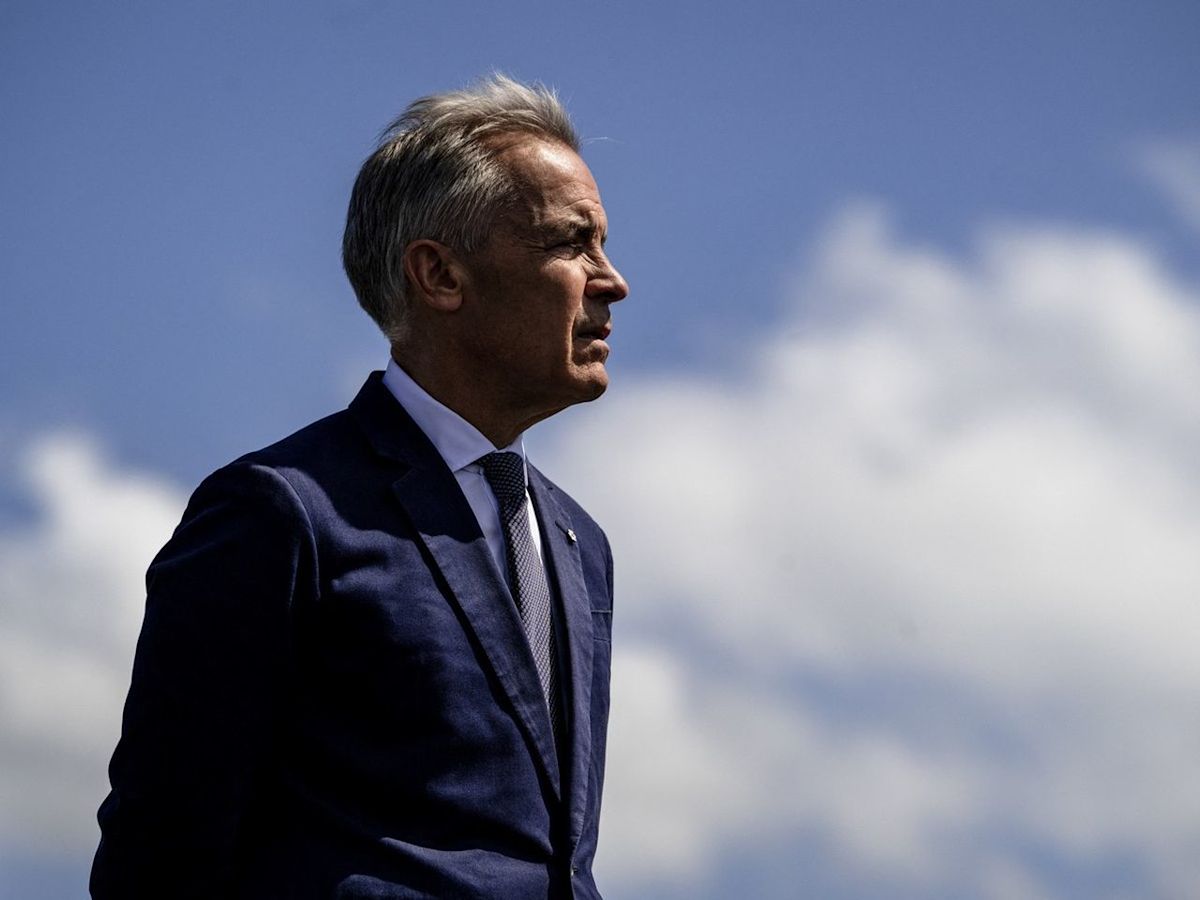
Earlier this month, Prime Minister Mark Carney granted Bloomberg News an "exclusive one-on-one" sit-down interview. On Wednesday, he sat down with the New York Times at its Manhattan headquarters to discuss his vision for diversifying Canada's trade. In both interviews, failed trade negotiations with the U.S. were discussed.
Notably, the same opportunity has not been provided to Canadian media. Instead, outlets here have only been given the opportunity to ask harried questions at short press conferences, and like our fellow Canadians, were recently spoon-fed a pre-recorded "Forward Guidance" video meant to reassure us, without specifics, that our PM had made the right choice.
Trade talks with the U.S. broke down on Aug. 21. Since then, we have been given conflicting information from U.S. representatives about the reason for the breakdown and not one sit-down interview from our PM.
Carney granted a 15-minute sit-down interview with Bloomberg News's Brian Platt on Sept. 14. While the purpose of this interview was to discuss the Canada Investment Summit taking place at the time, toward the end of the interview, Platt took the obvious opportunity to ask Carney about whether remarks made by U.S. President Donald Trump suggesting that the U.S. could reach a deal with Canada "fairly soon" were true.
Carney replied: "There is a mutually advantageous agreement that is possible between Canada and the United States … we're ready to sit down and negotiate that and move it forward."
To this, Platt followed up: "Is there a question of who moves first here?"
Carney cut off Platt before he could finish his question and replied: "No. There's not a pride thing from our perspective. We're practical people that know what our bottom lines are, what our red lines are, for sovereignty, for culture, not being restricted on our ability to sign other trade deals.… We're ready to sit down. There's no pride in this. We'll do what's right for the Canadian people."
But Canadian media hasn't been given an opportunity to sit down with Carney to ask questions that might test that claim.
Wednesday's New York Times article summarizing their interview with Mark Carney about his diversification vision was more platforming than interviewing.
The article, written by four journalists, describes Carney as "the most prominent global leader to take on Mr. Trump," claims other leaders look to him as a "model" for dealing with their president and compliments Carney's clear articulation of his interests.
The New York Times journalists apparently didn't push back on Carney's reiteration that the world should move away from the U.S. dollar as the standard reserve currency and toward a multipolar system in which the only other currency mentioned was China's.
I guess the New York Times found Carney's suggestion that such a pivot would be limited until the Chinese currency and financial system was properly liberalized somehow reassuring, if they didn't, they didn't mention it.
It's strange that they didn't probe Carney's suggestion about the realignment of the global financial system further. Carney initially suggested it in a 2019 speech he made while serving as the governor of the Bank of England. In other words, his belief has nothing to do with diversifying Canada against Trump's tariffs or this trade war. It predates it.
But perhaps the most disturbing part of the New York Times interview is that these journalists decided to lead their article with Carney's statement that, as an "extreme tail risk" he investigated the possibility of the U.S. invading Canada.
This, despite the fact that elsewhere in the interview they say that Carney said he and Trump "have a good relationship in the sense of we can pick up the phone and talk to each other about issues," speak "frequently" and have spoken "a number of times" since talks broke down last month.
Apparently, the New York Times never even bothered to ask what the results of the possibility of invasion investigation were or they decided not to share them. As a result, the foreboding suggestion that U.S. soldiers might cross our borders and point weapons at our citizens just hangs there.
Worse, because it was suggested in an interview with our PM, this bizarre, unfounded, fearmongering suggestion was picked up by Canadian media outlets, flooding our headlines and hijacking Canadian voters' nervous systems.
The New York Times journalists apparently never bothered to drill down on the specifics about why Carney decided to walk away from the deal, if they did, they didn't share what they'd learned. And, if they never asked for specifics, it suggests they just assumed it was necessary.
The article was less of an interview than it was a friendly platform for Carney to elucidate his vision for reducing dependence on the U.S.
As for Canadian media, we have not been granted any sit-down interviews from Carney about the breakdown in negotiations.
Reporters here have only been able to ask harried questions after press conferences. Oh, and on Sept. 8, Carney released his third, and perhaps most polished, pre-recorded "Forward Guidance" video, which was wholly absent of details about why talks broke down. In the video meant to reassure us we were told he "simply could not accept what they were proposing."
Then why not sit down for interviews with Canadian media?
The most recent sit-down interview our PM granted to a Canadian media outlet took place before talks broke down. On April 27, CBC News's chief correspondent Adrienne Arsenault sat down for a 30-minute interview to mark Carney's one-year anniversary as PM.
An interview marking a PM's one-year anniversary didn't have to be cozy, but it was. Arsenault was all smiles and leant toward the PM who returned her smiles. Arsenault asked, "Prime Minister, so, we are almost, you know, one day shy of a year, and it's kinda been a lot."
Then, instead of Arsenault pressing him on specifics about the progress of any of his government's policies over the last year, she let him guide the interview. She asked, "How do you think you're doing?"
Carney refused to grade his progress and turned the question into how it had felt to be in the role of PM over the last year, and Arsenault didn't press him to answer her original question. Nor did she seem prepared to question his progress herself. Not exactly what Canadians would expect from an anniversary check-in interview.
Instead, Arsenault moved to a question about whether there was going to be anything new or more for Canadians in terms of economic relief.
To Arsenault's credit, she did press him later in the interview about tariff negotiations up until that point. But when he refused to answer her question about whether any other countries are happy with the deals they have worked out with the U.S. and threw it back at her to answer, she accepted his evasion and the excuse that these unnamed countries dislike their deals "in private."
Carney's Canadian media evasion doesn't end there. Outlets here had to hear from the Wall Street Journal that it was Carney's idea to make Canada an associate member of the European Union.
Even Toronto Star journalist and CBC pundit Althia Raj noted that her colleagues in the press in Ottawa are "annoyed" that that Carney's "been going again to a foreign outlet to talk in part deliver messages that probably he should be saying at home."
Again, there have been no sit-down exclusives with Carney and Canadian media about the breakdown in trade negotiations — this is bizarre and discomforting, and I doubt Canadian media would have allowed Carney to avoid an in-depth interview about negotiation breakdowns if he was a Conservative prime minister.
Only a Canadian journalist who understands what's at stake for Canadian workers and industries and has no smiles for Carney can properly interrogate Carney about the reasons behind the surprise breakdown in talks and measure them against claims made by U.S. Trade Representative Jamieson Greer and others.
The fact that Carney hasn't offered such an interview suggests he doesn't want to do one, and reporters can't ask questions of a pre-recorded video. This is all the more reason why Canadian media should push for in-depth interviews with our PM.
Carney is treating Canadian media like his mushrooms by leaving us in the dark. We need to demand better. Canadians deserve better.
Michael Higgins: Canada's unimaginative media can't get enough of these academics
Terry Newman: Concordia handbook teaches students to hate Canada, the West, police ....
Related Stories
 Careers
Putin expresses cautious stance on resuming peace talks
7 hours ago
 Careers
Trump Ally Melts Down Defending Media Ban
10 hours ago
 Careers
Unions have new leverage, not less, under Liberals' new major projects bill: jobs minister
1 day ago
 Careers
Greek authorities seek answers after six killed in Athens apartment block explosion
1 day ago
 Careers
Jeremy Geddert: Conservative leadership elections aren’t conservative enough
2 days ago
 Careers
South African white genocide does not exist, new ambassador to US tells BBC
2 days ago
 Careers
Trump reportedly rejects Iran's proposal to reopen strait
2 days ago
 Careers
The latest CPP and OAS payments hit bank accounts Friday
2 days ago