
Teaching and learning in the age of AI: Why literacy matters for inclusive and ethical education

Here, Dr Stefania Giannini, President of Government Relations at Efekta Education, focuses on teaching and learning in the age of artificial intelligence and emphasises the importance of literacy for inclusive and ethical education
UNESCO’s mandate is to promote education as a fundamental human right by expanding access to quality learning, while ensuring that innovation remains grounded in equity, inclusion and human dignity.
During my tenure as Assistant Director-General for Education (2018–2026), two events revealed the scale and speed of transformation confronting education systems worldwide. The first was the COVID-19 pandemic, when school closures affected 1.6 billion learners and demonstrated both the power of technology to sustain learning and the risk of deepening inequalities where access remained uneven. A few years later, artificial intelligence (AI) arrived in classrooms.
Unlike previous technological advances, AI does more than support existing tasks. It generates content, shapes the information people receive, and influences how knowledge is accessed and interpreted. A teacher can explain the reasoning behind a conclusion; an AI system often cannot.
This is why AI demands a different level of scrutiny. It requires new competencies, new governance frameworks, and renewed attention to the values that have always underpinned education.
In conversations with ministers and education leaders across the world, one question emerged consistently: How can education systems ensure that learners and teachers develop the literacy needed to engage with AI critically, ethically and confidently?
Existing policy frameworks offered few answers to questions of transparency, accountability, teacher preparedness or the responsible use of AI. The objective was, therefore, to develop common principles that would enable innovation while safeguarding inclusion and human dignity. At the same time, education systems needed to prepare young people for an AI-driven world. UNESCO’s AI competency frameworks for students and teachers are the outcome of that process.
For governments, the immediate priority is to give teachers and learners the confidence to engage with AI in the classroom. Over time, AI literacy should become embedded in curricula, teacher preparation, and national education policy.
Too often, public discussion focuses on which jobs AI may replace, including those of teachers. A more important question is what distinctly human capabilities become more valuable when machines can perform many routine cognitive tasks.
Education systems designed for the pre-AI era must evolve accordingly. Students increasingly need new competencies: ethical judgement, responsible information practices, and an understanding of how algorithmic systems influence decisions, opportunities and behaviour. AI literacy encompasses these all-important skills that traditional approaches to teaching and learning have not typically prioritised. Accordingly, the role of teachers must also evolve.
For centuries, education systems have largely been organised around standardisation: one curriculum, one pace, one measure of success, and often, one correct answer.
AI creates opportunities to rethink that model. Rather than requiring all learners to follow the same pathway, education can increasingly adapt content, pace, and support to individual needs while maintaining common learning goals.
In this new environment, the teacher’s role becomes more important than ever. Teachers remain the designers of meaningful learning experiences and the guides who help learners navigate complexity.
This understanding was already reflected in the 2019 Beijing Consensus, in which more than fifty governments agreed that AI should augment, not replace, human capabilities and that teachers must remain central to our education systems.
Progress has been uneven. Many education systems still struggle to prepare teachers for the opportunities and risks associated with AI.
The goal is not to promote AI for its own sake, but to equip educators with the confidence and judgement to determine when it adds value. The relationship between teacher and learner remains at the heart of education, and technology should strengthen that relationship.
No two countries face this moment in the same way, but the guiding principles should remain universal. Any national strategy for AI in education must be ethical in its foundations and inclusive in its implementation, or it risks amplifying the very inequalities education is intended to overcome.
UNESCO estimates the world will need 44 million additional teachers by 2030. Overcrowded classrooms and severe teacher shortages continue to limit learning opportunities for millions of children.
Yet these outcomes are not inevitable. The benefits of AI will depend on deliberate policy choices. We cannot afford to repeat the mistakes of previous technological revolutions by allowing unequal access, or by treating safeguards as an afterthought.
Data privacy must be protected. Children must be safeguarded. Access to AI should not become another marker of privilege.
AI will transform education. Whether that transformation proves beneficial depends on the choices we make today. If we invest in teachers, equip learners with strong AI literacy, and place ethics and inclusion at the heart of education policy, technology can expand opportunity rather than deepen division.
AI will help shape the future of education. Equally, education will shape the future of AI. Ensuring that both serve humanity may be one of the defining responsibilities of our time.
Related Stories
 AI News
Can Artificial Intelligence Help Prevent Double Land Sales in Ghana?
1 hour ago
 AI News
Delay the deployment of Artificial Intelligence | Opinion letters
1 hour ago
 AI News
Artificial intelligence answers: what is the expected result of the Liverpool v Manchester City match?
2 hours ago
 AI News
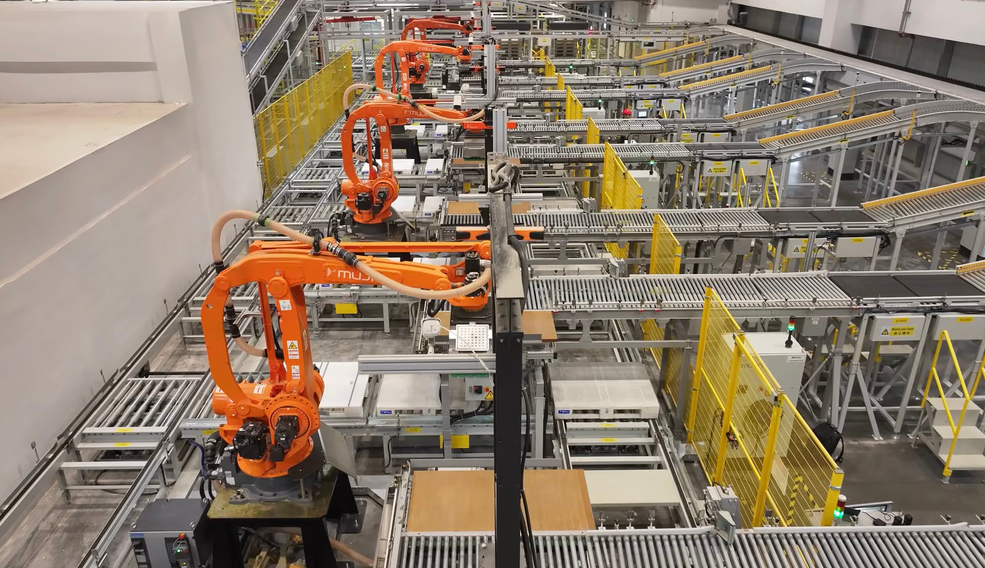
Korea’s SK Square backs Japanese physical AI startup Mujin to expand into robotics
2 hours ago
 AI News
Artificial intelligence answers: what is the expected result of the Al Ahly and Zamalek summit?
3 hours ago
 AI News
Artificial intelligence answers: what is the expected result of the Al Ahly v Zamalek summit?
3 hours ago
 AI News
We saw ‘Artificial’ before everyone else, and now we know why Hollywood tried to bury it
3 hours ago
 AI News
AI surveillance startup Flock to cut several hundred jobs amid backlash, sources say
5 hours ago