
Taiwan tech suppliers look beyond horizon to space for growth

TAIPEI (Taiwan News) — Domestic technology manufacturers are increasingly turning to space as a new growth frontier, capitalizing on global demand for satellite components and systems.
Firms producing antennas, industrial computers, and other equipment are building on Taiwan Space Agency initiatives to develop a domestic satellite supply chain. Many of these companies are targeting international customers from the outset, per Nikkei Asia on Thursday.
TASA plans to establish a domestic rocket launch site in Pingtung by 2030. Its Formosat-8A "Chi Po-lin" satellite began imaging operations in January and released its first high-resolution images in February. The agency also licensed a satellite-grade GPU system to Liscotech for commercialization.
The company sees space applications as a path to higher margins and less price competition than mass-market electronics. It is developing onboard computers, power systems, and AI-enabled computing modules based on Nvidia platforms that can be integrated directly into small satellites.
Liscotech Founder and CEO Jack Chen (陳良豐) told Nikkei Asia, "As a niche player, space-grade computing has become a very important area because it demands deep technical know-how and rigorous testing capabilities. We have been targeting the international market from day one."
Large contract manufacturers including Foxconn, Wistron, and Compal are also reportedly pursuing space-related opportunities. Foxconn collaborated with National Central University and other partners to launch communications satellites and partnered with space startup Ramon.Space to develop servers for orbital data centers.
Meanwhile, Digitimes reported that printed circuit board maker Compeq Manufacturing produces space-grade boards for SpaceX, while Universal Microwave Technology supplies satellite components to Amazon’s Project Kuiper, OneWeb, and SpaceX. Compeq has said that satellite-related business could represent up to 80% of its revenue.
These corporate initiatives align with Taiwan’s broader strategy to build a competitive space industry, according to Commonwealth Magazine. The government passed the Space Development Act in 2021 and has committed substantial funding to support satellite programs and supply chain development.
Taiwan’s space industry revenue grew more than 9% last year to approximately NT$300 billion (US$9.3 billion), according to the Taiwan Institute of Economic Research. In March, 21 Taiwanese companies showcased their capabilities in satellite communications, RF components, ground systems, and emerging manufacturing technologies at the Satellite 2026 conference in Washington, DC.
Industry analysts have noted that Taiwan’s strengths in semiconductors, precision manufacturing, and information technology position it well to become a key supplier in the global space economy, particularly for low-Earth orbit satellite components and systems.
Related Stories
 Technology
When Tech Companies Die, What Happens To The Products They Leave Behind?
1 day ago
 Technology
Two Finns supplying Russia with missile tech worth tens of millions
1 day ago
 Technology
Drones with pepper spray, four
1 day ago
 Technology
Micron Technology stock pre-market at EUR 800.50: memory storage - ad
1 day ago
 Technology
TAIEX Ends at 4
1 day ago
 Technology
ZAWYA: Technology, start-ups can double India
1 day ago
 Technology
Czech government to consider CZK 1 billion fund for startups
1 day ago
 Technology
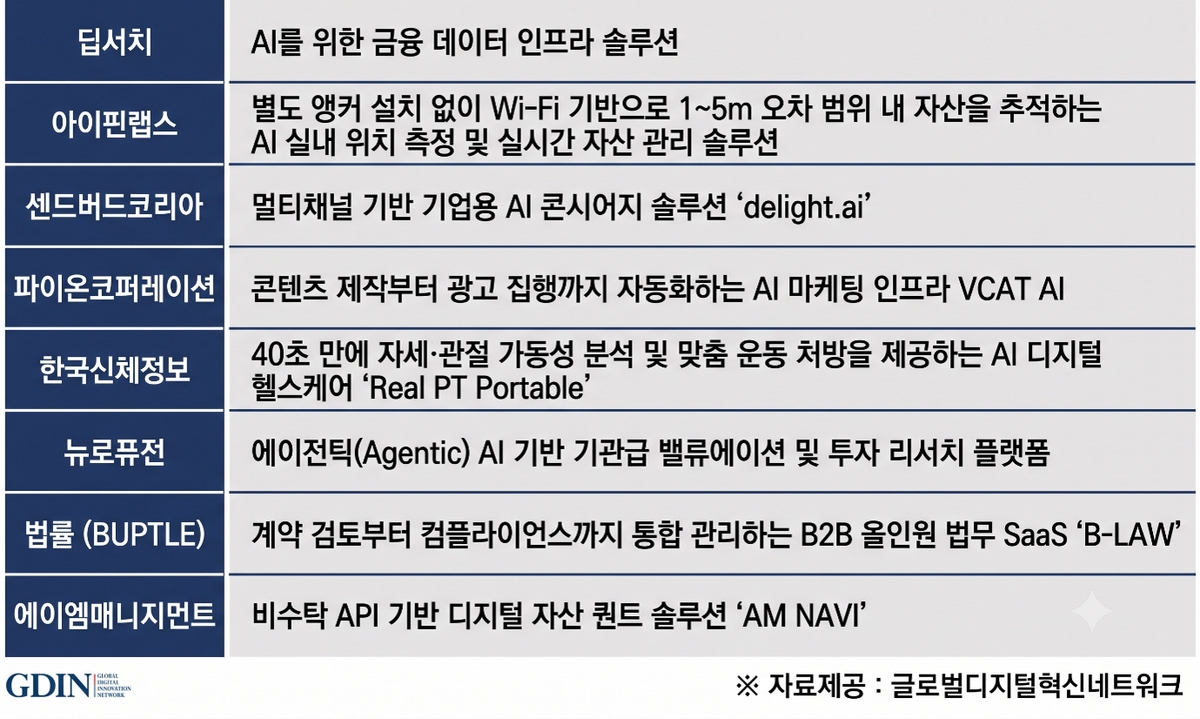
GDIN Supports Eight Startups at CEATEC 2026 in Japan, Opens Door to Local Investor Collaboration
1 day ago