
Steelpan and the Indian Diaspora: Bridging Cultures Through Music
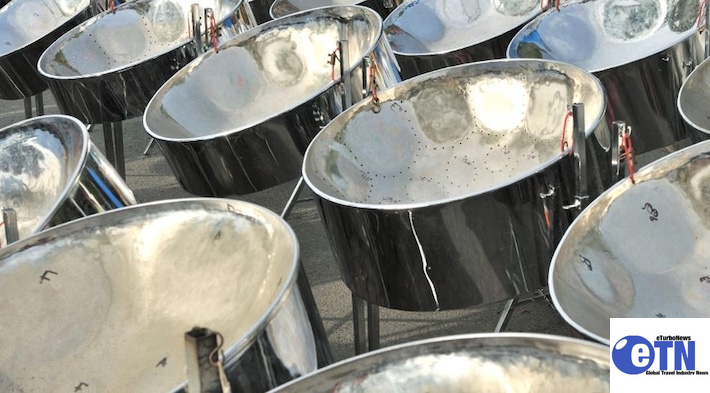
Originating in Trinidad and Tobago, the steelpan stands as the only acoustic musical instrument invented in the 20th century. Born out of resistance, creativity, and innovation, it has evolved from marginalized street music into a globally recognized symbol of Caribbean culture. Yet, within this powerful narrative lies a lesser-told story: the role of the Indian diaspora in shaping, sustaining, and expanding the steelpan’s musical possibilities.
Among the most influential contributors was the late Jit Samaroo, whose genius arrangements seamlessly integrated Indian melodic structures with the harmonic and rhythmic language of steelpan orchestration. Despite his global acclaim, Samaroo—an Indo-Trinidadian—represented a tiny minority within the steelband movement. This raises a deeper question: in societies with significant Indo-Caribbean populations, to what extent does steelpan performance function as a symbol of cultural identity, bridging Caribbean heritage with Indian ancestral roots?
Culture, Heritage and Identity in the Girmitya Diaspora in the Caribbean
These questions were explored during the Indo-Caribbean Cultural Centre (ICC) Thought Leaders’ Forum held on March 9, 2025, via Zoom. Chaired by Shakira Mohommed and moderated by Shalima Mohammed, the forum brought together five speakers from Trinidad and Tobago, Guyana, and Canada to examine the theme “Steelpan in the Music of the Indian Diaspora.”
For Devin Ramoutar, a Guyanese-born steelpanist based in Canada, accessibility and engagement were central themes. He emphasized using familiar Indian melodies infused with contemporary rhythms to attract both elders and youth. By blending classics with modern grooves, steelpan performances become shared cultural spaces—sites where generations and communities intersect. In this way, the steelpan becomes not just an instrument, but a bridge.
Dr. Savitri Rampersad of Trinidad and Tobago framed the integration of Indian music into steelpan as both natural and inevitable. She pointed to expanding steelpan programs in schools and increasing intercultural tolerance as catalysts for deeper musical exchange. Indian music, she noted, has historically absorbed non-Indian instruments with ease. Given its tonal range and expressive capacity, the steelpan is uniquely suited to Indian film music and melodic traditions, standing comfortably alongside harmonium, violin, and synthesizer.
Kenneth Persad traced his fascination with steelpan back to childhood, recalling a formative performance by Samaroo Jets during a school assembly. That moment sparked a lifelong journey. Today, Persad commands a repertoire of nearly 150 East Indian songs, including Bollywood classics from the 1950s to contemporary hits. His experience underscores how steelpan can function as a vehicle for preserving Indian musical memory within a Caribbean soundscape.
Khion De Las offered a more technical perspective. He highlighted the steelpan’s percussive design and mallet-based technique as ideal for executing complex Indian rhythmic cycles, or taals. The instrument’s rhythmic precision allows it to mirror the intricacy of Indian percussion traditions. However, he also identified a limitation: the steelpan’s restricted capacity for pitch bending and microtonal inflections—essential expressive elements in Indian classical music. While possible in theory, bending notes risks detuning the instrument, making such techniques impractical in live performance.
Clyde Weatherhead provided a crucial historical lens, tracing the roots of Tunapuna All Stars to the Saraswati Steel Orchestra of the 1950s. Founded by Asgar Ali Mohammed in Pasea, Tunapuna, Saraswati was among the earliest steelbands dedicated to Indian music, producing recordings before disbanding in the 1960s. Its members later shaped successive incarnations of Tunapuna All Stars, including Turban Stalin, which achieved notable Panorama success in the 1970s. Despite periods of disbandment and limited sponsorship, the current Tunapuna All Stars emerged through community support and remains renowned for its Indian repertoire and cultural activism.
Collectively, the forum’s insights reveal that steelpan performances within Indo-Caribbean communities are far more than musical experiments. They are acts of cultural negotiation—affirmations that Caribbean and Indian identities are not mutually exclusive, but deeply intertwined. Through melody, rhythm, and history, the steelpan has become a site where diasporic memory, national culture, and artistic innovation converge.
In this sense, the steelpan does more than play Indian music—it tells an Indo-Caribbean story, one that continues to unfold with every note struck.
More on https://www.youtube.com/@dmahab
Related Stories
 Entertainment
‘Amruthavarshini’: When Deva gave Kannada cinema an all
6 days ago
 Entertainment
Liam Gallagher makes stance on Fontaines D.C. painfully obvious
6 days ago
 Entertainment
Jailer 2 worldwide box office collection: Rajinikanth delivers highest
6 days ago
 Entertainment
New movies to watch this weekend: See 'The Social Reckoning' in theaters, rent or buy 'Spider
6 days ago
 Entertainment
Bash and smash: 'Rage room' opens in St. John's
1 week ago
 Entertainment
5 movies like 'Knives Out' to scratch the funny murder mystery itch
1 week ago
 Entertainment
‘You Can See Everything’ reviews: Nathan Fielder’s Elizabeth Holmes documentary hits 99% on Rotten Tomatoes as it opens in theaters
1 week ago
 Entertainment
Every major concert, show and music festival coming to Las Vegas in 2027
1 week ago