
Saudi Arabia Embraces Artificial Intelligence to Create Smarter Holidays, Seamless Visitor Experiences and Next
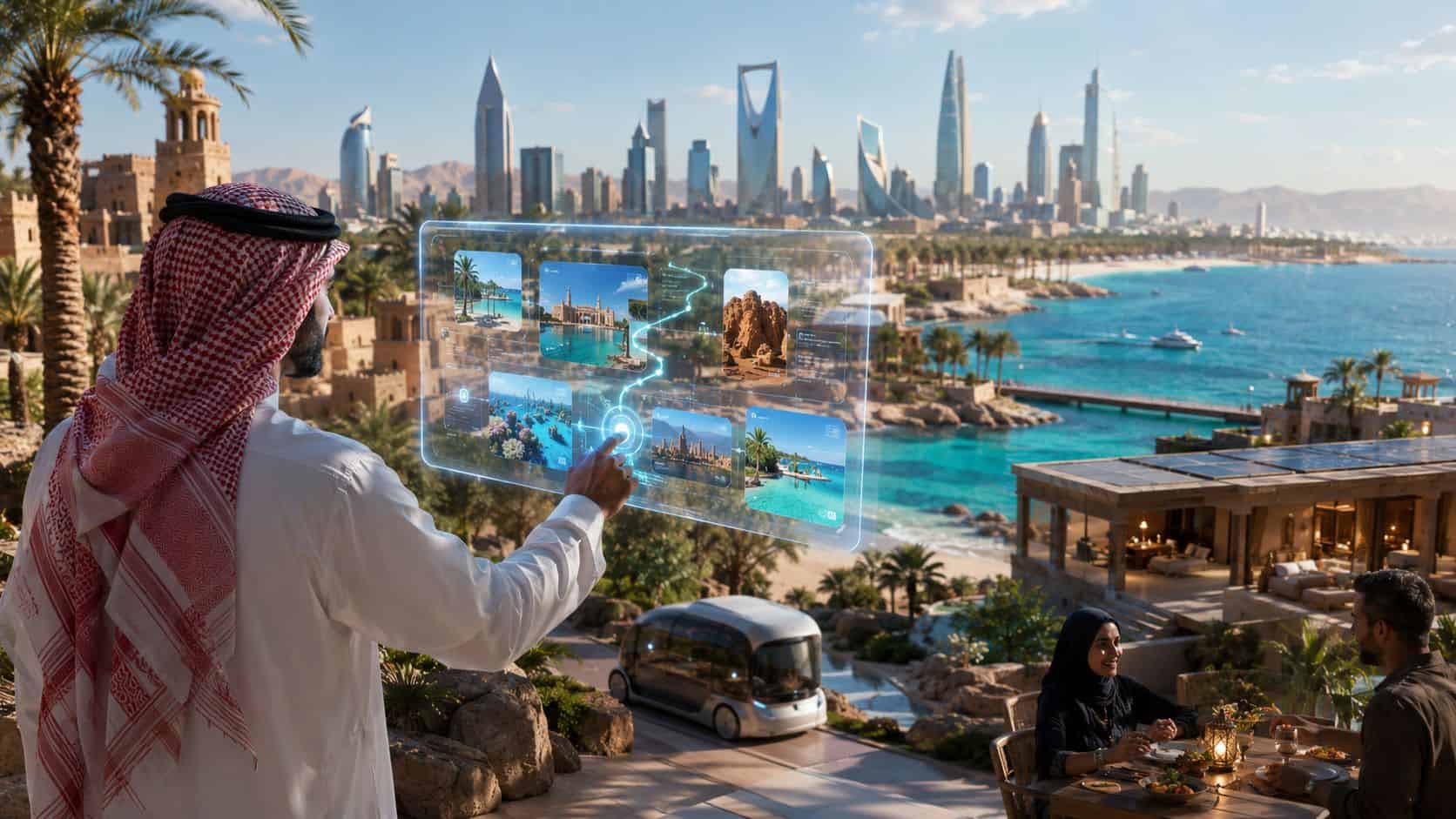
Saudi Arabia Embraces Artificial Intelligence to Create Smarter Holidays, Seamless Visitor Experiences and Next-Generation Tourism Across Vision 2030 Destinations—Everything Travellers Need to Understand
Saudi Arabia is rapidly positioning itself at the forefront of digital tourism by integrating artificial intelligence (AI) across every stage of the visitor journey. From personalised holiday planning and intelligent accommodation recommendations to predictive travel services and multilingual digital assistance, AI is becoming a defining pillar of the Kingdom’s tourism transformation. As the country advances its Vision 2030 strategy to diversify its economy beyond oil, the combination of advanced technology and ambitious tourism development is creating a more connected, efficient and visitor-centric travel ecosystem.
The emergence of Saudi AI tourism reflects a broader shift in how destinations compete for international visitors. Rather than relying solely on iconic attractions or large-scale infrastructure projects, Saudi Arabia is increasingly investing in intelligent digital services that simplify travel decisions, enhance customer satisfaction and improve operational efficiency across airlines, hotels, tourism authorities and destination management organisations. Industry analysts believe this evolution could strengthen Saudi Arabia’s position as one of the world’s fastest-growing tourism markets while supporting sustainable long-term growth.
Artificial Intelligence Is Reshaping Every Stage of the Traveller Journey
Modern travellers generate enormous amounts of digital information before making a booking. Search history, previous trips, accommodation preferences, travel budgets, family requirements and seasonal trends all influence purchasing decisions.
Artificial intelligence is allowing travel companies to interpret this information in real time, helping travellers discover destinations, flights and hotels that better match their interests without navigating thousands of options manually.
Instead of displaying endless search results, intelligent recommendation engines increasingly present customised itineraries based on behavioural patterns, traveller profiles and previous experiences.
For visitors exploring Saudi Arabia, this could mean discovering lesser-known mountain destinations, coastal resorts, cultural festivals or heritage attractions that align closely with their personal interests.
The technology also supports:AI ApplicationBenefit for TravellersIndustry BenefitPersonalised recommendationsFaster destination discoveryHigher booking conversionIntelligent itinerary planningReduced planning timeBetter customer engagementAI-powered customer support24/7 multilingual assistanceLower service costsDynamic pricing analysisCompetitive travel offersImproved revenue managementPredictive travel insightsBetter schedulingDemand forecastingAutomated translationsEasier communicationWider international reach
Vision 2030 Continues to Drive Digital Tourism Innovation
Tourism has become one of the central pillars of Saudi Arabia’s economic diversification strategy.
Under Vision 2030, the Kingdom aims to expand tourism’s contribution to GDP while attracting millions of domestic and international visitors through investments in hospitality, aviation, entertainment, culture and technology.
Major projects including The Red Sea, Qiddiya, Diriyah, NEOM, Amaala and AlUla are increasingly integrating digital technologies into their visitor experiences.
AI is expected to become a common feature throughout these developments, supporting:
These capabilities improve both visitor satisfaction and operational efficiency.
Saudi Tourism Growth Provides the Foundation for AI Expansion
Saudi Arabia’s tourism sector has recorded remarkable growth over the past several years.
According to official government figures, the Kingdom welcomed more than 100 million domestic and international tourists in 2023, seven years ahead of its original Vision 2030 milestone. Authorities have subsequently increased long-term tourism ambitions to 150 million visitors annually by 2030.
Tourism investment has also accelerated across multiple sectors.Tourism IndicatorLatest Official Target / AchievementVision 2030 annual visitor target150 million visitors by 2030Tourism GDP contribution targetApproximately 10%Mega tourism projectsMultiple giga-projects under developmentInternational connectivityRapid airline network expansionHotel developmentHundreds of thousands of additional rooms planned
Growing visitor volumes create increasingly complex operational challenges, making AI-driven solutions more valuable across the tourism ecosystem.
Beyond Chatbots: AI Is Becoming the Industry’s Invisible Infrastructure
Although travellers often associate artificial intelligence with virtual assistants or customer service chatbots, much of the technology operates behind the scenes.
Hotels increasingly rely on AI for occupancy forecasting and staffing optimisation.
Airlines use predictive analytics for route planning, maintenance scheduling and passenger demand forecasting.
Online travel agencies employ recommendation engines to personalise search results.
Destination management organisations analyse visitor movement patterns to improve crowd management and infrastructure planning.
This invisible digital infrastructure enables tourism businesses to respond more efficiently to changing market conditions while delivering smoother customer experiences.
Data Governance Becomes Increasingly Important
As tourism platforms collect larger volumes of traveller information, responsible data governance is becoming a critical industry priority.
Protecting this information requires robust cybersecurity, transparent governance policies and compliance with national privacy regulations.
Industry experts increasingly argue that traveller trust will become just as important as technological innovation.
Without confidence in how personal information is collected, stored and used, even the most advanced AI services may struggle to gain widespread acceptance.
Smarter Destination Discovery Supports Regional Tourism
Artificial intelligence is also helping distribute visitor demand beyond traditional gateway cities.
Rather than concentrating tourism exclusively in Riyadh, Jeddah or Makkah, recommendation engines can introduce visitors to emerging destinations that match individual interests.
These may include mountain escapes, coastal retreats, desert adventures, heritage villages or eco-tourism experiences.
Such diversification offers multiple benefits.
Travellers enjoy more authentic experiences.
Local communities receive greater tourism income.
Governments reduce pressure on heavily visited destinations.
Smaller businesses gain increased visibility within digital travel platforms.
This balanced approach aligns closely with sustainable tourism principles promoted globally.
Aviation and Hospitality Are Becoming Increasingly Connected Through AI
Saudi Arabia’s rapidly expanding aviation sector is expected to benefit significantly from AI integration.
Digital technologies can support:Aviation FunctionAI ContributionFlight demand forecastingBetter schedulingPassenger flow analysisReduced congestionAirport operationsImproved efficiencyCustomer communicationFaster updatesBaggage managementOperational optimisation
Hotels are implementing similar innovations.
Smart room management, energy optimisation, predictive maintenance and personalised guest services are becoming increasingly common throughout the global hospitality industry.
Saudi Arabia’s extensive hotel development pipeline creates opportunities to integrate these technologies from the outset rather than retrofitting existing infrastructure.
Visitors planning holidays to Saudi Arabia are likely to encounter more intelligent digital services over the coming years.
Potential improvements include:Visitor ExperienceExpected EnhancementHoliday planningPersonalised itinerariesHotel selectionBetter recommendation accuracyCultural experiencesTailored activity suggestionsLanguage supportAI-powered translationCustomer serviceFaster digital assistanceTravel updatesReal-time notifications
As digital services mature, travellers may spend less time planning logistics and more time enjoying destinations.
Saudi Arabia Competes Within a Global Digital Tourism Race
Saudi Arabia is not alone in embracing AI-powered tourism.
Destinations across Asia, Europe and the Gulf are investing heavily in intelligent visitor platforms, digital identity systems, smart airports and predictive tourism analytics.
However, Saudi Arabia possesses several competitive advantages:Competitive StrengthStrategic ValueVision 2030 investmentLarge-scale transformationNew tourism infrastructureModern digital integrationRapid aviation expansionImproved international accessMega destinationsTechnology-first developmentGovernment supportCoordinated implementation
The combination of infrastructure investment and digital innovation may enable the Kingdom to leapfrog more established tourism markets in selected areas.
Building a Future Where Technology Enhances Human Travel Experiences
Technology alone will not define the success of Saudi AI tourism. Authentic hospitality, cultural heritage, natural attractions and memorable experiences will remain the foundation of visitor satisfaction.
Artificial intelligence should therefore be viewed as an enabler rather than a replacement for human interaction. Its greatest value lies in reducing travel friction, improving decision-making and allowing tourism professionals to focus on delivering exceptional experiences.
As Saudi Arabia continues expanding its tourism economy, AI is expected to become deeply integrated into planning, booking, transportation, accommodation and destination management. Combined with Vision 2030’s ambitious investment agenda, this digital transformation is positioning the Kingdom to compete more effectively in an increasingly technology-driven global travel marketplace.
For international travellers, the result is likely to be a more personalised, efficient and seamless journey. For the wider travel industry, Saudi AI tourism represents an important example of how digital innovation and destination development can evolve together to create smarter, more sustainable tourism growth.
Practical Snapshot for Travel Professionals
Tags: AI travel technology, digital tourism, Hospitality Technology, Saudi AI tourism, Saudi Arabia Tourism
Related Stories
 Travel
People from more than 30 countries missing after flash floods in Nepal and China
1 hour ago
 Travel
Catastrophic Nepal, Tibet flood death toll soars as 25 Canadians still missing
2 hours ago
 Travel
Death toll rises to 273, with more than 1,300 missing in Nepal, Tibet after catastrophic floods
4 hours ago
 Travel
Anthony Albanese says 34 Australians missing in deadly Nepal flash floods
7 hours ago
 Travel
Third drone and suspected military explosives found near Leipzig airport
1 day ago
 Travel
Sabre confirmed as the official ATM Travel Tech Strategic Partner for ATM 2026
2 days ago
 Travel
‘Parisians out!’ Why the French have had enough of French tourists
2 days ago
 Travel
The sun hat is everywhere in Athens as crowds grow larger at ancient sites
4 days ago