
Questions for Hindutva Politics: The RSS, Power and Historical Responsibility
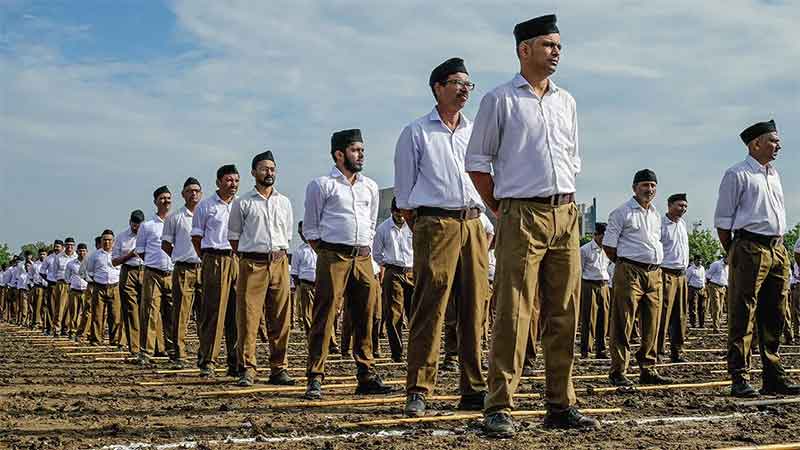
For more than a century, the Rashtriya Swayamsevak Sangh (RSS), the principal ideological force behind Hindutva politics, has maintained that it is merely a cultural organisation devoted to character-building and has no involvement in politics. Yet its history raises questions that continue to demand answers.
The RSS, founded in 1925, did not participate in India’s freedom movement. Instead, it consistently stayed away from the anti-colonial struggle. At a recent book release function in Nagpur, RSS chief Mohan Bhagwat remarked that India’s independence was not won by any single individual. However, an equally important historical fact is that the RSS itself played no role in the struggle for independence.
After Congress ministries resigned following the launch of the Quit India Movement in August 1942, the Hindu Mahasabha, despite advocating Akhand Bharat, entered coalition governments with the Muslim League in provinces such as Sindh and Bengal. This was despite the Muslim League’s Lahore Resolution of March 1940 calling for the partition of India on religious grounds.
Coalition politics normally involves agreement on common principles. When Atal Bihari Vajpayee headed the NDA government, pressure from coalition partners compelled the BJP to temporarily set aside contentious issues such as the Ram Temple. Yet no comparable condition appears to have been placed on the Muslim League regarding its demand for partition when the Hindu Mahasabha cooperated with it.
Shyama Prasad Mookerjee, later celebrated by the Sangh Parivar, even wrote to the British Viceroy suggesting measures to suppress the Quit India Movement. Such facts complicate efforts to portray leaders like Vinayak Damodar Savarkar as central figures of India’s freedom struggle.
In 1951, under the guidance of M.S. Golwalkar, the Bharatiya Jana Sangh was established with Shyama Prasad Mookerjee as its first president. The need for a political arm became especially apparent after the government banned the RSS in the aftermath of Mahatma Gandhi’s assassination. From the Jana Sangh to the Bharatiya Janata Party after 1980, the political trajectory has remained continuous. Yet the RSS has continued to insist that it is merely a cultural organisation.
The BJP’s rise to power has been inseparable from the organisational strength of the RSS. Generations of RSS pracharaks, including Narendra Modi, Ram Madhav, Vinay Sahasrabuddhe and Sanjay Joshi, were deputed to strengthen the party. During elections, RSS cadres actively work at every level of campaigning. To describe such involvement as unrelated to politics strains credibility.
Over the past four decades, issues relating to Ayodhya, cow slaughter, madrasas, hijab, Kashi, Mathura and several disputed religious sites have repeatedly been used to mobilise communal sentiments. Such polarisation has been central to the BJP’s political expansion.
Former BJP president J.P. Nadda once declared that the party no longer needed the RSS. Yet electoral setbacks have revived public discussion about the relationship between the two organisations. Mohan Bhagwat’s recent references to Manipur and questions of arrogance suggest underlying tensions that cannot easily be concealed.
The Northeast has witnessed decades of RSS activity. I have personally met many RSS and Vivekananda Kendra workers in the region. In my view, communal polarisation has aggravated social divisions there. The process initiated under Balasaheb Deoras to extend the Sangh’s influence among tribal communities through organisations such as Vanvasi Seva Ashram represented a major shift in strategy.
Adivasis have historically been nature worshippers and cannot simply be subsumed into the framework of any organised religion. Efforts to redefine their identities have come from different religious traditions over time. Such interventions, whatever their source, have often created new tensions.
Prime Minister Narendra Modi himself once described the RSS as the world’s largest NGO. Whatever the intention behind that remark, it acknowledged the organisation’s vast reach and influence.
The relationship between Narendra Modi and the RSS leadership has also been marked by tensions. Journalist Digant Ojha’s booklet Swayamsevak Number One documents conflicts involving Sanjay Joshi after Modi became Chief Minister of Gujarat. These episodes raise questions about the balance of power between charismatic leaders and the organisation that nurtured them.
Following the 2002 Gujarat riots, former Prime Minister Atal Bihari Vajpayee publicly reminded Modi of the importance of Rajdharma. That reminder remains relevant whenever questions of governance, responsibility and communal harmony arise.
For years, electoral victories were projected as personal triumphs of Narendra Modi. Giant hoardings, the slogan “Modi ki Guarantee” and the centralisation of political messaging all reflected this tendency. It is therefore striking that concerns regarding arrogance and humility have become more prominent only after electoral setbacks.
The most important issue, however, concerns the long-term consequences of communal politics. Over the past century, religious polarisation has deepened insecurity among India’s minorities. It was communal division that eventually culminated in Partition. To continue pursuing similar politics may yield temporary political gains, but it risks sowing the seeds of future divisions.
I write this not out of hostility, but out of a lifelong commitment to opposing communalism in all its forms. My effort has been to understand honestly the causes that led to Partition and to warn against repeating the mistakes of history.
Get the latest CounterCurrents updates delivered straight to your inbox.
Dr. Suresh Khairnar is the ex-president of Rashtra Seva Dal
Related Stories
 India
India
Gicquel/Delrue: Golden Trailblazers
3 hours ago
 India
India
Number of schools shrinks by over 84,000 in India in eight years
4 hours ago
 India
India
Nelco and Elveo join forces to deliver next
4 hours ago
 India
India
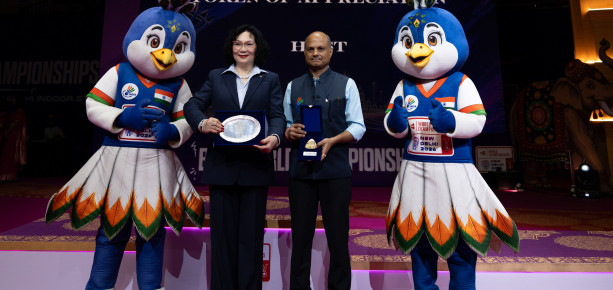
BWF President Khunying Patama Leeswadtrakul Praises Amazing India
7 hours ago
 India
India
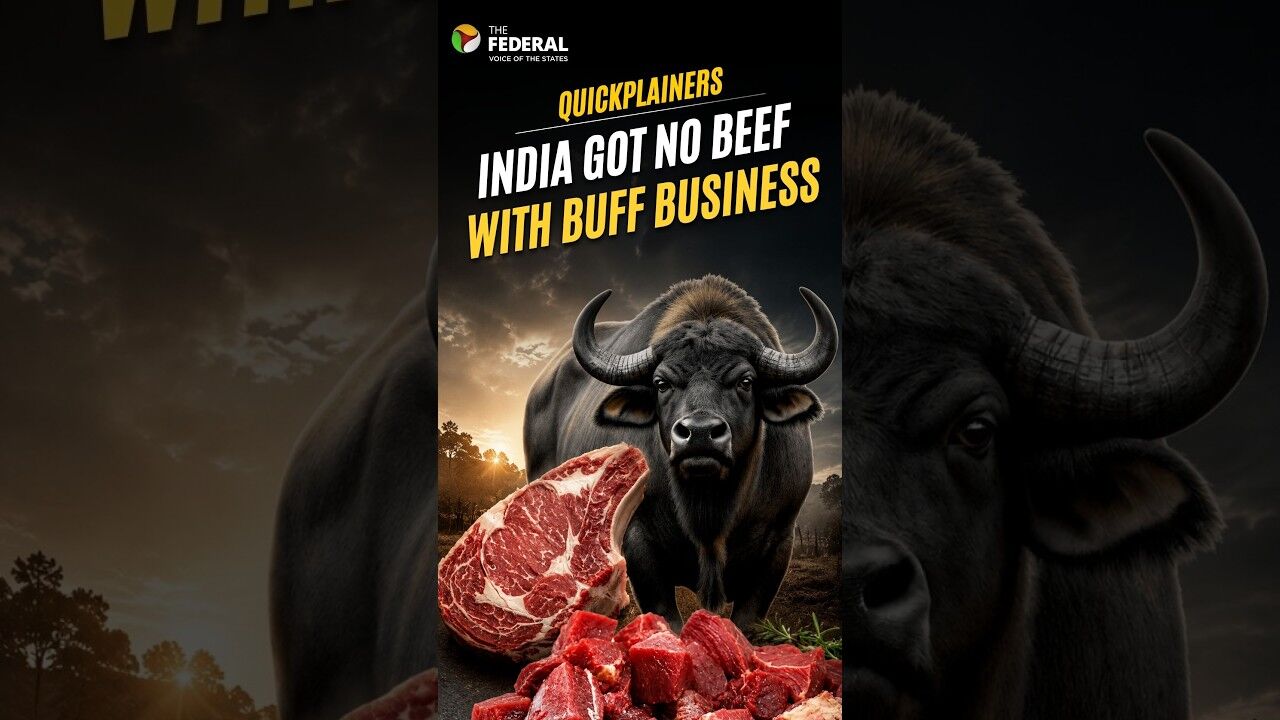
India’s $5 billion Beef Industry Booms Amidst BJP’s Cow Politics
9 hours ago
 India
India
Indian Men’s Team’s slim chance of entering FIH Hockey World Cup 2026 semis depends on complex mathematics
10 hours ago
 India
India
Gicquel/Delrue Break New Ground For France
11 hours ago
 India
India
NRI slammed for saying returning to India 'massive headache': 'You have glass ego' | Hindustan Times
13 hours ago