
Putting communities at the centre of technology
Putting communities at the centre of technology
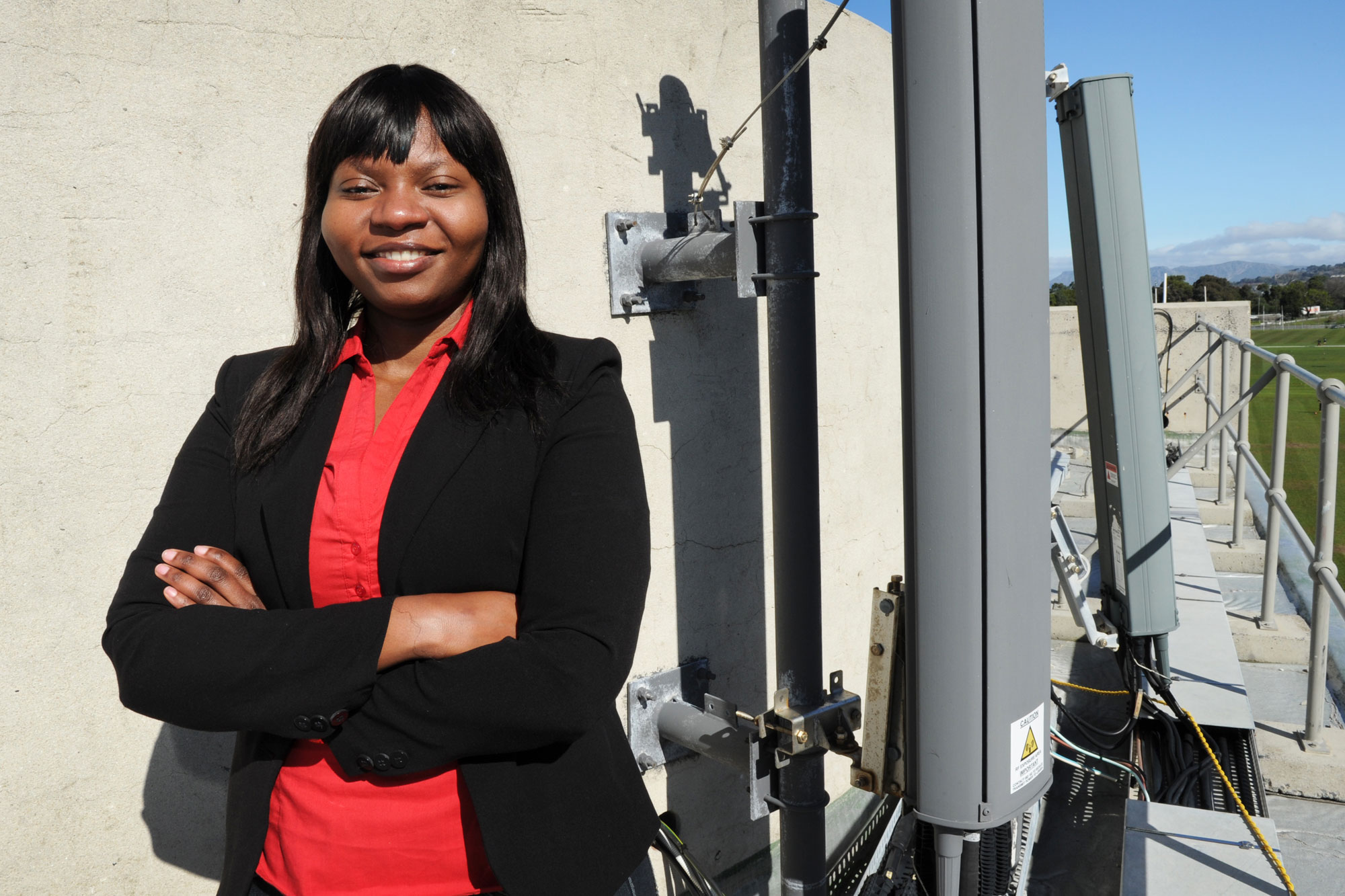
The University of Cape Town’s (UCT) Associate Professor Joyce Mwangama is using artificial intelligence (AI) to put 5G in the hands of people who have never touched a router.
A rural clinic in Limpopo needs a reliable internet connection to receive a surgical consultation from a specialist 400 km away. A small-scale farmer needs her soil sensors talking to each other and to a dashboard she can read on her phone. Neither the clinic nor the farm has an IT department. Neither can afford to hire one.
This is the problem Associate Professor Mwangama is trying to solve – and she is not doing it by training a new large language model.
The barrier is not the technology
South Africa has 5G. The spectrum exists, the hardware exists, and the standards bodies have been working on sixth-generation networks for years. What does not exist, in most of the country, is the technical capacity to deploy and manage private 5G networks – the kind operated independently of major network providers, sometimes called non-public networks or private cellular networks.
The Independent Communications Authority of South Africa (ICASA) has identified this directly: the complexity of operating 5G infrastructure is the primary barrier to adoption beyond major urban centres. You can have the fastest network in the world sitting in a warehouse but it is useless if no one in a 200 km radius knows how to switch it on.
“Closing the access gap means addressing the complexity gap first. I have always believed that impact beyond academia should be the goal of research, not an afterthought.”
Mwangama’s project, AI4Open6GNet, addresses this at the point of friction. Instead of requiring an engineering team to configure a network, the system accepts a plain-language description of what the network needs to do, for example: “support 10 soil sensors and two video streams”. It then translates that into a fully configured, deployed and self-managing private 5G network. No specialist is required.
“The two are deeply tied,” said Mwangama. “Network complexity is itself a barrier to access. Many communities and businesses are in a position to deploy their own networks, but the specialist knowledge required puts that out of reach. Closing the access gap means addressing the complexity gap first. I have always believed that impact beyond academia should be the goal of research, not an afterthought – so to have that recognised alongside scientific merit in the same award feels like a validation of that idea.”
Built on 20 years of collaboration
The project is a three-way partnership between UCT, the University of Limpopo and Technische Universität Berlin (TU Berlin). It is not a new relationship. Mwangama’s research group has worked with TU Berlin for over two decades, a collaboration that began with her late PhD supervisor and continues now with Professor Thomas Magedanz, who holds the chair of the TU Berlin Focus Research Unit.
The open source 5G campus network platform the team is building on, Open6GNet.org, was co-founded by UCT and TU Berlin. AI4Open6GNet adds the intelligence layer that makes that infrastructure genuinely usable by non-experts.
The project was announced in May 2026 at the 30th anniversary celebration of the South Africa–Germany bilateral science and technology cooperation programme. It is jointly funded by the National Research Foundation (NRF) and Germany’s Federal Ministry of Research, Technology and Space (BMFTR) under the ZADE-AI call.
The South African pilot sites are grounded in Limpopo, where the University of Limpopo – a co-principal investigator on this project – provides direct access to farming communities.
In years two and three of the project, the team will deploy a private 5G Internet of Things (IoT) network for precision agriculture at a real farm site – crop monitoring, soil sensing and yield prediction, operated by the community itself. There will be no engineers on site once it is running.
The healthcare application targets rural clinics with no viable connectivity and no on-site IT staff. The aim is real-time communication for remote diagnostics and surgical mentoring in settings where reliable connectivity has never existed.
The third application is education. UCT’s own postgraduate course on 5G and open programmable networks, EEE5138Z, serves as a live test case: students deploy and operate real 5G infrastructure as part of their training. The same model is intended for schools and smaller universities that have never been able to afford the complexity.
What the NRF chose to fund – and why it matters
The NRF brief for this call was specific. Researchers were not asked to build new AI models. The question put to them was what AI could actually do for society – for agriculture, healthcare, education – and the funding followed the answers.
The NRF also made a deliberate decision about who would receive that funding. Awards under this call were directed toward historically disadvantaged institutions. Scientific merit and redress were applied through the same competitive process, not as separate considerations.
By 2028, AI4Open6GNet aims to publish an open-source AI toolkit through Open6GNet.org, alongside deployment blueprints usable by any community or university on the continent. At least three joint peer-reviewed publications are planned, as well as policy briefs to the national Department of Science and Innovation (DSI) and ICASA on enabling private and community-owned 5G networks.
Three PhD students – one each at UCT, TU Berlin and the University of Limpopo – and six or more master’s students will work toward those deliverables. The aim is not a product. It is infrastructure that belongs to the people who need it most.
Associate Professor Joyce Mwangama is based at the Telkom Centre of Excellence in the Department of Electrical Engineering at UCT. AI4Open6GNet builds on prior work from the EU Horizon Europe DIGITAfrica project, with deployments already live at universities in South Africa, Senegal, Kenya, Cameroon and Tunisia. For more information, visit open6gnet.org and digitafrica.eu.
This work is licensed under a Creative Commons Attribution-NoDerivatives 4.0 International License.
Please view the republishing articles page for more information.
Related Stories
 Technology
When Tech Companies Die, What Happens To The Products They Leave Behind?
6 hours ago
 Technology
Two Finns supplying Russia with missile tech worth tens of millions
6 hours ago
 Technology
Drones with pepper spray, four
7 hours ago
 Technology
Micron Technology stock pre-market at EUR 800.50: memory storage - ad
8 hours ago
 Technology
TAIEX Ends at 4
8 hours ago
 Technology
ZAWYA: Technology, start-ups can double India
9 hours ago
 Technology
Czech government to consider CZK 1 billion fund for startups
9 hours ago
 Technology
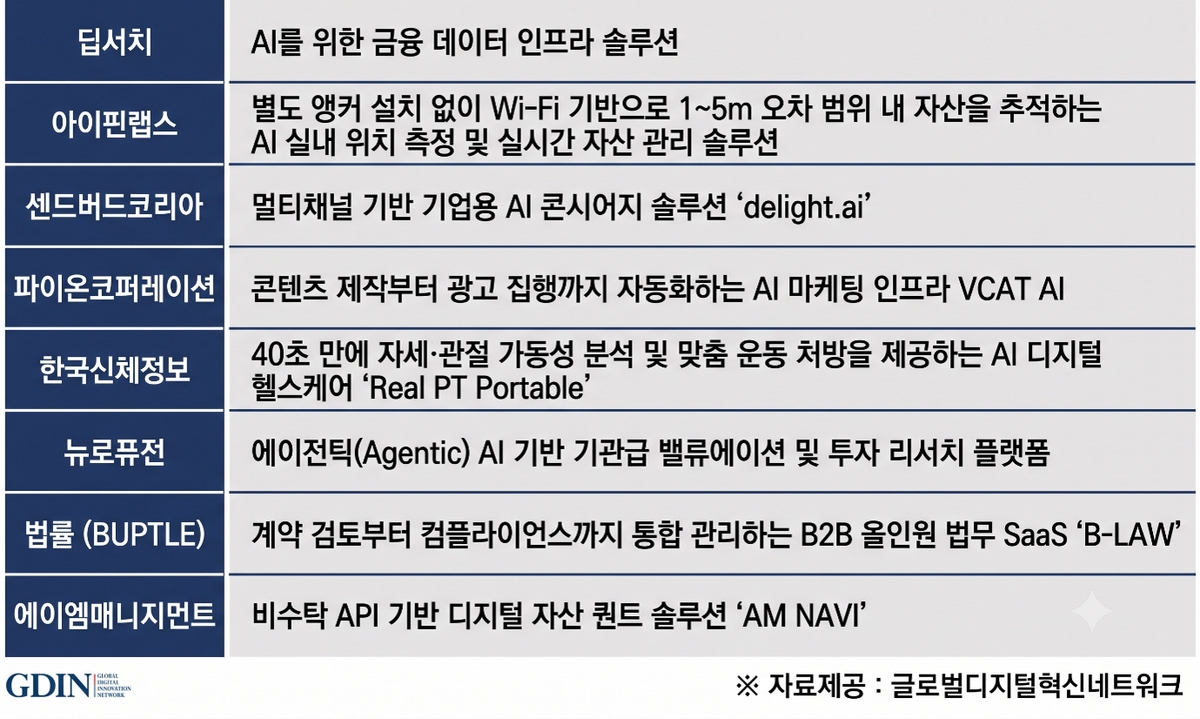
GDIN Supports Eight Startups at CEATEC 2026 in Japan, Opens Door to Local Investor Collaboration
9 hours ago