
PSV Tech closes €55M Fund II to back Nordic startups before product
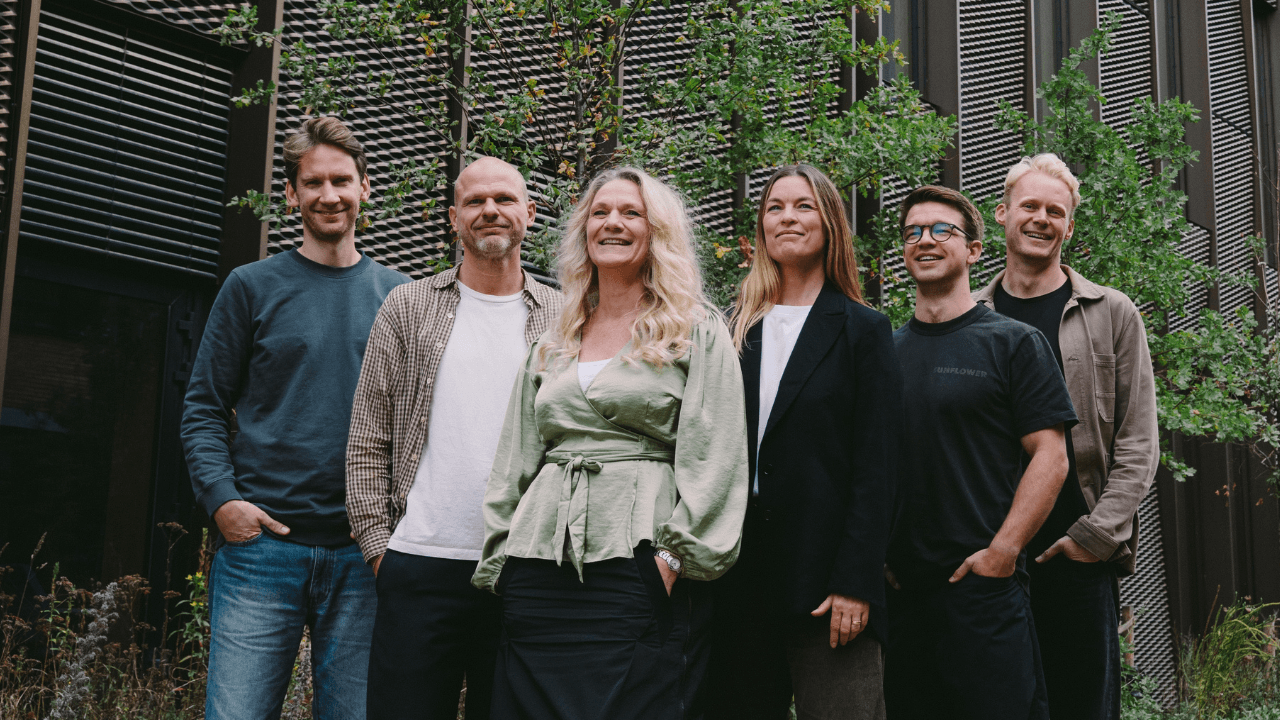
Today, PSV Tech announced the final close of Fund II at €55 million. Twenty-five years ago, an investment organisation took shape in the halls of the Technical University of Denmark (DTU) with a simple idea: more of the technology and talent coming out of Denmark needed someone willing to back it early.
Close to 500 early-stage investments later, that idea remains at the heart of what is today venture house PSV. PSV Tech was launched in 2020 as part of PSV Venture House, with a mission to back Nordic founders before product-market fit.
The fund is led by General Partners Helle Uth, Richard Breiter, Alexander Viterbo-Horten, and Christel Piron.
I spoke to Partner Helle Uth to find out more.
Investing before product-market fit
Fund II builds on PSV Tech’s experience backing startups before product-market fit, while expanding its focus across the Nordics in AI, software, and digital infrastructure. At such an early stage, Uth says there is often little market evidence on which to judge a company.
“You don’t necessarily have the product or traction to evaluate, so the main parameter we can assess is the team. A lot of what we’ve been doing over the years is trying to perfect our pattern recognition around what a great founding team looks like.”
Once PSV Tech has backed a company, the next challenge is getting it ready for growth capital.
"A big part of our job is getting them ready to raise growth capital. We try to understand what the company needs to look like for a larger or international fund to invest: what value inflection points do they need to reach, and what does the next investor need to see?”
AI is also changing what an early-stage company looks like, allowing founders to achieve more without rapidly expanding their headcount.
“One of the clearest things we’re seeing is that companies can do much more with less. They don’t need to build really big teams really quickly.”
But Uth stresses that PSV Tech isn't simply seeing startups built around existing AI models.
“We’re also seeing companies coming out of research environments and building around deeper technology and IP.”
At the same time, she argues that access to increasingly powerful AI models means technology alone may not provide a lasting competitive advantage.
“It’s not necessarily the company with the best AI product that wins. It might be the company or the team that can build the best go-to-market model, reach customers most effectively, and become part of their everyday workflow."
So it comes back to who can actually distribute the product, get the customer’s attention, and become embedded in their everyday workflow.
For PSV Tech, one of the defining characteristics of a strong founding team is therefore adaptability.
“We always see a really nice plan in a pitch deck. What we actually want to understand is what the team will do when it doesn’t go according to plan, because it never does.
Something that is difficult today might become really easy tomorrow because a new AI model appears. The technology underneath a company can change incredibly quickly.”
PSV Tech looks for founding teams with complementary skills and tests whether they can adapt their product or customer focus when their original assumptions no longer hold. PSV’s roots at DTU also give the fund access to engineering and technical talent, particularly as it sees more startups emerging from research environments and building around proprietary technology and IP.
“The technologies change, the companies change and the market changes. But there is still a need for investors willing to take the first risk alongside founders. Fund II gives us the capital to keep doing exactly that – now across the Nordics.”
Since its first close, PSV Tech has made 19 investments from Fund II. The fund has been especially active in 2026, with 12 as-yet-unannounced investments across Denmark, Sweden, and Norway.
Check out our interviews with PSV Tech portfolio companies Noahs and Interhuman AI.
For Uth, Stockholm demonstrates what can happen when successful founders, experienced operators, universities, and capital begin reinforcing one another. The opportunity now is to make that flywheel Nordic. She says Denmark is beginning to exhibit similar characteristics.
“Senior people are coming back and starting again. Successful founders are funding new companies, and C-level executives from some of the big successes are leaving and starting companies of their own. We’re now beginning to see those same patterns in Denmark.”
But maintaining that flywheel also means continuing to fund companies at the beginning of their journey.
“Europe is rightly focused on the lack of later-stage capital. We need it. But we should not forget to keep feeding the beginning of that flywheel. There are no later-stage companies to invest in if we don't back enough of them early.”
PSV Tech’s first fund made 47 investments, with six exits including Helloflow and Heyhack. Portfolio companies Teton and Spektr, which PSV Tech backed early, have since raised $20 million Series A rounds.
“We are not trying to be the biggest fund. We want to be the best at being early. Across the hundreds of pre-seed investments our team have made, we have seen just how messy the journey from an idea to product/market fit can be.
That experience matters when you invest at a point where a lot is still unproven. Our job is to understand the people, the technology and the problem well enough to build conviction before the numbers can do it for us.
Long-term capital for a long-term ambition."
Chr. Augustinus Fabrikker and Nordea-fonden join Fund II as new investors alongside existing LPs including ATP, EIFO, IDA, and founders Christian Lund and Henrik Printzlau of Templafy, King co-founder Sebastian Knutsson, and Siteimprove founders Morten and Niels Ebbesen.
The new LPs bring additional long-term Danish capital into Fund II, matching an investment strategy built around companies that can take years to develop.
Claus Gregersen, CEO of Chr. Augustinus Fabrikker, comments:
“The commitment to PSV Tech forms part of our strategy to strengthen the local ecosystem by investing in fund managers that play a key role in the development of emerging Danish growth companies. PSV Tech is precisely such a manager, and the investment supports our long-term commitment to Danish innovation and business development.”
Lars Ingemann Nielsen, CFO of Nordea-Fonden, also highlights the value of long-term investment in early-stage companies:
“Nordea-Fonden has already invested in PSV Hafnium, so it is familiar with the venture house PSV. PSV Tech builds on a long-established, strong position in the Nordic startup ecosystem, and we see potential for our investment to deliver an attractive return, while also helping to support tomorrow's growth companies and create tangible value for society."
For DTU, the final close marks another chapter in an investment story that began on its campus 25 years ago. Anders Bjarklev,
“Since H.C. Ørsted founded DTU in 1829, the university has understood deeply that knowledge must be turned into real value for society. Innovation is fundamental to DTU. But innovation also requires risk capital — and courage.
That is why we took the lead in creating an investment company on campus that could turn research into companies, jobs and technological progress for Denmark and the world.”
Uth argues that Europe's debate about the shortage of scaleup capital risks overlooking where those future scaleups come from.
“We hear a lot in Europe about how we don’t have enough scaleup capital. But if we don’t have early-stage capital, we won’t have any scaleups for that scaleup capital to invest in.”
Related Stories
 Technology
IFC setting up fund for entrepreneurs, startups
11 minutes ago
 Technology
Budget 2027: Penang hopes for good news on penang technology financial centre, 7 projects under RP2
12 minutes ago
 Technology
REG - Accesso Technology
12 minutes ago
 Technology
Chandigarh University Signs MoU with 247VC to Create Investment Opportunities for Quantum and Deep
2 hours ago
 Technology
DEG Presents Annual EnTech Awards Honoring Entertainment Technology Innovators
2 hours ago
 Technology
Naval drone hits oil tanker off Russian resort city Sochi, triggering massive blaze
3 hours ago
 Technology
Chandigarh University Signs MoU with 247VC to Create Investment Opportunities for Quantum and Deep
3 hours ago
 Technology
Chandigarh University Signs MoU with 247VC to Create Investment Opportunities for Quantum and Deep
4 hours ago