
President Oaks welcomes world religious leaders to G20 Interfaith Forum
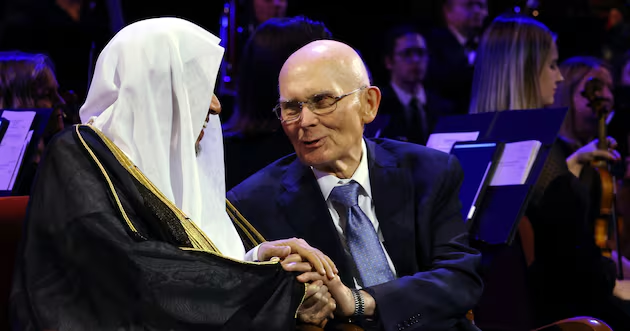
President Dallin H. Oaks welcomed religious and civic leaders, scholars and others to the Tabernacle on Temple Square on Thursday, Oct. 15, at the 2026 G20 Interfaith Forum.
The President of The Church of Jesus Christ of Latter-day Saints thanked the forum’s attendees for their work to bring people from different backgrounds and beliefs together to form stronger communities.
“People of goodwill, compassion and a desire to understand and help one another — without demanding a compromise of distinctive commitments — are at the core of peacemaking,” President Oaks said. “I commend you for your efforts to be peacemakers in today’s world.”
The forum’s theme this year is “Resilient Hope, Shared Future.” Speaking in the opening ceremony of the three-day forum, President Oaks said the gathering is the “most prominent constellation” of religious leaders to convene in Salt Lake City’s history.
“We are profoundly grateful for your demonstration that faith-inspired insights and initiatives can contribute to meaningful and scalable worldwide solutions,” he said.
President Oaks said the efforts of participants in the G20 Interfaith Forum demonstrate how individuals and groups can come together outside of political motivations and regardless of shared or dissimilar beliefs.
“Your record demonstrates that faith-informed perspectives have a meaningful place in global policymaking,” he said. “But the key to this whole effort is to bring us all together to address common problems.”
At the Church’s April 2026 general conference, President Oaks reiterated the Savior’s teaching to love everyone — including those who do not have the same beliefs as Latter-day Saints.
“Today we might say that we are commanded to love our adversaries,” he said. “All mortals are beloved children of God.”
President Oaks was preceded at the gathering by Sheikh Mohammad bin Abdulkarim Al-Issa, the secretary-general of the Muslim World League, and Archbishop Gabriele Caccia, the apostolic nuncio — or ambassador — of the Holy See to the United States. The Holy See serves as the central governing body of the Catholic Church and is led by Pope Leo XIV.
Al-Issa described his definitions of optimism and hope, saying that hope is not just a feeling but a “faith-based endeavor.”
“Optimism waits for things to improve on their own. Hope, however, is a decision of people with a living conscience,” he said.
Caccia shared a message from Pope Leo XIV.
“His Holiness prays that your fraternal gathering may be a shining example of the solidarity of the human family and promote the dedication of the human family to religious freedom and the common good,” he read.
Other speakers at the event included the interfaith forum’s president and vice president, W. Cole Durham and Katherine Marshall, respectively.
Imam Allahshukur Pashazadeh, chief imam of the Caucasus Region, came from Azerbaijan and expressed urgency for the work of the forum.
“Joint efforts of religious and secular groups matter more than ever,” he said.
Elder Metropolitan Emmanuel of Chalcedon from the Ecumenical Patriarchate in Türkiye also spoke.
Emmanuel said the root Greek word for “share” is also the root for the words “community” and “communion.” He explained that shared beliefs and spaces do not mean individuals are the same.
He pointed to the Tabernacle Choir seated in the choir seats behind him as an example. He said that sopranos and basses are part of the same choir singing the same song, but they don’t sing the same notes. They instead sing in harmony with one another.
Pujya Sadhvi Bhagawati Saraswati, the secretary-general of the Global Interfaith WASH Alliance of India; Rabbi Mark Dratch, executive vice president emeritus of the Rabbinical Council of America; and Dr. Francis Kuria Kagema, the secretary-general of Religions for Peace, also spoke in the event.
The opening ceremony was conducted by President Michael O. Leavitt, president of The Tabernacle Choir and Orchestra at Temple Square. President Leavitt drew on his combined experience as former governor of Utah and former secretary of the U.S. Department of Health and Human Services in sharing an anecdote regarding the intertwined nature of governments and religions.
“A government can use taxes to build a clinic,” he said. “But it often takes the voice of a trusted faith leader to walk through the door.”
Policy recommendations established at the interfaith forum are shared with G20 heads of state ahead of their leaders summit in Miami, Florida, on Dec. 14-15. The Salt Lake City event was sponsored by Georgetown University’s Berkley Center for Religion, Peace and World Affairs and Brigham Young University’s International Center for Law and Religion Studies.
Related Stories
 World
World
UNSC condemns Houthi attacks on Saudi Arabia | NHK WORLD
54 minutes ago
 World
World
Manolo Morettini targets 6DAYS® gold in the Club Team Award
2 hours ago
 World
World
The World of Motorcycling- News detail
2 hours ago
 World
World
Museum releases historical photos of island where Amelia Earhart may have crashed
2 hours ago
 World
World
World Food Day: UNICEF warns of climate threat to child nutrition
3 hours ago
 World
World
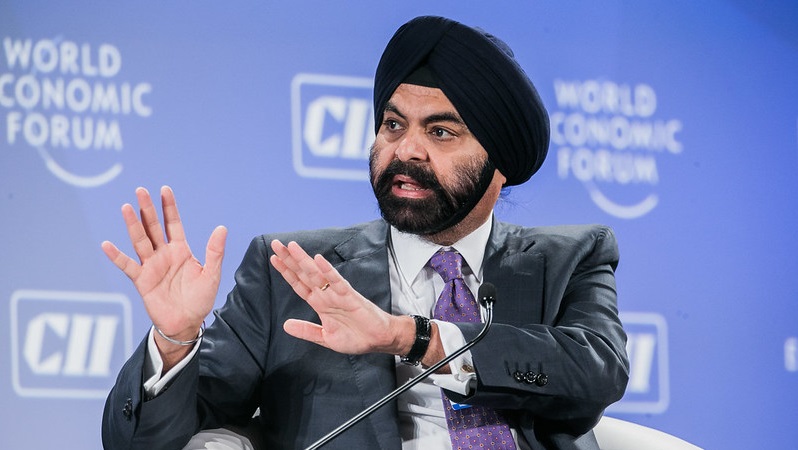
Under US pressure, World Bank says it will back gas “where appropriate”
3 hours ago
 World
World
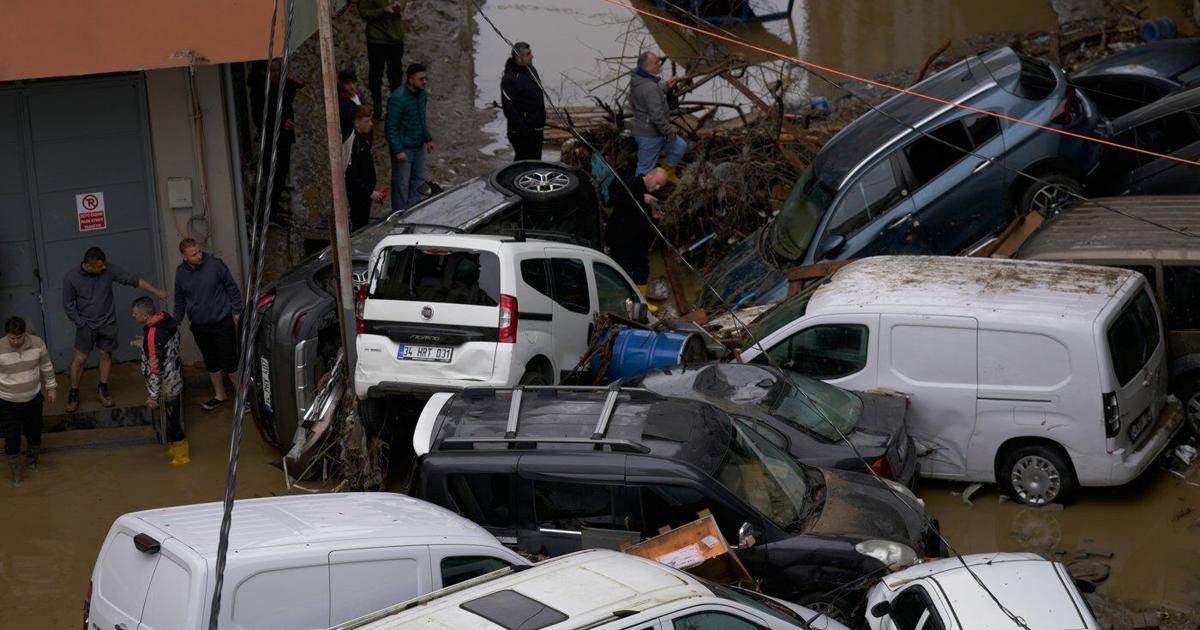
Istanbul's worst floods in 80 years leave 4 dead
3 hours ago
 World
World
Video. Latest news bulletin | October 16th, 2026
3 hours ago