
Preparing Israel for a revolution in AI leadership
Artificial intelligence is rapidly becoming a technology of the present, not merely an innovation of the future. It is quickly emerging as a central infrastructure on which the economy, science, industry, and national security of the coming decades will be built.
Those who control AI infrastructure, human capital, data, and computing and energy capacity will hold a significant share of the centers of power, both today and in the future.
For Israel, this is not simply an academic question. It is a strategic, and perhaps even existential, issue affecting both economic strength and technological superiority.
Israel begins from a strong position: It has leading universities, an advanced high-tech industry, a defense establishment with extensive experience in advanced technologies, including cyber, and a large community of researchers and engineers. However, these advantages alone do not guarantee success.
Many countries recognize the importance of artificial intelligence and are currently investing enormous sums, far beyond what Israel can afford, to build a competitive advantage in the field.
This was the starting point for the National Committee for Accelerating Israel’s Artificial Intelligence Capabilities, which Prime Minister Benjamin Netanyahu appointed in mid-2025 under my leadership. The committee was given a clear mission: to build comprehensive national capabilities that would ensure Israel’s leadership and superiority in this critical field.
The committee’s central recommendation, which was implemented at record speed, unusually fast for the government sector, was the establishment of a strong national body capable of leading the field and coordinating efforts among the government, academia, the defense establishment, and industry.
The idea was straightforward: artificial intelligence is not an issue that belongs to a single government ministry. It affects nearly every area, including defense, healthcare, education, transportation, energy, industry, and science.
Israel therefore needs a central coordinating body capable of seeing the full picture, setting priorities, and ensuring that investments complement rather than duplicate one another.
Since the report was published, a National AI Directorate has been established in the Prime Minister’s Office, headed by Brig. Gen. (Res.) Erez Askal, who assumed the role following an impressive and highly relevant career in the IDF’s Military Intelligence Directorate and C4I and Cyber Defense Directorate.
The Directorate’s strategic plan, published in 2026, follows the main directions outlined by the committee.
However, establishing the body itself is only the first step. The real test will be its ability to translate decisions into a multi-year program supported by an appropriate budget, as recommended by the committee and beyond, with clear timelines, defined responsibilities, and measurable indicators of success.
Computers can be purchased. Data centers can be built and supplied with electricity. Billions can be invested, as several countries seeking leadership in this field are doing.
But an entire generation of highly qualified researchers, scientists, and engineers cannot be created overnight.
For this reason, one of the committee’s most important recommendations focuses on investment in human capital.
That investment must begin at an early age, through educating children and teenagers, continue by increasing the number of students and researchers at every level, and include creating conditions that encourage Israeli experts who moved abroad to return, particularly those who left because of insufficient academic infrastructure in Israel.
Israel must also expand the circle of people who use artificial intelligence at every level.
Software engineers should not be the only professionals who understand and use AI. Doctors, teachers, industrial professionals, economists, lawyers, government employees, and managers will all need to know how to use the technology and, of course, understand its risks.
This is not a one or two-year effort. It is about building the human infrastructure for an entire generation.
One of the central conclusions of the Nagel Committee is that becoming a significant player in artificial intelligence requires adequate computing power.
The committee recommended establishing national computing infrastructure and a supercomputer with at least 60,000 next-generation GPUs, about half of which would be allocated to academia and support for relevant startups.
At first glance, this may appear to be simply a technological project. In reality, it is a fundamental question of national independence.
A country without independent access to significant computing power becomes dependent on those who possess it. When academic or defense research, sensitive technologies, or systems of strategic importance are involved, that dependence can have significant consequences.
National computing infrastructure is therefore not merely another infrastructure project. It is part of Israel’s ability to preserve technological independence and maintain leadership in AI.
Related Stories
 AI News
Report on Tumbler Ridge shooter’s ChatGPT conversations shocks B.C. attorney general
20 minutes ago
 AI News
A grand display for Xi reveals the limits of Trump’s summitry
23 minutes ago
 AI News
As tech leaders warn of risks, more college students major in AI
23 minutes ago
 AI News
OpenAI agent breached a government site. Could the same happen in Canada?
1 hour ago
 AI News
SU launches Institute for Artificial Intelligence amid influx of AI programs
1 hour ago
 AI News
Pope Leo warns of AI threat to humanity at start of three
2 hours ago
 AI News
OpenAI wants you to use AI
3 hours ago
 AI News
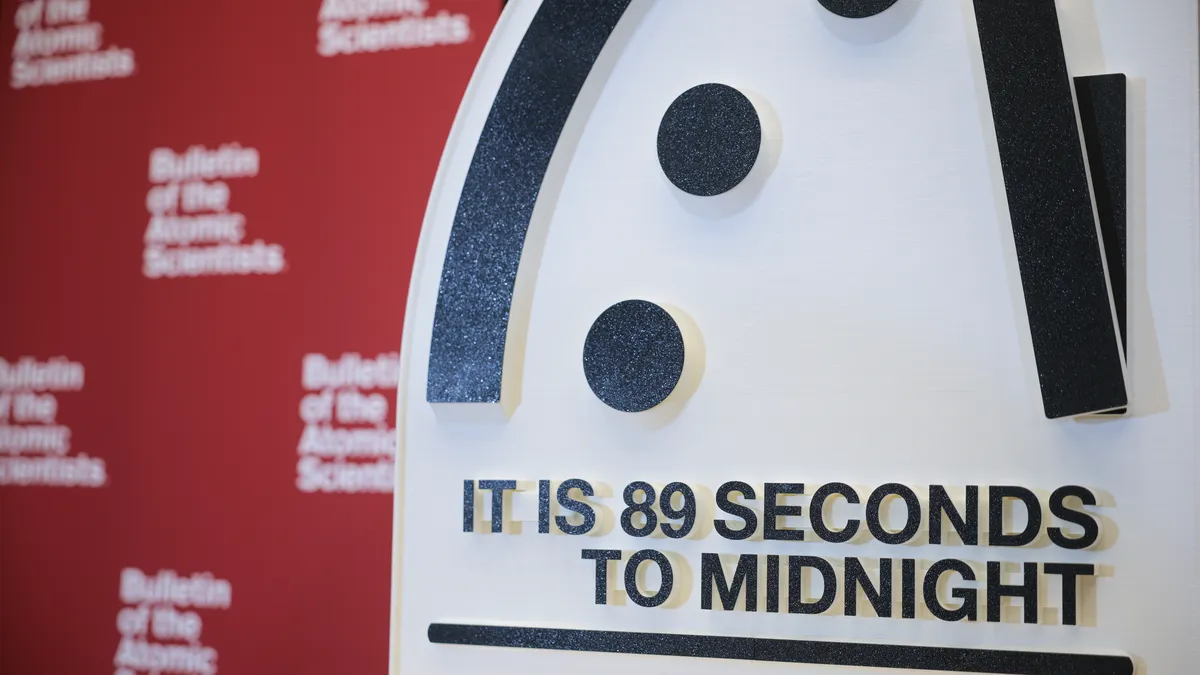
Doomsday Clock expert worried about 'an extremely pressing threat'
3 hours ago