
People are betting on whether Alberta will leave Canada, but why is it allowed?
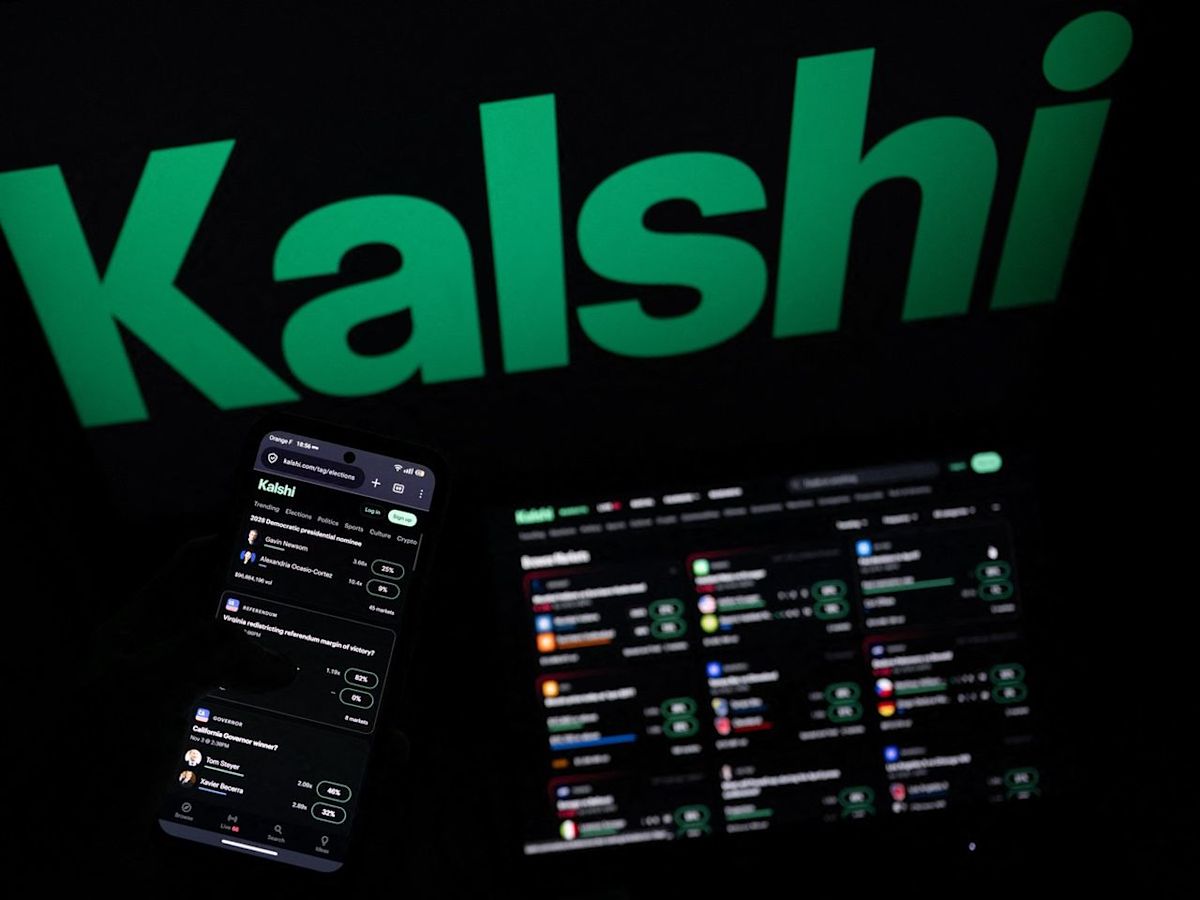
Hundreds of people are putting money on the outcome of the upcoming Alberta referendum on Oct. 19 through online betting markets, much to the protest of government officials.
Over the past year, the topic of Alberta separation has prompted trading on popular prediction-market platforms like Polymarket and Kalshi.
One Kalshi market, tied to the outcome of the referendum question on separation, is seeing near-daily activity. Like others on prediction-market sites, the page posts the odds as well as trading options. As of Saturday, it had the likelihood for option two on the referendum question passing, at a meagre eight per cent.
However, for Albertans, trading on the page isn't allowed.
"Betting on political events is prohibited in Alberta because of the risk of manipulation and insider information," Service Alberta Minister Dale Nally said in a statement to Postmedia. "Albertans should avoid any site that offers this type of bet at all costs."
Nally added that any platform that is offering wagers and doesn't want to follow the province's rules should geoblock Albertans from using their sites.
Gambling researcher and University of Lethbridge professor Robert Williams agrees that insider trading is a problem and tough to root out in prediction markets.
In general, he said, these kinds of markets are particularly hard to regulate. Even though Polymarket and Kalshi have geo-blocked people with Alberta IP addresses from making wagers, there are ways around the block, and also other offshore operators that people can access.
"That someone who really wants to bet on the Alberta election, I think they probably could find some site that allows them to do that," Williams said.
The markets also function slightly differently from typical gambling websites. Instead of traditional wagering, the platforms offer simple contracts that pay $1 if something happens or nothing if it doesn't.
The contracts themselves then can be traded, while their value shrinks or rises between 1 and 99 cents, depending on outcome odds.
But while they are similar to gambling, Canadian regulators have been working to add clarity on what constitutes betting and what constitutes financial speculation.
Williams defines gambling as "staking money or something of material value on an uncertain outcome, in the hopes of gaining additional material goods or money." However, the Canadian Securities Administrator and the Canadian Investment Regulatory Organization have set out boundaries that clarified trading around financial and economic items is permitted, but trading on events for sports and entertainment is more in the stream of gambling.
That was further solidified this year when Canadian fintech company Wealthsimple partnered with Kalshi to bring prediction markets north of the border. It came with the CSA's approval, so long as it is only used for events relating to the economy, financial markets, and the weather.
While Williams noted it feels uncomfortable to see people wagering on elections, he doesn't see how it's much different than polling in affecting outcomes.
"That's been happening for 50 years now — that we have polls in advance of elections. And there's not a whole lot of evidence that they change behaviour that much," Williams said.
He also notes that, based on survey research, people in Canada who use prediction markets are a pretty small number. While they tend to be the more hardcore gamblers, and sometimes problem gamblers, he said, there isn't much showing a steep rise in people who use the platforms.
"There is a bit of moral panic going on," he said, adding that it's typical whenever there is a novel way to gamble.
But when it comes to the markets as an information tool, Williams said there is some research that suggests prediction markets might even be better than polls at accuracy. The reasoning, he said, is that people tend to be a bit more analytical when putting large amounts of money on the line.
If that's the case, then a Kalshi market would suggest Alberta won't be ditching Canada any time soon.
It has the odds of that happening before the next federal election at just 13 per cent.
Majority of Albertans in favour of staying in Canada and few intend to change their vote: Leger poll
Alberta counts the cost of a border with Canada, as the referendum nears
Bookmark our website and support our journalism: Don't miss the news you need to know — add EdmontonJournal.com and EdmontonSun.com to your bookmarks and sign up for our newsletters here.
You can also support our journalism by becoming a digital subscriber. Subscribers gain unlimited access to The Edmonton Journal, Edmonton Sun, National Post and 13 other Canadian news sites. Support us by subscribing today: The Edmonton Journal | The Edmonton Sun.
Related Stories
 Canada
Woman dies in car crash on busy road
59 minutes ago
 Canada
Canada’s premiers tight
1 hour ago
 Canada
Quebec man trafficked woman while behind bars in Manitoba through phone calls
2 hours ago
 Canada
The incoming U.S. import bans on Canadian alcohol, whey, molasses and motorcycles, by the numbers
2 hours ago
 Canada
As Canada pivots to Arctic, experts wonder if Ottawa has enough regional diplomats
2 hours ago
 Canada
‘Pretty bleak’: Why this year’s delayed harvest is pushing farmers to a breaking point
3 hours ago
 Canada
Adam Zivo: It is in Canada's interest to forge deeper ties with Ukraine
4 hours ago
 Canada
‘We’re in a rush’: Ottawa businesses want Canada
4 hours ago