
Ottawa mayor defends city's decision to sign Alto NDA
Ottawa mayor defends city's decision to sign Alto NDA
Non-disclosure agreement signed in December, mayor says it's 'not unusual'
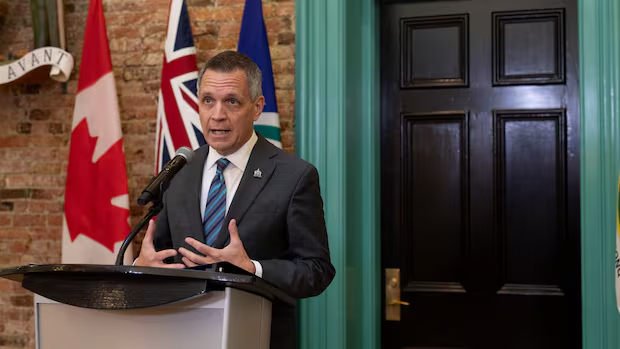
Ottawa’s mayor is defending the city’s decision to sign a non-disclosure agreement (NDA) with the Crown corporation overseeing Canada's proposed high-speed rail network.
Back in December, the city's head of planning services told council that Alto's public consultations were about to begin and mentioned signing an NDA.
"I have signed an NDA on behalf of the City of Ottawa to gain access to the detailed mapping and route planning options under consideration, to ensure our most up to date information is informing the decisions of Alto," Marcia Wallace wrote in a memo at the time.
On Tuesday, CBC asked Mayor Mark Sutcliffe about what signing the NDA says about transparency with the public.
"It's not unusual that if there is some discussion over acquiring some land that at the beginning of the process you sign an NDA and then if the negotiation happens and it leads to a successful outcome that the information is disclosed at the end of the process," he said.
"Just to be clear, [Alto is] not sharing information with us that we're withholding from the public," Sutcliffe added.
The mayor said his understanding is that the NDA is about the properties owned by the City of Ottawa that may be affected, not the entire project.
Alto's high-speed rail network will eventually span 1,000 kilometres from Toronto to Quebec City and could cost up to $90 billion. The first leg slated for construction is from Montreal to Ottawa.
Since the start of public consultations, Alto has faced an outpouring of public criticism, including about how it has communicated with the public and collected feedback.
The corporation received about 18,000 comments on an interactive map about where the tracks could lie, and 118 were removed "due to human error," according to Alto.
Farmers and rural landowners have shared their anxiety about receiving land access requests and about seeing drones fly above their properties.
According to the current project map, the rail corridor crosses two provinces and appears to occupy a "fairly large" swath of land — up to 10 kilometres wide in some places.
Alto says that the corridor will be narrowed down by this fall to a "final right-of-way" measuring about 60 metres in width.
Eastern Ontario farmers react to Alto's use of drones
In an email to CBC News, Alto said NDAs are widely used in the industry and help "structure discussions and two-way data sharing around preliminary working assumptions."
"Our approach has been, and continues to be, open and transparent engagement with municipalities," spokesperson Crystal Jongeward wrote.
Some municipalities and counties have voiced their opposition to certain aspects of the route, and to Alto's process.
The United Counties of Prescott and Russell passed a resolution in May to block Alto's access to county property and ban confidential discussions between the parties regarding the route.
At the time, Warden Mario Zanth criticized Alto for its communication with the public on the project.
Alto says it's in the process of setting up a follow-up meeting with Zanth which they hope to build into "a series of regular touch points."
Emma Weller is a reporter for CBC Ottawa and she's also worked with CBC's Your World Tonight. She can be reached at emma.weller@cbc.ca.
With files from Jodie Applewaithe
Related Stories
 Canada
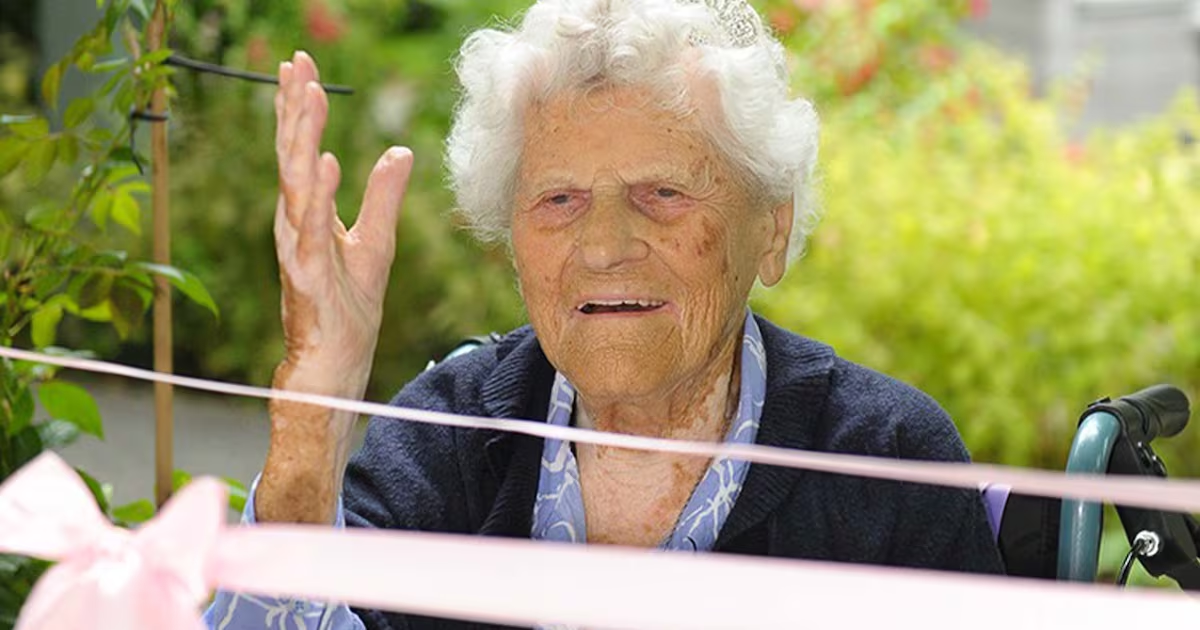
World’s oldest person Ethel Caterham celebrates 117th birthday
49 minutes ago
 Canada
JD Vance reportedly mocks Carney for trying to ‘out
49 minutes ago
 Canada
Statistics Canada reports retail sales up 0.6 per cent in June at $74.3B
49 minutes ago
 Canada
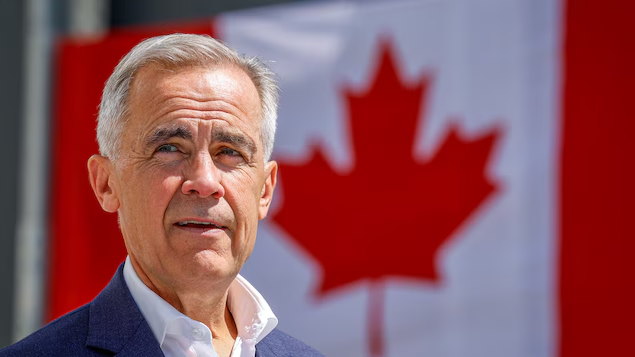
Carney’s big challenge as Canada-U.S. trade deal nears
50 minutes ago
 Canada
Michel Maisonneuve: Canada must defend the North to keep it
50 minutes ago
 Canada
Calgary parents looking for ways to save amid rising back-to
50 minutes ago
 Canada
Alberta minister faces more fury at second town hall on AI data centres
1 hour ago
 Canada
‘No indication’ U.S. blueberry recall for death risk impacts Canada: CFIA
1 hour ago