
New UNESCO data: For every two teachers, the world needs one more
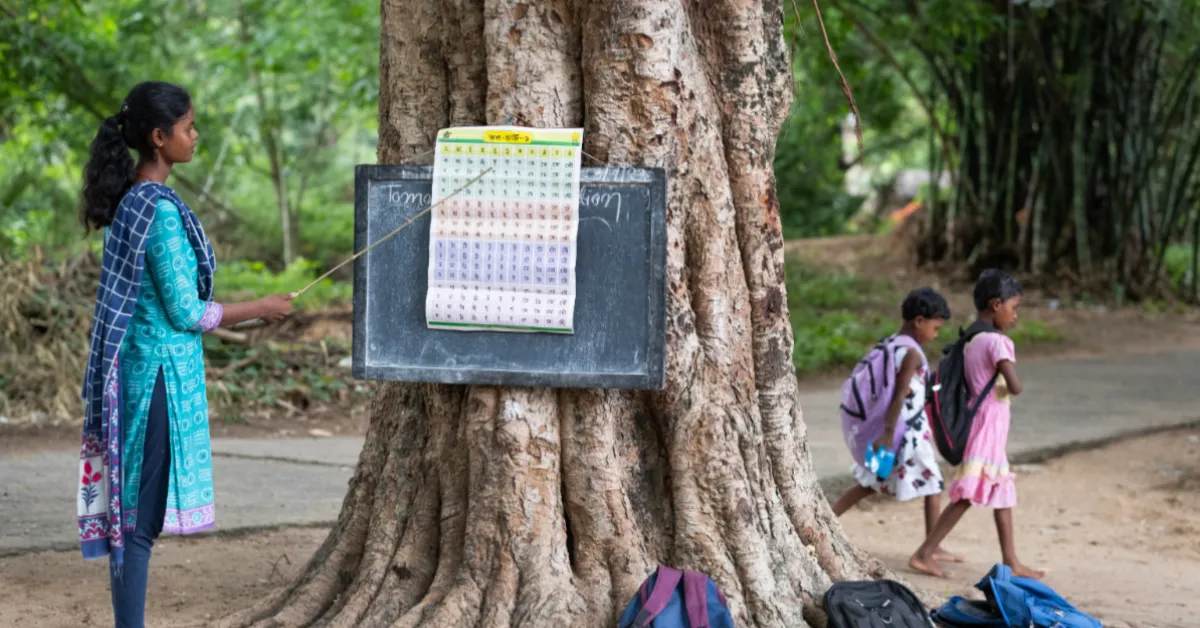
New UNESCO data: For every two teachers, the world needs one more
A new fact sheet released by the UNESCO Institute for Statistics and the International Task Force on Teachers for Education 2030 examines the status of teachers, including how teachers are valued, supported and paid, 60 years after the adoption of the landmark 1966 ILO/UNESCO Recommendation concerning the Status of Teachers.
The fact sheet was released to mark World Teachers’ Day 2026, bringing together ministers, teachers and education experts at UNESCO Headquarters in Paris to discuss how to strengthen the profession. Co-convened by UNESCO, the International Labour Organization, UNICEF and Education International, the celebration took place under the theme “Standing with teachers: 60 years of protecting the profession, advancing its status and shaping our futures”.
Every learner deserves a teacher who is well prepared, well supported and empowered to thrive in the profession. Realizing this right depends on how societies value teachers and the teaching profession. In fact, the value we place on teachers reflects the value we place on future generation.
How teachers are seen by society shapes whether they stay in their jobs. In 75% of the countries taking part in the OECD's TALIS 2024 survey, fewer than 40% of teachers felt that their profession was valued. Those who felt valued were over 10% less likely to think about leaving within five years.
The stakes are high: 58% of the teachers the world needs by 2030 will be hired not to expand the workforce, but to replace those who leave the profession. The fact sheet shows where the losses are greatest: attrition rates are 7.2% in pre-primary education, 5.4% in secondary and 4.7% in primary.
The new data also reveals that pre-primary and primary teachers earn slightly less than other professionals with similar qualifications. Overall, in two out of five of the 68 countries analyzed, teacher salaries remain below those of similarly qualified professionals across all education levels.
Teaching also comes with a heavy workload. Teachers spend an average of 19 hours in the classroom per week, but work around 60 hours in total, much of it includes unpaid preparation, marking and administrative tasks. In primary schools, the global pupil-trained teacher ratio stands at 28 to 1, the highest of any level.
The fact sheet offers practical recommendations for governments and partners. These include giving teachers a seat at the table when policy is made, setting professional standards and career paths, offering competitive salaries and targeted incentives for hard-to-staff schools, making schools safer and more supportive, and cutting back unnecessary workload.
What UNESCO does to support teachers
UNESCO works with countries to increase the supply of qualified, motivated teachers by improving policies relating to them and supporting quality training which meets learners’ needs. Special focus is placed on Africa, inclusion, gender sensitivity and digital technologies.
UNESCO and the ILO have also launched a joint revision of the 1966 Recommendation, guided by an Independent Expert Group through mid-2027.
As the work moves forward, the evidence is clear: attractive, respected and supported teaching professions are the foundation of quality education for every learner.
Related Stories
 World
World
Vietnam police bust cat trafficking ring
21 minutes ago
 World
World
Smashing Stats: Arctic Open 2026
21 minutes ago
 World
World
Traditional Japanese storytelling conveys horrors of war
21 minutes ago
 World
World
U.S. Vice
21 minutes ago
 World
World
Supporters of Imran Khan start march on locked
2 hours ago
 World
World
Pope urges Korean priests and religious to ‘bear witness to reconciliation'
2 hours ago
 World
World
U.S. News & World Report Partners with Candid to Bring Agentic AI Survey Innovation to Senior Living
2 hours ago
 World
World
Amazon wins global rights to stream Emmys in six
3 hours ago