
Natural traces in forensic investigations: Integrating biological trace analysis and artificial intelligence in forensic investigations
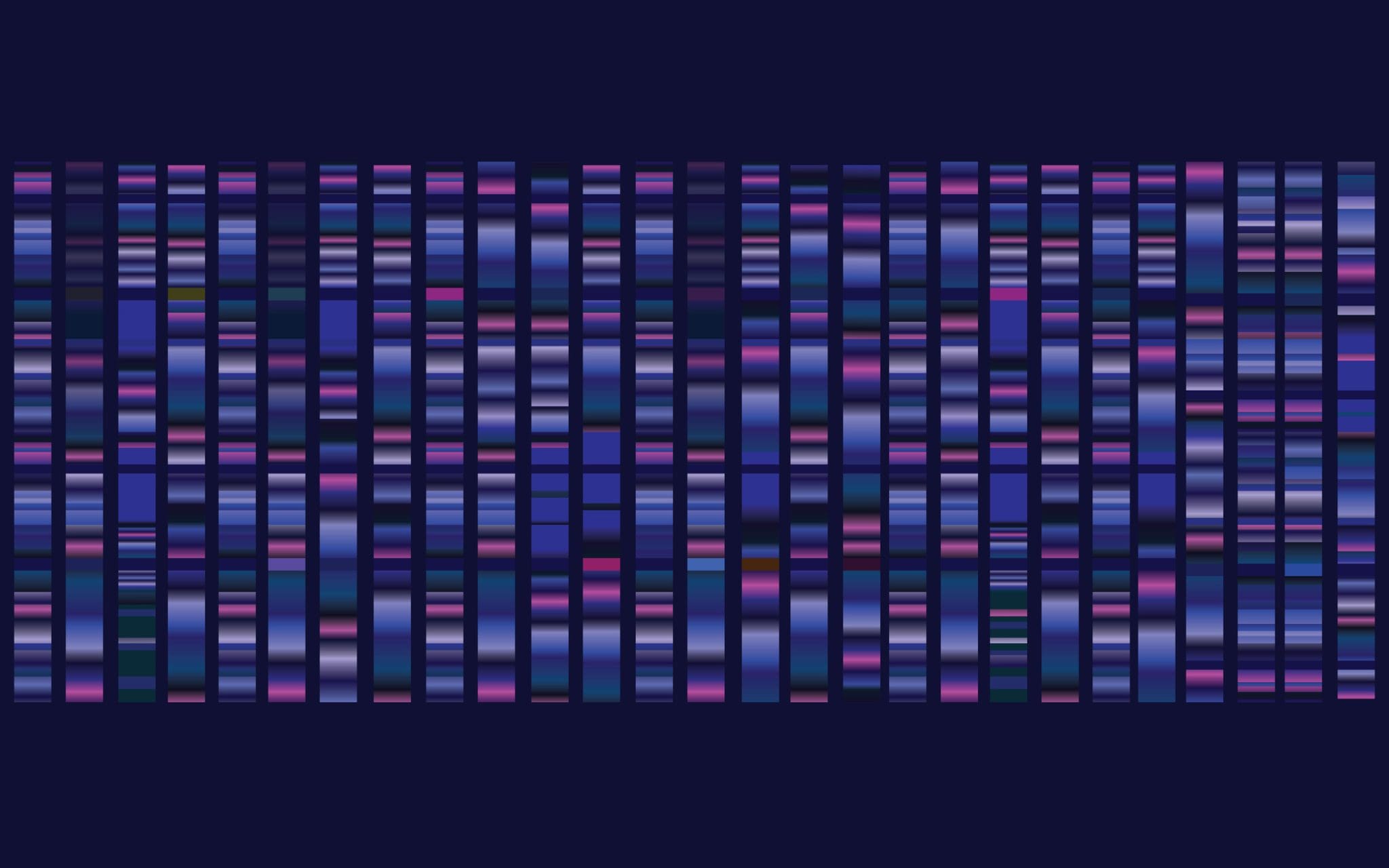
The Natural Traces Consortium is transforming forensic science by expanding the range of evidence sources to include biological and environmental materials across 11 key areas
Insects can be important indicators of post-mortem processes, providing valuable information on body movement, the potential cause of death, and the period during which a person may have been neglected prior to death. Most importantly, they serve as a reliable tool for estimating the time since death, even when discovery occurs days, weeks, or even later. We combine advanced methods in biology, ecology, and chemistry to reconstruct colonisation timelines and generate accurate estimates of post- mortem intervals. These approaches are applied to the analysis of 100–150 insect-infested bodies annually.
Non-human DNA traces, such as environmental DNA, are increasingly used to analyse biological evidence with mixed sources, but their interpretation remains challenging due to complex compositions and limitations in current methodologies. We develop new sampling and molecular approaches based on long-read metagenomics to improve the identification and characterisation of mixed biological traces deposited in the environment. The resulting genetic data are used to support the development of likelihood ratio–based statistical frameworks for evaluating the evidential weight of mixed-source biological samples.
Forensic interpretation increasingly relies on likelihood ratio (LR) frameworks aligned with Standard ISO 21043, while rapidly evolving artificial intelligence (AI) technologies are being integrated into evidence evaluation. However, the complexity and diversity of evidential data pose significant challenges for consistent, interpretable analysis. We develop AI- and statistical-based systems to compute standard-compliant LRs, establish rigorous validation protocols, and create adaptable solutions across different forensic domains. Our goal is to deliver scientifically robust frameworks that ensure precise, reliable, interpretable, and defensible forensic reporting across diverse legal systems.
Identifying biological material from degraded or processed samples remains a major challenge in both wildlife forensics and human identification. We develop DNA barcoding and STR multiplexing systems to detect CITES-protected species, such as big cats and the Eurasian lynx, particularly in materials like tanned hides and traditional medicine artefacts. To support rapid, field-based analysis, we also explore portable technologies, including Bento Lab and LAMP assays. In addition, our work extends to forensic microbiology and bioarchaeology, where we use ancient DNA and stable isotope analysis to reconstruct life histories.
Diatoms are valuable indicators for diagnosing post-mortem drowning, but their forensic interpretation requires robust ecological and methodological frameworks. As microscopic algae with species-specific environmental preferences, diatoms provide distinct signatures that can be used to reconstruct drowning sites and circumstances. We integrate expertise in diatom analysis from paleoecology with established forensic methodologies to improve identification accuracy and interpretation. Our work focuses on optimising sampling strategies, developing comprehensive reference datasets, and standardising analytical methods to support the use of aquatic microorganisms as reliable indicators.
Inferring the geographic origin of biological traces remains challenging due to spatial and temporal variability in biodiversity. We study patterns of biodiversity in human-modified landscapes by integrating biogeography, ecological theory, and quantitative modeling across scales from microbes to plants. Focusing on microbiomes as geographically informative traces, we analyse spatial and seasonal variation in microbial communities and identify taxa with biogeographical relevance. By combining next-generation sequencing with predictive modeling, including machine learning, we develop and evaluate frameworks to infer the origins of biological samples and to support microbe-based geolocation.
Investigating fungal communities for trace analysis and growth-based evidence interpretation (University of Genoa) Fungal communities provide valuable but underutilised information for trace analysis and evidence interpretation. We study micro- and macro-fungi across taxonomy, biodiversity, and ecology, integrating mycobiome assessment, strain isolation, cryopreservation, and morphological and molecular identification with research in medical and forensic mycology and cultural heritage biodeterioration. We investigate fungal presence and growth on bodies and materials to support timing and environmental inference, while developing a forensic fungal database, standardised sampling protocols, and temperature-dependent growth tables for key species, alongside expanding the DISTAV Culture Collection (ColD-UNIGE).
Pollen is abundant, highly resistant, and widely distributed in the air, sediments, animal fur, and the human body, making it a valuable yet challenging trace for environmental attribution. We improve pollen and palynomorph sampling across diverse substrates and enhance reference datasets to enable high-resolution identification and more accurate environmental inference. We also advance the integration of aerobiology and palynology to strengthen methodological consistency and support training through international summer schools in palynology and botany, fostering interdisciplinary expertise.
Mixed biological traces are difficult to interpret due to data scarcity, mixture complexity, and limited model interpretability. We develop computational methods to analyse microbiome and environmental DNA data by integrating preprocessing pipelines, feature engineering, synthetic data generation, and probabilistic deconvolution. Using predictive machine learning and deep learning models within a Bayesian inference framework, we aim to enable robust, interpretable, and statistically sound quantification of mixed biological traces.
Airborne biological traces provide current information about people, wildlife, and environmental context before that evidence is deposited on surfaces of objects and becomes part of dust or soil. We collect environmental DNA in indoor and outdoor settings.
Our approach integrates human and non-human eDNA trace analysis to reconstruct crime events. Air forensics complements established disciplines in San Juan
Micro-arthropods associated with human decomposition provide valuable but underutilised information for interpreting pre- and post-mortem events. By analysing Acari (mites) from individual and mass graves, we estimate time since death and time since deposition and assess potential relocation of cadavers or their parts. Ectoparasites recovered from clothing and skin are used to infer environmental conditions surrounding death and to provide insights into pre-mortem circumstances such as abandonment, neglect, or torture.
Related Stories
 Explainers
Why Karnataka politics keeps getting caught on camera
1 day ago
 Explainers
Rare waterspout may have damaged trees near coast
2 days ago
 Explainers
Demolition of M5 bridges is 'going smoothly'
3 days ago
 Explainers
Meteorologists' warning about "El Niño": it develops a second arm from the initial mass and heightens the forecast of its effects
3 days ago
 Explainers
Trump’s new press secretary is leaving the post
3 days ago
 Explainers
What is driving young anglophones out of Quebec?
4 days ago
 Explainers
What is Starshield, SpaceX’s military
5 days ago
 Explainers
Portal Innovations Venture Team Releases New Analysis on Capital Efficiency in Emerging Biotech Ecosystems
6 days ago