
Monuments and re
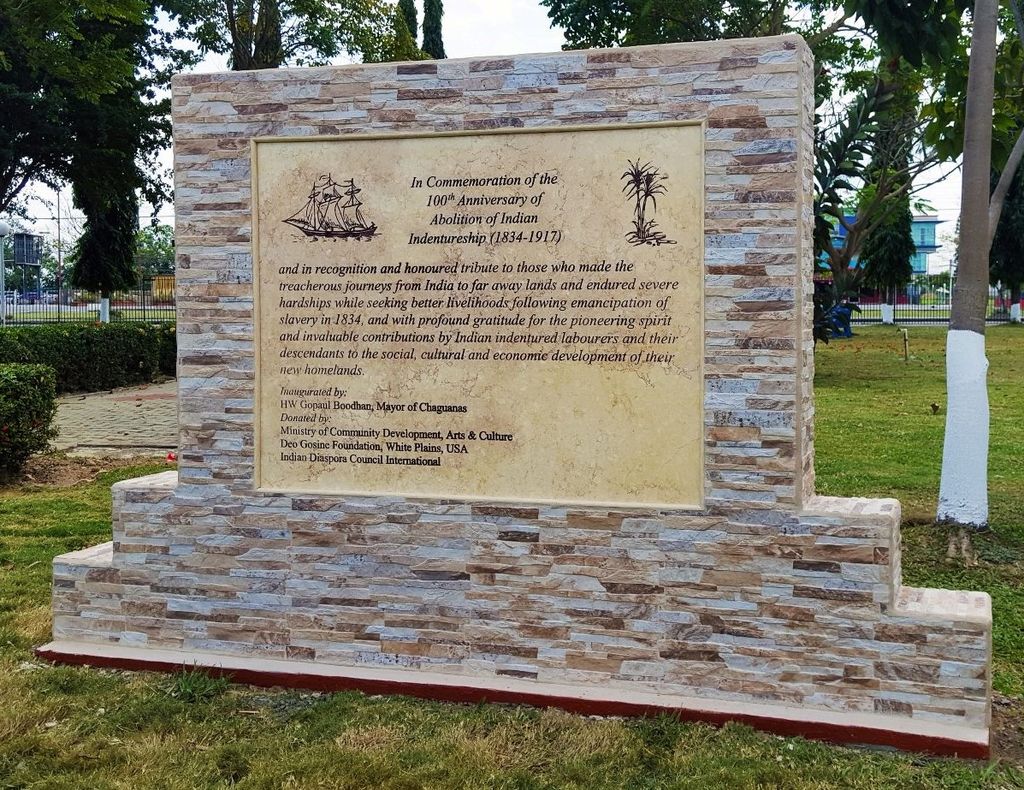
The online programme discussed monuments and re-enactments in the Girmitiya indentured Indian diaspora. It explored how monuments, memorials and historical re-enactments shape collective memory in the diaspora. In countries such as India, Fiji, Mauritius, Réunion, South Africa, Guyana, Suriname, and Trinidad and Tobago, communities have created physical and performative spaces to commemorate the history and experiences of indentured labourers and their descendants. By examining these sites of remembrance, the discussion highlighted how heritage, identity and cultural resilience have been preserved and transmitted across generations.
The following are excerpts from an Indo-Caribbean Cultural Centre’s (ICC) Thought Leaders’ Forum (14/06/26). The 316th edition of the ZOOM programme was chaired by Aashirya Anroed of the Netherlands and moderated by Shalima Mohammed of Trinidad. There were four speakers in the programme. The topic was “Monuments and Re-enactments in the Girmitiya Indentured Diaspora”.
Kolkata’s two indenture memorials
Kaberi Roy of India said in summary: “I am deeply honoured to speak in this platform about two significant Indenture Memorials situated in the port area of Kolkata, India, near the River Ganges. The first structure, inaugurated in January 2011, is the Kolkata Indenture Memorial, a project brought to life through a collaborative initiative involving the Government of India and representatives of GOPIO, specifically Shri Ashook Ramsaran and late Madam Leela Gujadhur Sarup. This was followed by unveiling of the Surinam Memorial in October 2015, a project inspired by the 2011Indenture Memorial, and driven by the Suriname Ambassador to India, Smt. Ashna Kanhai.
“Kolkata is the only city in India with the distinction of having not one, but two memorial sites to Indian Indenture Labour. This city is of immense historical significance in the context of the Indenture Labour System, not only because this is where it all began and from where the largest number of migration took place, but also because this city served as the epicentre where the legislative framework of the indenture system was drafted and sustained.”
Memorials as keepers of history
Ashook Ramsaran of USA and Guyana said in summary: “Memorial monuments serve as essential public displays that acknowledge, honour and remember significant historical events for posterity. Throughout my global advocacy, I have fiercely supported and initiated various monuments to mark Indian arrivals and departures across numerous Girmitiya countries, including Guyana, Trinidad, Mauritius and Jamaica. Annual Indian Arrival Day reenactments, complete with traditional prayers, dances and vibrant public performances are vital for preserving cultural heritage and reinforcing ethnic cohesion within the wider Indian diaspora.
“In recognition of this true deep history, several nations have successfully enacted formal laws to designate these arrival dates as official national holidays. Our ongoing international efforts are highly focused on collaborating with the Archaeological Survey of India to secure prestigious UNESCO heritage designations for these historic departure depots. For families living across
other countries, establishing physical markers ensure the sacrifices are never forgotten by future generations.”
Preserving identity under cultural pressure
Dr Léna Armoudom of Réunion said in summary: “The Indian presence in Réunion Island dates back remarkably early to the original settlements, meaning the modern population is deeply marked by Indian ancestry. Unlike the British model of governance, the French colonial system heavily promoted a policy of forced cultural assimilation which unfortunately caused the traditional Tamil language to gradually decline across generations.
“Despite these intense systemic pressures, descendants successfully preserved their distinct cultural identity and ancestral memories through elaborate temple rituals, festivals and dramatic performances like the Balataum. This traditional performance allows actors to transmit historical and mythological memory across generations. I was incredibly proud to act as the initiator and committee president for the Barachois Memorial, which was officially unveiled in October 2015 to pay a lasting, formal tribute to Indian slaves, indentured labourers and other free servants.”
Reclaiming the Girmitiya story
Rizwaan Abbas of Canada and Fiji said in summary: “Working alongside indigenous communities in Canada as an archaeologist has shown me that all colonised people share a profound bond forged by collective resiliency. In Canada, the Indo-Fijian diaspora faces unique cultural challenges because we are often dwarfed by a larger South Asian population, leading to a lingering fear of losing our distinct individuality and history. To counteract this, we have set out to actively decolonise our culture by shifting our focus away from the restrictive terminology imposed by political institutions and renaming the historic day as Girmitiya Day to directly honour our resilient ancestors who were once placed in bondage.
“Through these grassroots efforts, we are successfully building a strong foundation for our unique identity, which has already sparked an incredible surge of pride and curiosity among our youths. I am thrilled to share that the city of Surrey and the province of British Columbia have recently issued official proclamations recognising this day, putting Canadian communities at the forefront of global reconciliation. We are finally telling our own stories.”
Related Stories
 Global Indians
ETMarkets NRI Talk| Rs 1 crore, 5
2 hours ago
 Global Indians
Indian diaspora in North Texas celebrates 80th I
3 days ago
 Global Indians
Indian diaspora in North Texas celebrates 80th I
3 days ago
 Global Indians
Independence Day 2026: Rekha hoists tricolour in Melbourne, joins Pankaj Tripathi, diaspora in singing national anthem
4 days ago
 Global Indians
Indian bonds may slip after RBI shortens swap window for diaspora deposits
5 days ago
 Global Indians
'Ghana was the crime scene'
5 days ago
 Global Indians
Indian diaspora in Houston celebrates 80th Independence Day
5 days ago
 Global Indians
Indian diaspora in Houston celebrates 80th Independence Day with patriotic fervour | Hindustan Times
6 days ago