
L&T Innovation Fund steps up India deeptech push, looks to support startups with $1
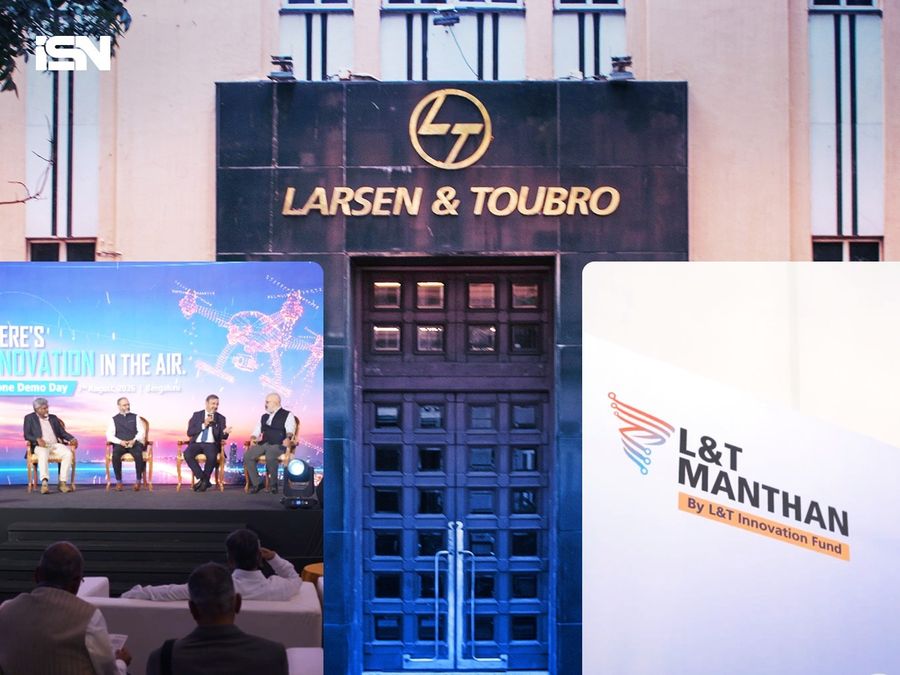
Larsen & Toubro's corporate venture capital arm, L&T Innovation Fund (LTIF), is increasing its focus on Indian deeptech startups, as the engineering conglomerate looks to use its industrial network to help young technology companies move beyond prototypes and towards commercial deployment.
The five-year-old fund has so far made eight investments globally, with much of its earlier investment activity taking place outside India.
Its disclosed portfolio includes AI-powered cybersecurity startup CYFIRMA, while another portfolio startup develops digital twins for water-treatment plants. Most of its other undisclosed investments are in industrial AI, according to Sushma Kaushik, head of L&T Innovation Fund.
LTIF typically makes initial investments ranging from $1 million to $10 million and generally keeps its ownership below 20%.
The fund, however, is designed to operate differently from a traditional financial investor. L&T describes LTIF as its corporate venture capital arm established to engage with startups and advance technologies aligned with the group's businesses and long-term strategic priorities.
L&T wants to offer startups more than capital
As part of its India strategy, the fund is looking to use L&T's presence across engineering, manufacturing, construction, energy and technology to provide startups with access that a conventional venture capital investor may not be able to offer.
Notably, L&T's business leaders have also started scouting startups themselves, indicating greater involvement from operating businesses in the group's startup strategy.
The fund also supports portfolio and potential investee companies through partnerships, empanelment, customer engagements and go-to-market efforts.
This approach is reflected in L&T Manthan, an initiative powered by the Innovation Fund that connects startup founders with senior executives and business teams across the group.
L&T has described Manthan as a platform intended to move innovation towards both capital deployment and actual business adoption.
Startups identified through such programmes can progress into proofs of concept, pilots, commercial engagements, co-development arrangements, strategic investments or longer-term partnerships with L&T businesses.
21 startups participate in L&T Manthan Drone Demo Day
The latest edition of L&T Manthan brought the fund's startup engagement strategy into focus, with 21 startups participating in the Drone Demo Day held in Bengaluru on August 7, 2026.
The startups were selected across six technology themes,including aerial platforms, mobility and logistics, defence and mission systems, autonomy and drone operations, marine and amphibious platforms, components, propulsion and energy, and AI and geospatial intelligence.
L&T said the event was designed to evaluate deployment-ready technologies and identify opportunities for proofs of concept, co-development, commercial engagement and strategic investment.
The aerial platforms, mobility and logistics category included Okulo Aerospace, EndureAir, Amber Wings, Redwing and BonV.
Bengaluru-based Okulo Aerospace develops solar-electric, long-endurance UAVs for persistent aerial surveillance.
EndureAir develops autonomous heavy-lift UAVs for logistics, defence and emergency response.
Chennai-based Amber Wings is building indigenous VTOL, surveillance and cargo UAVs, including the ATVA-1 hybrid VTOL, M50 heavy-lift UAV, Anvik ISR UAV and Q20 cargo UAV.
Redwing designs and manufactures drones and autonomy systems for commercial operators and other brands.
Bhubaneswar-based BonV is developing autonomous heavy-lift cargo UAVs for defence and remote logistics. Its technology is aimed at moving rations, ammunition, tools and construction materials to mountainous regions, defence posts and project sites where reliable road access may not be available.
Pune-based Aethrone Aerospace develops autonomous aerial systems for naval and defence missions, including shipborne UAVs, maritime search-and-rescue drones, systems for radar and gunnery alignment, aerial targets and loitering systems.
UNMANND showcased its TITAN-30 and TITAN-60 heavy-lift UAVs alongside FURY, its counter-UAS interceptor system. While the TITAN platforms are designed to transport supplies, sensors and tactical payloads at high altitudes, FURY uses autonomous interceptors against hostile drones and swarms.
Kolkata-based Megh Robotics develops counter-drone systems, customised UAVs and unmanned ground vehicles for defence and security applications. Its products include handheld and portable UAV neutralisers, payload systems and payload-towing unmanned ground vehicles.
Mumbai-based Kawa Space develops wideband radio-frequency payloads and signal-intelligence systems. Its technology can capture and analyse radio-frequency signals to help defence users identify and classify communications, radar and other electronic emissions.
Five startups, including Vecros, Jarbits, inDrones, Suind and NxtQube were featured under autonomy and drone operations.
Bengaluru-based Vecros develops onboard AI and visual-navigation technologies that enable drones to navigate autonomously in indoor and GPS-jammed environments without continuous cloud connectivity or pilot control.
Lucknow-based Jarbits develops multi-drone command software and geospatial risk-intelligence platforms.
inDrones provides full-stack drone operations, geospatial analytics and autonomous-navigation technologies. Its offerings include the EigenOS drone-data operating system, Insynq Edge and technologies for swarm and GNSS-denied navigation.
Bengaluru-based Suind develops autonomous drones that use onboard vision to navigate complex, low-altitude environments. Its Wasp aerial-intelligence UAV is designed for applications including inspection, perimeter surveillance and construction monitoring, while its Bumblebee drone is focused on autonomous agricultural spraying.
Nashik-based NxtQube is developing autonomous drone-in-a-box systems for unattended inspection and surveillance. Its system is designed to allow a drone to launch on schedule, complete a mission, return to its dock, recharge and transfer data without requiring an on-site pilot. The marine and amphibious platforms segment included AquaAirX and EyeROV.
Bengaluru-based AquaAirX develops amphibious drones capable of operating in the air, on water and underwater. Its AVATAAR platform is designed to fly to a location, land on water and dive below the surface for inspection or surveillance before returning to the surface.
Kochi-based EyeROV develops indigenous underwater drones, autonomous surface vessels and AI-powered inspection technologies. Its portfolio includes TUNA, TROUT and TSROV remotely operated vehicles, along with the i-Boat Alpha autonomous surface vessel, for applications such as inspecting dams, tunnels, ship hulls, pipelines, ports and offshore platforms.
Nautical Wings Aerospace develops indigenous electric propulsion systems and composite components for UAVs, including propellers, integrated electric propulsion units and carbon-fibre components for multirotor, fixed-wing and VTOL platforms.
Kochi-based ATWIC R&D develops indigenous navigation and stabilisation sensors for aerospace and defence systems.
Bengaluru-based Hastin Energy develops smart batteries and battery-health software for aerial, ground and underwater unmanned systems.
New Delhi-based CYRAN AI provides an AI-powered spatial-intelligence platform that converts drone imagery, live video, satellite data and sensor information into maps, 3D models, digital twins, defect alerts and GIS dashboards for geospatial, industrial and defence applications.
Coimbatore-based Birdscale provides geospatial intelligence for construction monitoring, measurement and asset inspection. Its SiteSense platform uses drone, satellite, LiDAR and thermal data to track construction progress, calculate earthwork quantities, create digital twins and identify defects.
LTIF is also changing the stage at which it is willing to engage with Indian companies.
Its international investments have generally targeted technologies at Technology Readiness Levels 7 or 8, where products are relatively mature and closer to deployment. In India, the fund plans to evaluate companies at TRL 4 or 5 and potentially work with them as they move towards TRL 7 or 8.
The shift gives L&T an opportunity to become involved earlier in the development of technologies that could eventually be used across its businesses.
The fund's current investment thesis includes AI, Industry 4.0, green-energy transition and industrial electronics, areas that overlap with L&T's operations across engineering and construction, energy, semiconductors, data centres and hydrogen.
One of LTIF's publicly disclosed investments is CYFIRMA, an external threat landscape management startup.
In April 2023, CYFIRMA raised a pre-Series B round from L&T Innovation Fund and Israeli venture capital firm OurCrowd. The investment was subsequently followed by a strategic partnership between CYFIRMA and L&T Group company LTIMindtree, which integrated CYFIRMA's threat-intelligence capabilities with LTIMindtree's cybersecurity offerings.
Related Stories
 Technology
NBA commissioner Adam Silver says league could introduce ‘smart ball’ technology as soon as next year
59 minutes ago
 Technology
Trump's backyard is quietly transforming into 'Silicon Valley South' as wealthy Americans flock in
59 minutes ago
 Technology
A banker with over 25 years’ experience joins B. Riley Securities to advise sports, media and tech firms.
1 hour ago
 Technology
Ørsted Orders Third Saab Seaeye Cougar ROV
2 hours ago
 Technology
Sagar Defence, Lloyd’s Register to Advance Pathways for Autonomous Systems Certification
2 hours ago
 Technology
MTN Opens 2026 Technology Hackathon to African Innovators and Employees
3 hours ago
 Technology
High ticket gates installed to deter fare dodgers
3 hours ago
 Technology
REG - Bytes Technology Grp
3 hours ago