
Is AI Claude christian?
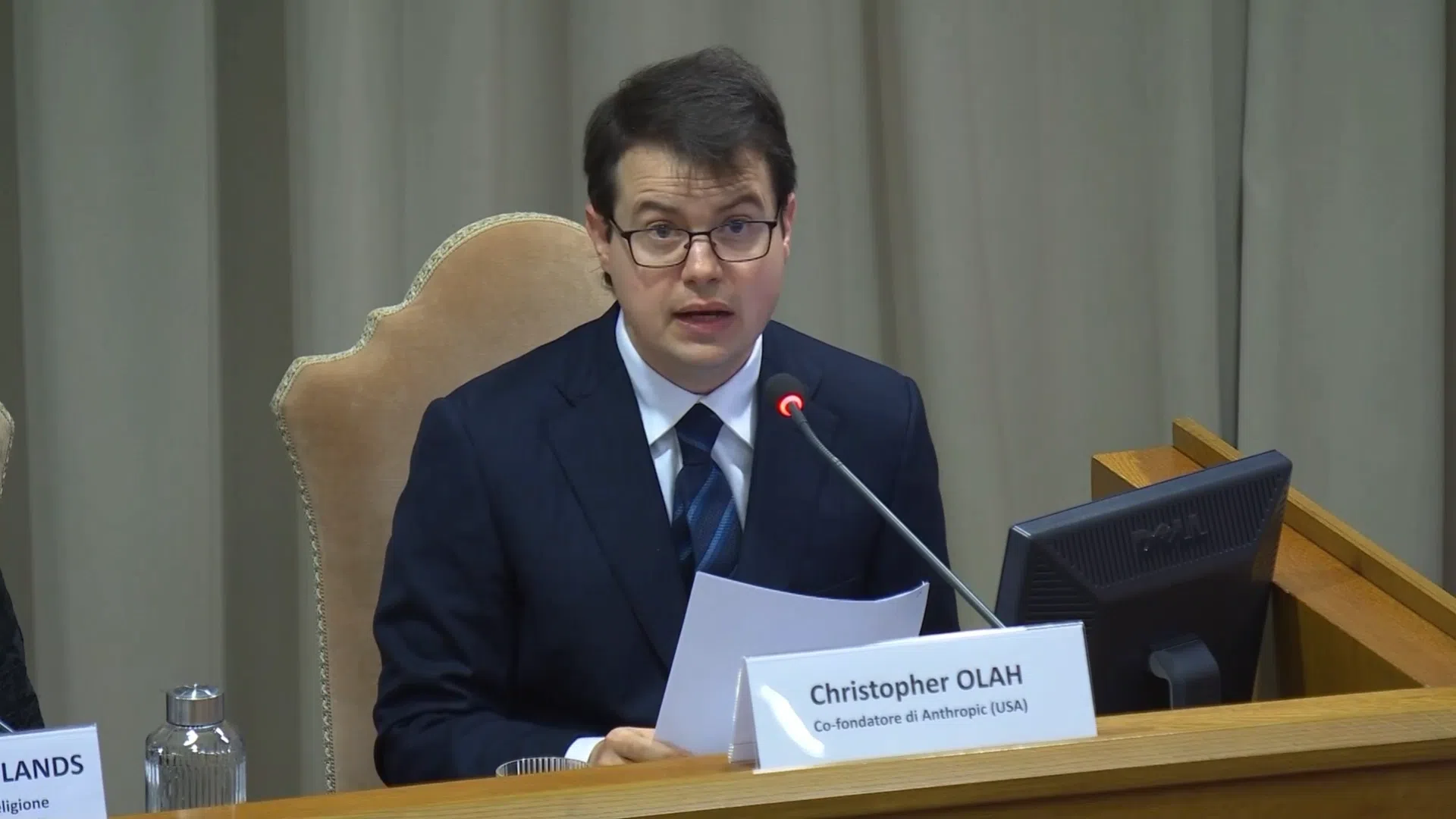
One of the AI industry's biggest competitors was born out of a dispute over the future of artificial intelligence. In 2020, a group of OpenAI employees walked away, believing the company was placing profits ahead of safety. They founded Anthropic and developed an “AI Constitution” to guide how artificial intelligence should behave.
Among the names thanked in the acknowledgments of the document is Paul Tighe, Secretary of the Dicastery for Culture and Education. But how did a priest end up advising one of the world's leading AI companies?
MONS. PAUL TIGHESecretary of the Dicastery for Culture and Education
Christopher Olah, one of the founders of Anthropic, was eager to talk to someone from the Catholic world about what they were doing and to try to understand their work. And he wanted feedback from a Catholic perspective. So we met with him informally. And it was quite interesting. His attitude really struck me. What I sensed was the absolute sincerity of his desire that, whatever Claude did, it would be something that truly served people and caused no harm or damage. Something he feared might happen.
Olah was very interested in having the opinion of a professor of Moral Theology and Ethics.
And, on their own, they had come to the conclusion that simply imposing rules on Claude wasn't enough. The fact is that Claude's managers largely adopted a very utilitarian approach to ethics, inspired by the effective altruism movement, and imposed rules on him to ensure that he would do the right thing in every situation.
Anthropic sought to train Claude using the best examples of human behavior. But for Professor Tighe, good intentions alone do not guarantee morality.
They have to be open to listening to different voices and different perspectives to ensure that their understanding of what is the human good is a fully enriched, integrated and developed understanding.
And Anthropic was the only company to attend Pope Leo XIV's presentation of Magnifica Humanitas.
CHRISTOPHER OLAHDirector of Anthropic
No matter how sincerely any of us intend to do the right thing, and I believe many of us do, we will always be influenced by those incentives. That is why if we want this technology to work well, it is enormously important that there be people outside those incentives. People who care about things going well, who are paying close attention, who are willing to say hard things and insist on safety, and who are willing to be our earnest, thoughtful critics.
I think that's the thing, why it's important for the Church to be engaged in dialogue with people who are working. To offer them that support, that moral backing for their desire to do good.
Claude may be powered by algorithms, but the principles behind its development reflect a concern that Pope Leo XIV has repeatedly raised: technology must serve humanity, not the other way around.
Related Stories
 AI News
New York City Public Schools banning AI use through middle school starting this year
22 minutes ago
 AI News
Employees Absolutely Loath AI in the Workplace, Survey Finds
22 minutes ago
 AI News
Developer uses Claude Code to debloat Android smart TV for 'unbelievable' performance upgrade
22 minutes ago
 AI News
Beyond Code: Dex System Publishing Unveils Speculative Slate Examining Artificial Intelligence and Digital Consciousness
23 minutes ago
 AI News
Defense chief stresses push for AI technology application in military
1 hour ago
 AI News
Best AI Chatbots of 2026
1 hour ago
 AI News
PwC: Global investment in AI infrastructure to hit $31.6 trillion through 2050
1 hour ago
 AI News
AI in Business Leadership: Artificial Intelligence as a Strategic Compass
1 hour ago