
IP, Artificial Intelligence, and Magnifica Humanitas: Where does human creativity end?

I recently spoke with a friend who works as an information technology expert for a mobile communications company. Our discussion turned to artificial intelligence (AI) and its ability to create music. Today, anyone can generate a song simply by entering a prompt into an AI application. Within seconds, the system can produce a composition tailored to the user’s preferred theme and style, often at minimal cost.
From the consumer’s standpoint, this development is truly exciting. What once required years of training and artistic discipline can now be accomplished through a few instructions.
From the perspective of intellectual property law, however, this technological advancement raises profound questions concerning both the authorship and ownership of copyright.
The creation of an AI model is itself a product of human ingenuity. A question arises once the model begins generating artistic works on its own. When an AI system produces a musical composition or any artistic work, can that output be protected under intellectual property law?
Unlike human creators, an AI model does not draw upon personal experience, emotion, or reflection. Its “creativity” arises from algorithms and training data. The resulting output may appear original and expressive, but it is generated without the lived experience associated with human creation.
This raises a fundamental question: Can an AI system be regarded as an author under intellectual property law?
Since the Berne Convention of 1886, copyright law has been built upon the premise that authorship is inherently human. This human-centered understanding of intellectual property finds expression in the often-quoted observation of my late UK professor, Prof. Bill Cornish, that intellectual property represents the “finer manifestations of human achievement.” Indeed, copyright protection has long been anchored on the belief that original works are products of human intellect and creativity.
Under prevailing legal norms, purely AI-generated works generally fall outside the traditional concept of authorship. However, the issue remains the subject of a continuing debate at the intersection of law, philosophy, and ethics.
Closely related is the question of copyright ownership. Assuming copyright subsists in an AI-generated work, who should own it? Is it the programmer who developed the AI model, the company that trained it, or the user who prompted the AI model?
To address these questions, we must first understand the policy underlying copyright protection. The Constitution provides that the “State shall protect and secure the exclusive rights of scientists, inventors, artists, and other gifted citizens to their intellectual property and creations.” It reveals a fundamental truth: intellectual property law exists primarily to promote human achievement and creativity.
The issues raised by AI therefore go beyond legal doctrine. They invite us to reflect on the nature of human creativity itself.
In my Intellectual Property Law classes, I often tell students that intellectual property is an expression of what St. John Paul II described as man’s “original solitude.” Human beings are distinct from other creatures because they create through conscious reflection and the exercise of free will. It is this uniquely human capacity that gives rise to artistic works, inventions, and other forms of intellectual property.
As artificial intelligence increasingly generates creative outputs without direct human involvement, I find myself asking: where does human creativity begin and end?
This concern was indirectly touched upon during the recent Forum on Law and Technology organized by the UP Women Lawyers’ Circle. In his address, Senior Associate Justice Marvic Leonen emphasized that artificial intelligence should assist lawyers, not replace them, and that human judgment can never be delegated to machines.
His observations reinforce a concern that is particularly significant in intellectual property. There is genuine risk in encouraging the replacement of human creators in the artistic and inventive process. This is evident in music, paintings, literature, and technological innovation, where creativity has been understood as a uniquely human undertaking.
Professor Daniel J. Gervais, in The Human Cause, warns that machine-generated outputs possess significant economic advantages. They are faster and cheaper than human creations. If such works receive the same intellectual property protection as human creations, market forces may gradually favor artificial production over human creativity. The danger is not merely economic. It is existential.
This concern resonates with Pope Leo XIV’s recent encyclical, Magnifica Humanitas, which cautions against outsourcing creativity and judgment to machines. The encyclical warns that an overreliance on artificial intelligence risks anthropological regression, manifesting in the deskilling of human labor and the subordination of workers to technological systems. Technology must remain an instrument that serves humanity rather than a substitute for the human person.
The challenge posed by artificial intelligence goes beyond legal discussion. It raises a question about the nature of humanity itself. As AI increasingly enters activities once regarded as uniquely human, it compels us to reflect on what distinguishes human beings from the technologies they create.
In this rapidly evolving landscape, intellectual property law has an important role to play. Copyright and patent must continue to encourage innovation while safeguarding the uniquely human capacity for creativity, imagination and invention.
Ultimately, the true subject of intellectual property law is not the machine but the human person. It is the human person whose intellect and creative spirit give meaning to every act of creation and to the intellectual property it produces.
This article is for informational and educational purposes only. It is not offered and does not constitute legal advice or legal opinion.
Alex Ferdinand S. Fider is a senior partner of the Angara Abello Concepcion Regala & Cruz Law Offices (ACCRALAW).
Related Stories
 AI News
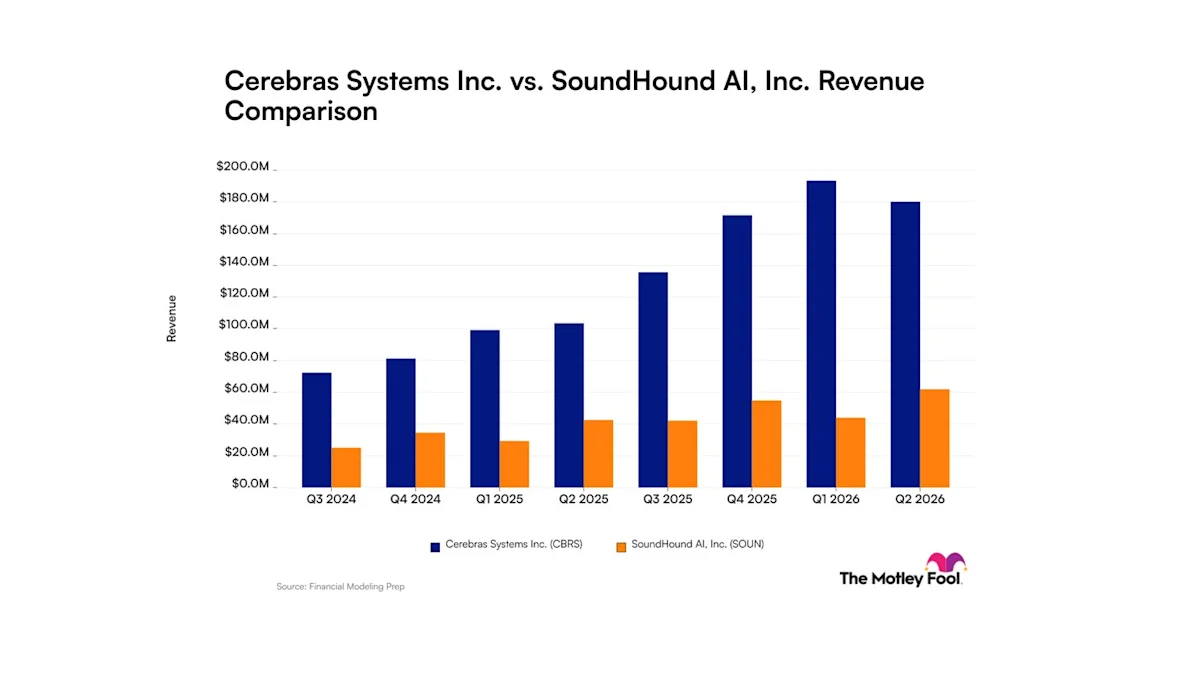
Cerebras Systems vs. SoundHound AI: Here's What Revenue Trends Tell Investors About These Artificial Intelligence Companies
16 minutes ago
 AI News
There’s a way to stop ChatGPT sending you to court for the wrong reasons
16 minutes ago
 AI News
Anthropic warns of AI ‘worms’ spreading across smart gadgets
1 hour ago
 AI News
Manage private pricing offers for Amazon Bedrock with managed entitlements
1 hour ago
 AI News
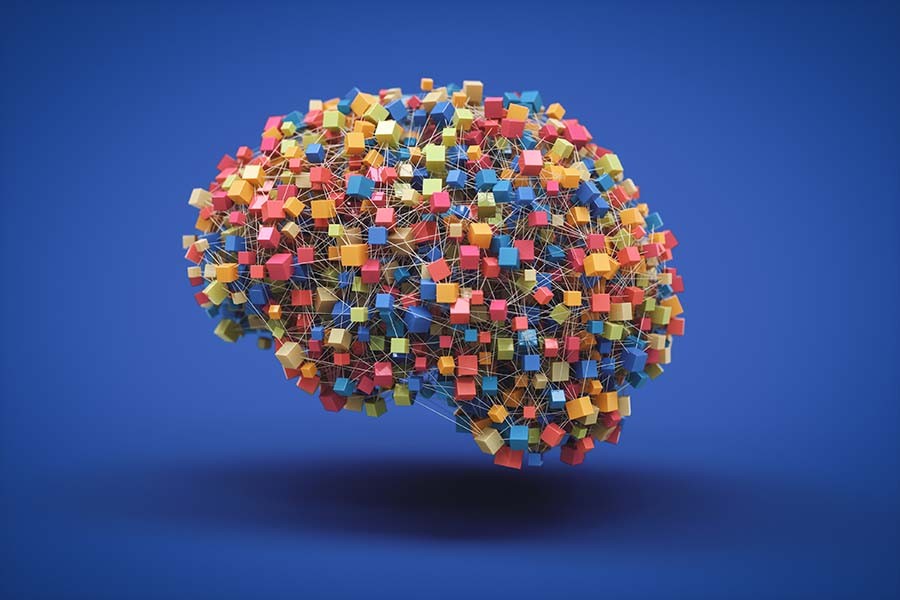
How artificial neural networks build their own learning machinery
1 hour ago
 AI News
Far-right and Iran add to mix of terror threats UK faces
2 hours ago
 AI News
The Virginia Senate receives new research on artificial intelligence
2 hours ago
 AI News
AI kill switch: Can we really shut down artificial intelligence?
2 hours ago