
Immigration referendum questions leave Alberta's agri
Immigration referendum questions leave Alberta's agri-food sector on edge
Half of referendum questions focus on immigration policy
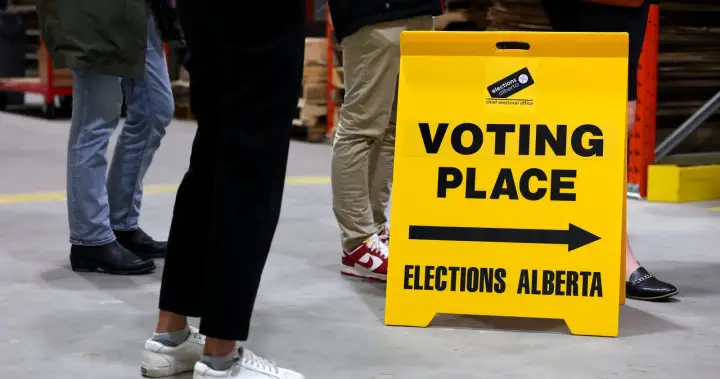
Alberta farm producers — and the temporary foreign workers they rely on — are keeping a close eye on Monday's provincial referendum, as several ballot questions could significantly impact their operations.
Five of the 10 referendum questions focus on immigration policy, gauging support for things like service fees and health-care waiting periods for non-permanent residents.
Statistics Canada data shows Alberta generates about one quarter of the nation's farm revenue and dominates Canadian beef processing, with many major operations leaning on temporary foreign workers. So producers worry the measures being posed to voters regarding non-permanent residents could disrupt their workforce, making it harder to retain such workers.
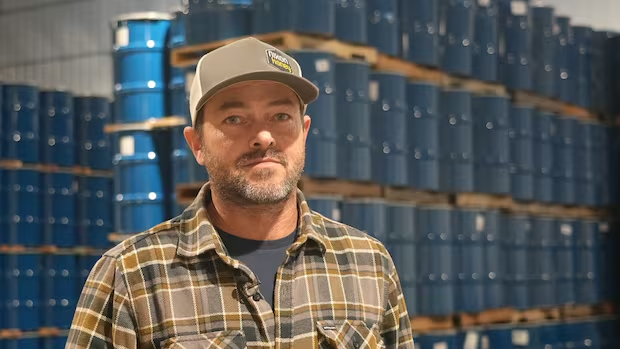
“We would not be able to do what we do without the foreign workers. That's the bottom line,” said Kevin Nixon, owner of Nixon Honey Farm in Red Deer County, about 170 kilometres south of Edmonton.
“We would be in big trouble and the livestock would suffer,” he said. "It doesn't matter if it's cattle, or chicken, or pigs, or bees — the health of the livestock has to come No. 1, otherwise they're dead.”
Nixon says managing beehives requires years of specialized experience and physically demanding labour — skills, he notes, are often difficult to recruit for locally. (Submitted by Nixon Honey Farm)
The company produces more than 680,000 kilograms of honey every year, Nixon said, and that hinges a lot on specialized labor.
He hires locally, he said, but finding skilled, consistent workers locally often falls short of what's needed to manage his 12,000 hives. Nixon relies heavily on about 20 temporary foreign workers from Mexico every season, who bring years of skilled experience.
Follow all of our Alberta referendum coverage
Everything you need to know about the 10 questions in Alberta's Oct. 19 referendum
“It's not something that you can just pick up in one season and do,” Nixon said. “It's a very physical, labour-intensive job; it's hot and you're getting stung every once in a while.”
In Brooks, a southern Alberta city about 160 kilometres from Calgary, the JBS Foods plant is one of the largest beef-processing facilities in Canada. There, roughly 400 temporary foreign workers perform the hardest roles, which are often passed by locals, according to union representative Adriana Salguero.
“Cows are very big animals and very heavy,” Salguero said, adding the plant processes about 4,800 per day. “They remove big pieces of meat from the bones. Deboning is a very dangerous job; using knives, hooks, saw machines to cut pieces."
Statistics Canada data shows more than 40 per cent of of Canada's cattle was in Alberta on July 1. (Chelsea Kemp/CBC)
She said the immigration referendum questions have sparked deep anxiety on the plant floor, raising "a fundamental equation of fairness."
“How can we ask people to contribute to our economy and to our communities, while making them feel that they have different opportunities than the other people, but they are required to contribute the same as everybody,” Salguero said.
Policy analyst Ohi Ahmed warns that referendums create systemic political uncertainty that can drag down agricultural productivity.
“That will ultimately lead to a certain slow turnaround when it comes to productivity for the agriculture and agri-food sector for Alberta — and by extension, in Canada,” Ahmed said.
He highlighted a 2022 Canadian Agricultural Human Resource Council survey, which suggested chronic labour shortages cost the national sector $3.5 billion in sales. Alberta's agri-food sector could see greater reliance on foreign labour, Ahmed said, as 40 per cent of the workforce is forecast to retire by 2030.
Do Alberta’s temporary residents pay little tax, reap lots of benefits? We asked economists
According to Aaron Stein, executive director of the Alberta Federation of Agriculture, potential labour uncertainty adds to an already challenging operating environment.
“Diesel prices, fertilizer prices, tariffs with the U.S., tariffs with Asia. It's on and on,” Stein said.
“Additional costs ultimately affect farm competitiveness. We're competing with the Brazils, the Australias, the USAs of the world on the international market.”
If most voters support the referendum questions on immigration, the Alberta government will "work with employers and other groups to develop a system where we determine the workers our economy actually needs," a spokesperson for the Ministry of Jobs, Economy, Trade and Immigration told CBC News in an emailed statement.
Immigration levels over the past several years have put pressure on the province's health care and public services, the spokesperson said. So the government is seeking a mandate that balances workforce needs without straining those systems.
Alberta’s population grew more than rest of Canada last year, data shows
Albertans divided on immigration, while half still undecided on 9 non-separation questions: poll
An Employment and Social Development Canada (ESDC) spokesperson noted that temporary foreign workers make up less than two per cent of Alberta's total labour force, but they confirmed primary agriculture is still exempt from recent federal low-wage TFW cap reductions due to chronic labour shortages.
Back on his farm in central Alberta, Nixon acknowledged the province's concerns about public-service capacity, but said misconceptions persist about temporary foreign workers being "cheap labour."
Uniting across political lines, former Alberta premiers urge ‘no’ vote on immigration questions
Added costs like housing, airfare and transportation make hiring foreign workers more expensive than hiring locally — albeit crucial during tight harvest windows, Nixon said.
He added there may be a misconception about the impact seasonal temporary foreign workers, like the ones he hires, have on the public health system. He said he pays for private health insurance coverage for his seasonal crews, because some of those workers are ineligible for provincial health coverage.
The debate, he said, also extends beyond labour. Honeybee pollination, for example, helps other crops grow.
“It's about producing our food in our country," Nixon said.
Nadeer Hashmi is a reporter for CBC News in Red Deer, Alta. He was formerly a reporter in Yellowknife.
Related Stories
 Canada
Mayor of Vancouver election results
50 minutes ago
 Canada
Why Canada's immigration cuts aren't fixing the system's problems
50 minutes ago
 Canada
‘It’s important’: New RCMP position to investigate livestock crimes in Manitoba
1 hour ago
 Canada
Religion could be on the rise among young adults. Some are seeing it in Sask.
1 hour ago
 Canada
Weather alert issued as gusts up to 100 km/h expected in parts of central, southern Alberta Saturday
1 hour ago
 Canada
Alberta separation referendum ‘not very likely’ new poll shows
1 hour ago
 Canada
Indian diaspora protests in London, US, Canada & Germany against CEC Gyanesh Kumar | Protests also organised in Ireland & Netherlands | Inshorts
1 hour ago
 Canada
It's over: Canada ends England's 41
2 hours ago