
Icelanders vote to reject talks on joining the European Union
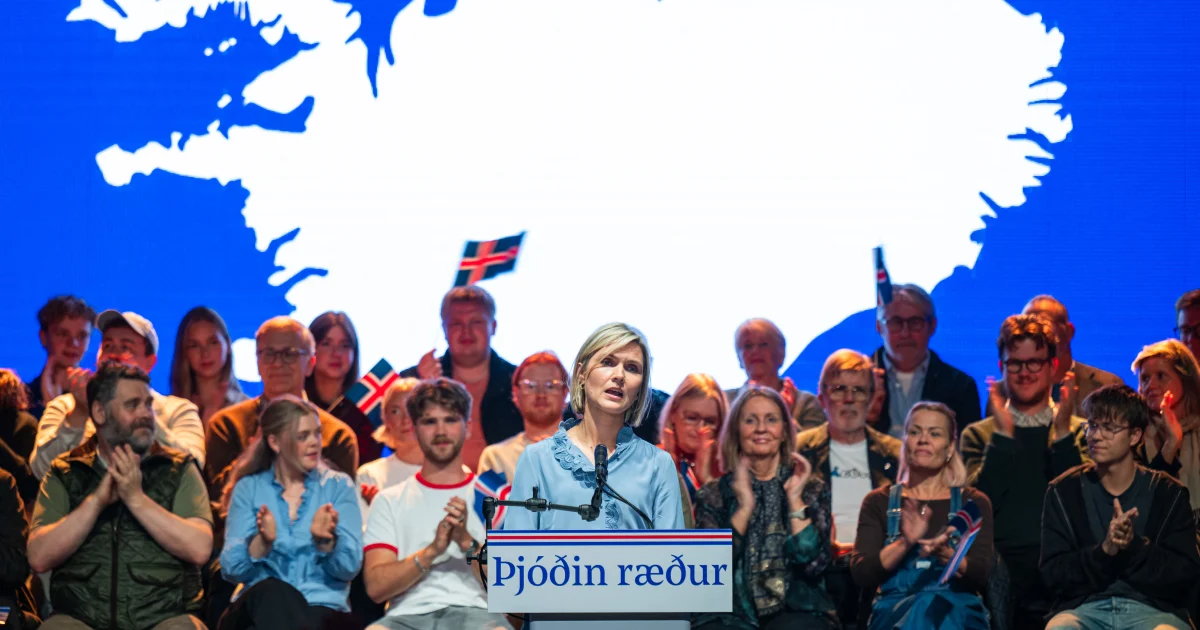
Icelanders have voted to stay out of the European Union, broadcaster RUV reported on Sunday, rejecting a government push to reopen membership talks and siding with those who said Iceland’s fishing waters were too important to risk.
An earlier tally suggested some 47.5% of voters supported the government’s proposal while 52.5% said no, RUV said.
A ‘no’ vote will disappoint Brussels, as some officials had cast Iceland as a low-risk case that could help ease scepticism toward EU enlargement and strategically strengthen the bloc when Arctic security is in focus.
The government has framed membership as a shield against trade wars and Arctic rivalry and presented the referendum as a “now or never” moment, with Prime Minister Kristrún Frostadóttir warning that a “no” would put the membership question aside.
Iceland first applied to join the EU in 2009 when a financial crisis hit the country’s small, exposed economy. A Eurosceptic government ended talks in 2013.
Geopolitical turmoil, including war in the Middle East and U.S. import tariffs, has brought urgency to an issue Icelanders have debated on and off for decades.
“Yes” campaigners argued joining the bloc could ease high interest rates and offer more security in a world unsettled by war in Ukraine and U.S. President Donald Trump’s rhetoric about annexing another Arctic island Greenland.
“No” campaigners said EU membership would threaten the island’s sovereignty and fishing waters.
The referendum campaign has fuelled debate about Iceland’s place in the world, Prime Minister Frostadóttir told reporters after casting her ballot in the capital on Saturday.
“We’ve been waiting for this for years to be able to have a vote,” Frostadóttir said, adding that her government would continue its work regardless of the outcome.
Debates inside Iceland have focused on interest rates, fishing rights and the cost of living rather than on security.
Iceland has grappled with high inflation and interest rates that have made mortgages expensive. Supporters of a “yes” vote had said EU membership, and possibly adopting the euro, could bring relief. Iceland’s central bank interest rate is 8%, compared with 2.25% at the European Central Bank.
“It would not solve Iceland’s structural faults, but it could become a catalyst to a more healthy economy,” said chief economist Vilhjalmur Hilmarsson at Viska, one of Iceland’s largest labour unions.
Opposition leader Guðrún Hafsteinsdóttir, who has led the “no” campaign, said the economic case is overstated. “These are not problems that Brussels will solve for us. These are problems that Icelandic politicians must solve,” she said.
Voter Ragnhildur Skarphedinsdottir, 70, said Iceland was managing well on its own and that she was voting “no”.
“By staying independent as we are, we look brightly to the future,” she said before casting her ballot in Reykjavik.
Related Stories
 Economy
Fed's Warsh surprised by world economy's 'resilience'
1 day ago
 Economy
Bad news for Trump ahead of the midterms: it’s still the economy, stupid
1 day ago
 Economy
The global economy is muddling through against the odds. But a storm is coming | Larry Elliott
2 days ago
 Economy
How high inflation is hurting Trump's Republicans in U.S. midterm campaign
2 days ago
 Economy
‘Clear and present danger’: fuel prices could rise by 30c a litre across Australia under IMF scenario
4 days ago
 Economy
IMF warns global economy ‘could soon test the limits of resilience’
4 days ago
 Economy
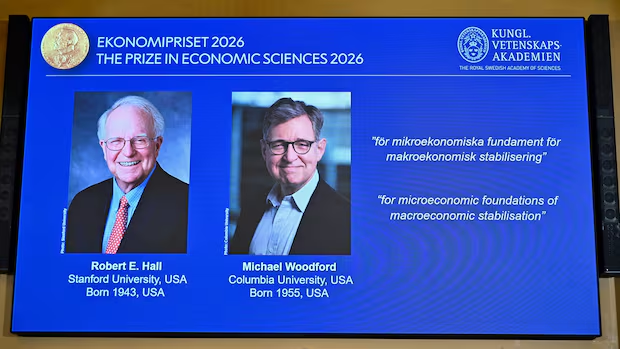
Nobel memorial prize in economics awarded to Robert E. Hall and Michael Woodford
5 days ago
 Economy
Nobel Prize for economics awarded to 2 U.S. academics
5 days ago