
How some St. Louis bioscience startups are moving from discovery to market
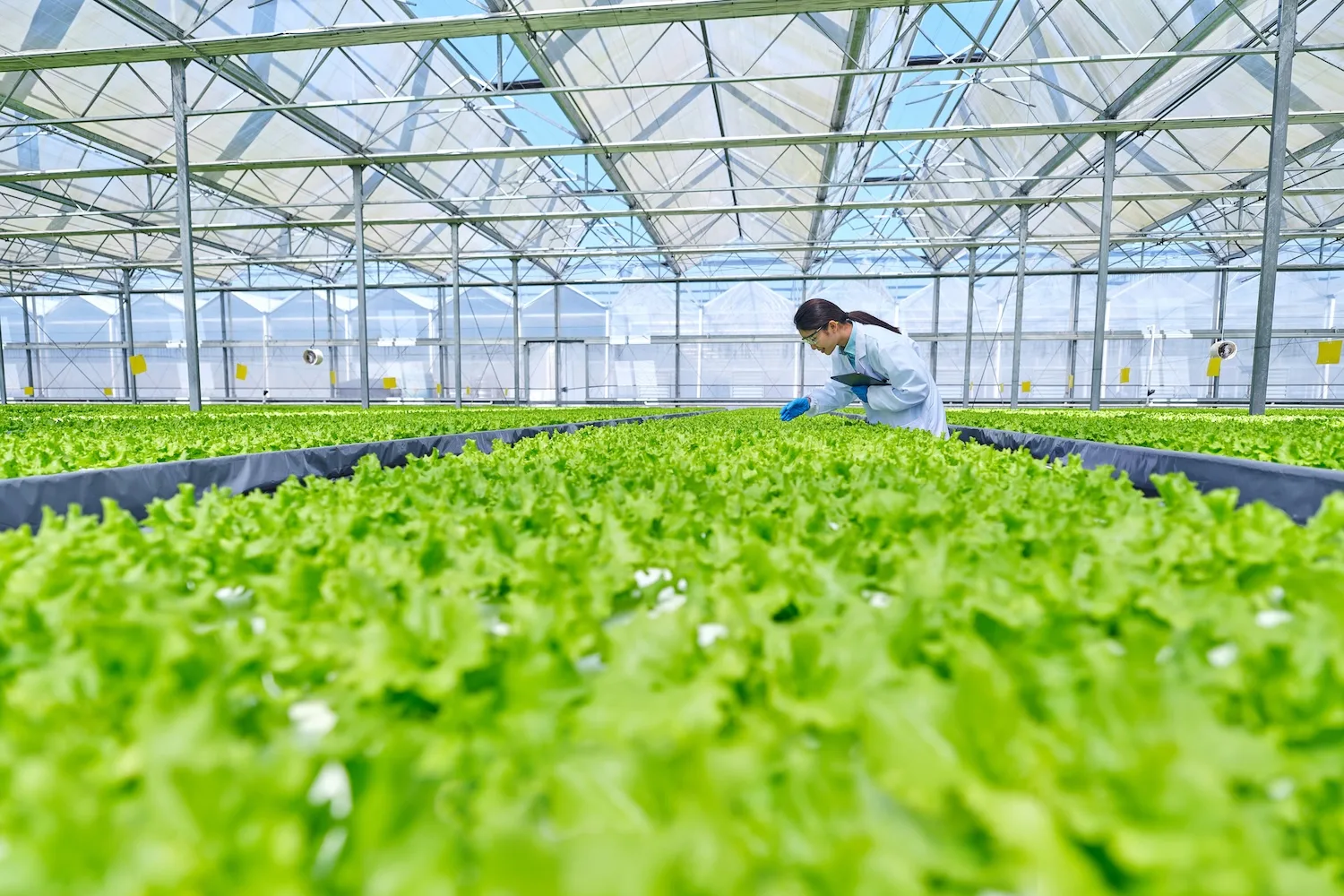
More than a decade ago, a handful of scientists, entrepreneurs, and investors began laying the groundwork for what has become one of the nation’s largest bioscience clusters. Today, St. Louis boasts world-class research institutions, specialized facilities, venture funding, and hundreds of startup companies.
Now comes the next big hurdle for some St. Louis startups.
Subscribe to the St. Louis Business newsletter to get the latest insights sent to your inbox every morning.
For ventures emerging from different corners of the region’s bioscience economy, the challenge is commercialization—turning promising science into products that earn customers, attract capital, and ultimately become sustainable businesses.
Two St. Louis companies are at that inflection point. Geneoscopy recently launched its FDA-approved colorectal cancer screening test nationwide through Labcorp, while CoverCress is preparing to process its first commercial harvest into biofuel feedstock. Their products differ dramatically, but their journeys share a common theme: proving that breakthrough science can survive the long road to commercialization.
“Everyone says you’ve got to go to Boston or San Francisco or New York to pursue entrepreneurship. At WashU, I found another path.”
When Erica Barnell launched Geneoscopy with her brother, Andrew, in 2014, she imagined it might become one line on her résumé.
“I think my end goal was really just to add a resume item to my CV,” quips Barnell, who was an M.D./Ph.D. student at WashU at the time.
Barnell relied on grants, discounted lab space, BioGenerator support, Arch Grants, and expertise from the university’s clinicians, statisticians, physicians, and mentors while building the business alongside her education.
“Everyone says you’ve got to go to Boston or San Francisco or New York to pursue entrepreneurship,” Barnell says. “At WashU, I found another path.”
The company’s evolution came with no shortage of challenges. Geneoscopy launched a phase 3 clinical study in 2021, during a global pandemic. It faced patent litigation from a competitor even before it had revenue or FDA approval. It raised money during a period when diagnostics were drawing less investor attention than pharmaceuticals.
To launch ColoSense commercially, the company needed FDA approval, inclusion in clinical guidelines, CMS coverage, coverage from commercial payers, electronic health record integration, manufacturing capacity, distribution, and clinician trust.
Today, the company employs about 80 people, operates a 25,000-square-foot laboratory, and has raised hundreds of millions of dollars in venture-backed funding. The Labcorp partnership marks the moment that Geneoscopy shifted from proving the science to delivering it at national scale.
Says Barnell: “I don’t think in a million years I could have guessed that we would have developed an FDA-approved product.”
“Discovery of the market need is just as important as the discovery of the underlying technology.”
Long before companies reach national markets, they must convince investors, partners, regulators, and customers that both the science and the business can succeed.
That’s where much of St. Louis’ bioscience ecosystem comes into play.
Jim McCarter has watched that ecosystem evolve for decades. Now senior vice president at BioSTL and senior managing director of BioGenerator Ventures, he founded agtech startup Divergence in 1999, when the region had deep scientific talent but relatively few startup companies.
Over the past 22 years, BioGenerator has helped support more than 400 companies, taken equity positions in 142, and invested roughly $52 million to $53 million into startups that have gone on to raise nearly $3 billion in follow-on funding. Last year alone, it reviewed 132 St. Louis-connected opportunities before making eight new investments.
The review process can involve hundreds of hours of diligence: technology, intellectual property, market size, competition, regulatory path, team, legal structure, business model, and use of capital. A venture can fall short because the market is too small, the competition is too strong, the team lacks a key skill, or the product does not solve a problem customers feel urgently enough. Sometimes the science works, just not well enough to carry a business.
“Discovery of the market need is just as important as the discovery of the underlying technology,” McCarter says.
That same emphasis on evidence shapes the work at the Donald Danforth Plant Science Center.
Young companies often arrive with laboratory results that look promising. Before investors or commercial partners will commit additional capital, however, they need rigorous data demonstrating those results hold up under closer examination.
“You can’t just say your product does it,” says Kirk Czymmek, director of the Advanced Bioimaging Laboratory and head of core facilities. “You have to measure it and show it.”
Whether researchers are tracking plant roots underground, measuring disease resistance, or analyzing changes inside cells, startups often need specialized equipment and technical expertise that would be prohibitively expensive to build themselves. The proximity of those resources—along with nearby scientists, investors, and entrepreneurs—has become one of St. Louis’ competitive advantages. Young companies can access sophisticated imaging systems, greenhouses, field sites, biochemical analysis, and experienced collaborators without leaving the region.
In an industry where capital is limited and experiments can take years, those connections can determine whether a promising idea advances to the next stage. And even after the science is proven, building a scalable business presents an entirely different challenge.
“The seven most expensive words in farming are, ‘That’s the way we’ve always done it.’”
CoverCress has spent more than a decade transforming pennycress, once regarded largely as a weed, into a winter oilseed crop that can grow between corn and soybean seasons, helping protect soil while providing farmers with another potential revenue stream.
After Bayer, Bunge, and Chevron became equity owners in 2022, the company launched commercially with growers the following year. Now, it’s preparing to crush its first commercial harvest into oil for biofuels—a milestone that CEO Jim Hedges considers another major step toward full-scale commercialization.
Still, Hedges cautions that moving from research plots to commercial agriculture presents an entirely different challenge. “Just because it works in the lab doesn’t mean you have a product,” he says.
Agriculture allows little room for error. Unlike software companies that can release updates every few weeks, crop developers may get only one growing season each year to evaluate new seed varieties, traits, or farming practices. A single setback can delay progress by a full year while testing investor patience and farmer confidence.
The company now faces the work of expanding acreage, improving genetics, navigating regulations, and persuading farmers to adopt a new crop within already demanding planting and harvest schedules.
“The seven most expensive words in farming are, ‘That’s the way we’ve always done it,’” Hedges says.
His larger concern is timing. “You want to time that really, really right,” Hedges says. “If you go too fast and you’re not ready, you can tank that market.”
“We need some home runs. We need some big success stories where companies become worth billions of dollars and demonstrate to the St. Louis region what success looks like.”
St. Louis has made meaningful strides in growing biotech companies, as Geneoscopy and CoverCress demonstrate. Compared with two decades ago, the region now has more laboratory space, more early-stage capital, stronger mentorship networks, and more executives who understand the realities of building young companies.
What it still lacks, McCarter says, is the concentration of experienced founders, investors, and operators found in established biotech hubs like Boston’s Kendall Square, where entrepreneurs regularly build, exit, and launch companies again.
Each successful commercialization helps close that gap. More national product launches create experienced executives. More exits create investment capital. More billion-dollar companies create visible examples for the next generation of entrepreneurs deciding where to build.
“We need some home runs,” McCarter says. “We need some big success stories where companies become worth billions of dollars and demonstrate to the St. Louis region what success looks like.”
St. Louis Magazine’s “Spotlight on Bioscience” series is supported by BioSTL, a St. Louis–based nonprofit dedicated to turning the region’s world-class research strengths into high-growth startups, a skilled workforce, and a globally recognized innovation hub.
Related Stories
 Technology
When Tech Companies Die, What Happens To The Products They Leave Behind?
1 day ago
 Technology
Two Finns supplying Russia with missile tech worth tens of millions
1 day ago
 Technology
Drones with pepper spray, four
1 day ago
 Technology
Micron Technology stock pre-market at EUR 800.50: memory storage - ad
1 day ago
 Technology
TAIEX Ends at 4
1 day ago
 Technology
ZAWYA: Technology, start-ups can double India
1 day ago
 Technology
Czech government to consider CZK 1 billion fund for startups
1 day ago
 Technology
GDIN Supports Eight Startups at CEATEC 2026 in Japan, Opens Door to Local Investor Collaboration
1 day ago