
How much will Trump’s ban on alcohol, dairy hurt Canada?
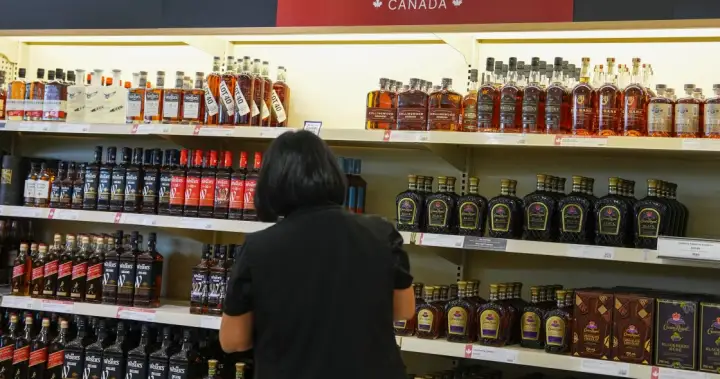
Canada’s economy could be facing a bigger dent from U.S. tariffs after U.S. President Donald Trump escalated his administration’s trade war to include full bans on most Canadian dairy and alcohol products.
Trump signed five executive orders late Tuesday which adjusted some of the previous tariffs to exclude items like cement and road salt, while also imposing full import bans on Canadian-made cheese and other dairy products, as well as alcoholic beverages. Trump justified the move as retaliation for Canada’s counter-tariff measures, which went into effect earlier on Tuesday.
Although the U.S. launched a trade war with Canada and the world in early 2025, Canada and the U.S. have been engaged in particularly tense negotiations and back-and-forth tariffs and counter-tariff threats since the U.S. threatened 50 per cent tariffs on hundreds of Canadian products in July, which went into effect in August.
Canada pulled out of trade negotiations last month, with Prime Minister Mark Carney saying his team “walked away from a bad deal,” and then imposed retaliatory counter-tariff measures this week.
“There are a number of industries and entrepreneurs and workers who will feel the brunt of this, specifically in alcohol, wine, Canadian-made beer, rye whiskey, products like that are clearly on the list,” says Matthew Holmes, executive vice president and chief of public policy with the Canadian Chamber of Commerce.
“They’re being directly targeted and the U.S. is viewing that as retaliation for the alcohol bans that provinces have put in place.”
Export Development Canada (EDC) estimates the value of Canada’s exports that could be subject to these import bans is roughly $778 million, which is somewhat modest compared to Canada’s total exports, which was $779 billion in 2025, according to Global Affairs Canada.
However, EDC says the impacts will still be severe for some businesses.
“Canadian exporters in these industries will find it harder to diversify, with the U.S. market accounting for anywhere between 70-95 per cent of total export sales. That makes firm-level impacts potentially quite severe, even if the aggregate Canadian GDP effect is fairly modest,” said EDC’s chief economist Stuart Bergman in a statement.
Here’s how much the full import bans could cost the Canadian economy.
Canadian wine, beer and spirits producers sell the vast majority of their products within Canada, but the overwhelming majority of the small amount that is exported internationally is sent to the United States.
If the U.S. imposes a full import ban on all Canadian alcohol, nearly all of that export figure could be erased.
According to the Government of Canada’s Trade Commissioner Service, Canada exported $1.36 billion in alcoholic beverages in 2023 and 90 per cent of those exports were sent to the U.S., with two-thirds being for spirits alone, including rye whisky, gin and vodka.
Wine Growers of Canada tells Global News that approximately $8.3 million of wine was exported to the U.S. in 2025, and although it’s a relatively modest amount, the impact is concentrated regionally in Ontario, which makes up 90 per cent of that value.
Wine Growers of Canada also says that of the $8.3 million of wine exported to the U.S., more than half (57 per cent) was for icewine alone.
“Canadian wineries have also invested many years in building relationships with U.S. importers, distributors, retailers and consumers,” Wine Growers of Canada says.
“While we cannot control decisions taken by the White House, federal and provincial governments in Canada can control the measures we take here at home to strengthen and grow the Canadian wine industry.”
When it comes to beer, Canada exported about $28 million dollars in beer products outside of Canada in 2025, according to Beer Canada, which makes up close to 10 per cent of all the beer Canadian breweries produce. That means about 90 per cent of Canadian-made beer is sold and potentially being consumed within Canada.
“Our number one partner for beer exports is certainly the United States. The overwhelming majority of that $28 million in exports would be headed south to the U.S. market with a very, very small share going overseas,” says Luke Chapman, vice president of federal affairs for Beer Canada.
“The broader conflict is creating uncertainty though across the industry and adding costs at a time that is already challenging for Canadian brewers.”
Banning Canadian dairy imports adds to an already complex system, where dairy trade between Canada and the U.S. has long been governed by agreements on import and export quotas, including relevant tariffs.
For example, Canadian dairy processors, including those producing cheese, generally prioritize Canadian dairy farmers when sourcing ingredients.
That’s one of the issues Trump has taken exception to when he threatened a full ban on Canadian dairy products, and less than a month after imposing 50 per cent tariffs on the same sector.
Canada sent just over $700 million in dairy exports to the U.S. in 2024, according to Statistics Canada, although it’s unclear how much of those dairy imports would have been impacted otherwise by a full out ban, as Trump has threatened.
“The continued escalation of trade actions including a ban on certain Canadian dairy exports and additional tariffs on others is deeply concerning for Canada’s dairy sector,” said Dairy Farmers of Canada in a statement.”
“As determined by the most recent CUSMA dispute settlement panel, Canada is currently respecting its dairy trade commitments with the U.S. unwarranted tariff measures and import bans only serve to create further uncertainty for farmers, processors and businesses on both sides of the border.”
Dairy Farmers of Canada would not confirm to Global News the annual value of dairy exports to the U.S. or how much would be impacted by a potential ban.
“Some of those dairy companies are going to feel it directly in terms of how big and how much of the U.S. market represents for them,” says Holmes.
“That action is very precision targeted at an industry that they feel is part of the trade irritant and grievance between the U.S. and Canada this time in terms of what they have access to in terms our market.”
The U.S. ban is set to take effect on Sept. 29.
Related Stories
 Canada
Trump says Iran war will end ‘immediately’ after U.S. midterms
37 minutes ago
 Canada
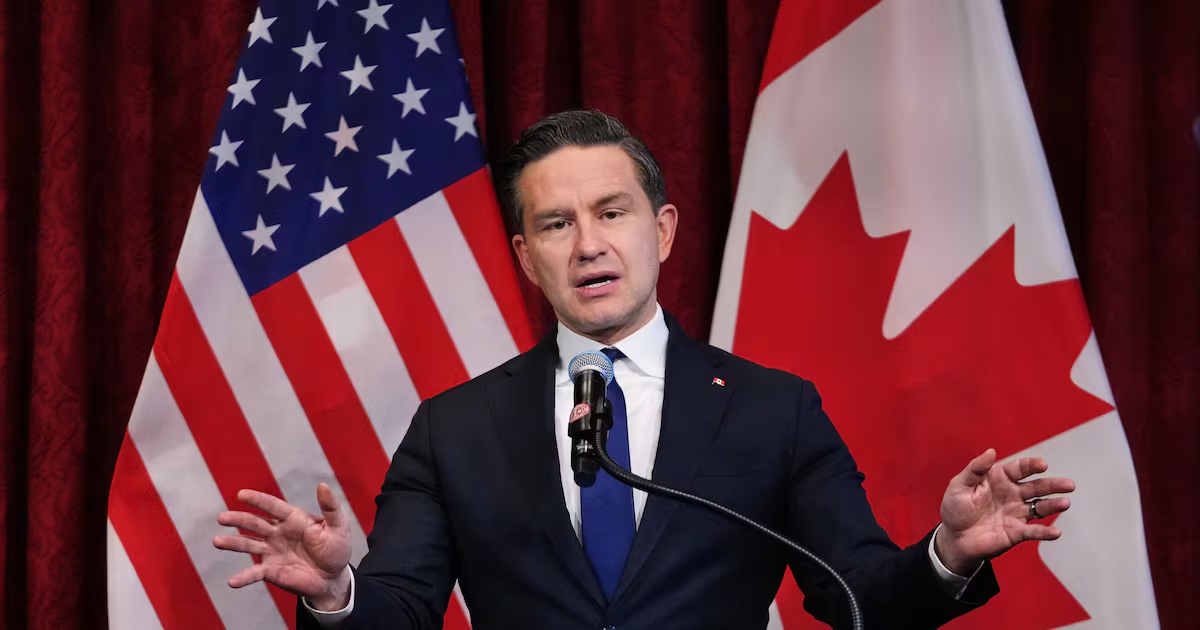
Conservative leader heads to U.S. to promote Canada as Trump escalates trade war
37 minutes ago
 Canada
Quebec
37 minutes ago
 Canada
Ottawa city council to consider motion to rename Trump Avenue
37 minutes ago
 Canada
Government exempts interprovincial pipelines from review by impact assessment agency
38 minutes ago
 Canada
Ontario businesses express mixed reactions to new U.S. tariffs, alcohol ban
1 hour ago
 Canada
Calls for companies that leave Canada to be punished as trade war intensifies. Live updates here.
1 hour ago
 Canada
Canada takes the lead at international defence expo
1 hour ago