
High blood pressure and diabetes: how artificial intelligence detects them using a video of the face
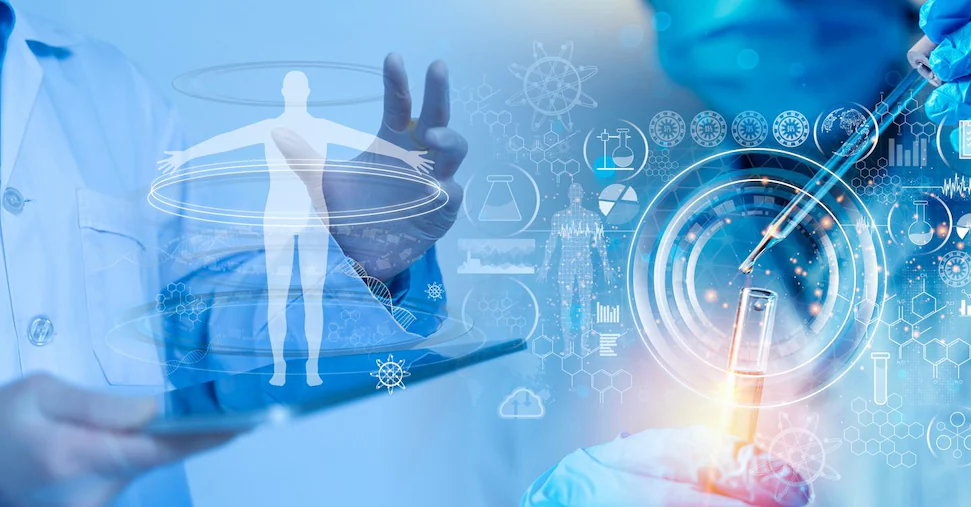
High blood pressure and diabetes: how artificial intelligence detects them using a video of the face
A short video of our face, analysed by artificial intelligence, could one day reveal the presence of two of the greatest threats to our health
For feedback, please contact english@ilsole24ore.com
It sounds like science fiction, but this is the direction suggested by a group of researchers from the University of Tokyo and the Institute of Science Tokyo (Japan). The idea is as simple as it is ambitious: if our face reveals something about our blood circulation, artificial intelligence could learn to decipher it.
The face as a window onto the circulatory system
The trick, of course, is not to ‘look someone in the face’ and diagnose an illness as a doctor would. The algorithm does not look for dark circles under the eyes, wrinkles or particular facial expressions. Instead, it analyses images captured by a special spectroscopic camera and looks for extremely subtle physiological signals: how blood flow changes at the skin’s surface, how the pulse wave behaves, and the characteristics of skin colouration.
This is information that our bodies provide to those who have ‘eyes’ to see, and which a well-trained machine can transform into a vast amount of data.
Japanese researchers involved 215 people in their study, including patients who had already been diagnosed and healthy volunteers. A short video recording was made of each person’s face and the palms of their hands, which was then analysed by the algorithm. The most surprising finding relates specifically to high blood pressure.
High blood pressure can be ‘spotted’ in five seconds
In previous experiments, using a 30-second recording, the system had identified high blood pressure with 95 per cent accuracy. But the most interesting thing is that even when the video clip was drastically shortened to 5 seconds, the algorithm continued to work, providing diagnoses with 90.3 per cent accuracy. It is as if the machine is able to detect, via the face, a sort of cardiovascular ‘signature’ associated with high blood pressure. But there is more. The new study set out to verify whether the same approach could also work for diabetes.
Diabetes can also be seen on the face
Facial blood flow patterns play a key role here. Using a 30-second recording, the algorithm identified diabetes with 88.2 per cent accuracy; when the video was shortened to just five seconds, the accuracy was 81.2 per cent.
These are very interesting figures, particularly when considering their potential use in large-scale screening.
This is because high blood pressure and diabetes share a particularly insidious characteristic: they can be present for years without causing any obvious symptoms. They are two silent killers which, unseen, damage the arteries, heart, brain, kidneys and other organs, increasing the risk of a heart attack and stroke.
Worldwide, it is estimated that around 1.4 billion adults aged between 30 and 79 live with high blood pressure, whilst there are around 589 million people with diabetes. However, there is a significant number of undiagnosed cases. That is why this idea of mass screening using a short video could prove to be particularly promising.
From selfies to cardiovascular ‘screening’
The future of screening could, in fact, involve a camera installed in a chemist’s, in a doctor’s waiting room, in a shopping centre – or perhaps even built into a smartphone.
You stand in front of the camera for a few seconds, then the artificial intelligence analyses the footage and provides a recommendation: you may be at risk, so you should check your blood pressure or have the necessary tests carried out.
This would not be a fully substantiated diagnosis (or at least ‘not yet’). Rather, it would be a warning sign, capable of bringing to the fore people who would normally slip through the net of traditional screening. And this is precisely where the real promise of the technology lies: not in replacing the doctor, but in being able to identify at an earlier stage those who do not yet know they have a problem.
The least ‘magical’ part of the story and a return to reality
Before we start imagining millions of people being diagnosed via a selfie, however, we need to keep our enthusiasm in check. The study was carried out on just 215 participants at a single centre. The researchers themselves emphasise that the model will need to be validated on much larger groups and, above all, on more diverse populations. But that’s not all.
The algorithm also attempted to estimate blood pressure directly without using a conventional monitor, but the results here were less convincing. The variability in the error was still too high. In short, it is not yet time to consign the sphygmomanometer to the attic. But that is certainly not the aim of this study.
Keeping an eye on your health whilst doing other things
If these findings are confirmed, the real revolution could be something else entirely. At present, to find out if we have high blood pressure, we have to measure it. To find out if we have diabetes, we have to undergo specific blood tests. And many people do not do these, because they ‘feel’ fine. A screening system of this kind, on the other hand, could identify people before they have a reason to see a doctor.
This is the most interesting aspect of the Japanese research: turning a mundane action, such as standing in front of a camera for a few seconds, into a potential opportunity for prevention. Of course, the system will first need to be validated through far more extensive studies involving different populations. But the direction seems to have been set.
The next time you have your blood pressure checked, it might no longer start with a cuff inflating around your arm, but with a camera scanning your face for five seconds.
And the future of artificial intelligence may not just be about making us work less or better. It may be about realising, before we do (and despite the fact that we ‘feel fine’), that something is wrong with our bodies.
Related Stories
 AI News
Bill Gross bets AI can help mass
3 days ago
 AI News
Nigeria records 93% rise in AI micro
3 days ago
 AI News
The Italian gelato maker using AI to invent new flavours
3 days ago
 AI News
Closing the Gap Between Agentic CX Pilots and Production
3 days ago
 AI News
New Brunswick data centre debate highlights cross
3 days ago
 AI News
How to Structure an AI Agent Referral Fee Agreement Between Startups
3 days ago
 AI News
No, AI didn’t delete a Swedish reality TV series
3 days ago
 AI News
There is no AI in Armageddon. Artificial intelligence is a tool, not an apocalypse
3 days ago