
Halifax lawyer has misgivings about new RCMP uniform policy
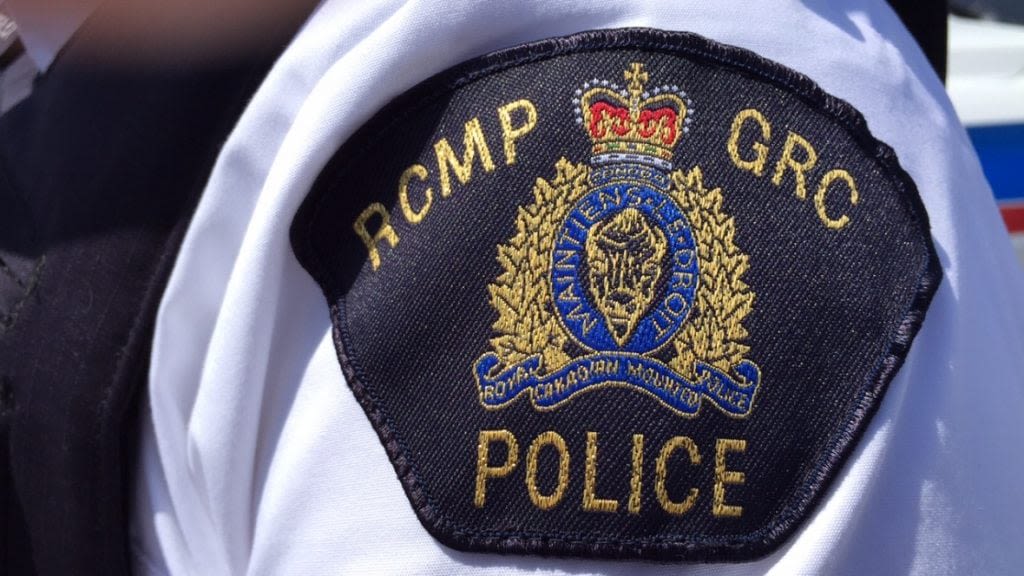
A Halifax lawyer says an RCMP policy change that means officers are no longer required to wear name tags on their uniforms while on duty poses a threat to police accountability and transparency.
Under a policy shift first reported by the Globe and Mail earlier this month, members of Canada's national police force can now choose between wearing a traditional name tag or their five-digit regimental number. The report said the policy has been in effect since March 30.
But defence lawyer Asaf Rashid said in an interview with CBC Radio's Information Morning Nova Scotia that officers should be required to display both, arguing that replacing names with numbers creates a barrier for the public during rapidly evolving situations.
"Who's going to be able to remember a number in a fast-paced environment where police are moving around very quickly," Rashid said, describing the policy shift as a step toward "draconian" practices.
"There's a certain sense of impunity when you don't have your name tag on that maybe you can get away with it. They should be accountable, they should be transparent, and there shouldn't be any limit on that."
Rashid represented several people who were charged when a large group of protesters clashed with Halifax Regional Police more than five years ago during the controversial homeless encampment evictions in the city's downtown.
"In one particular case there was an officer who said he forgot to bring the uniform that had his name tag on it and he seemed to be taking certain liberties away from individuals," Rashid said.
The RCMP introduced the policy change to protect officers from online harassment and "doxing," the compilation and release of someone's personal information, including their name, address and phone number.
"Officers were targeted online and their private life was exposed based on their last name," RCMP spokesperson Sgt. Maj. Julie Gagnon said.
In some cases, Gagnon said, officers received death threats.
"We sure don't want that for officers. So we're now giving the options … because the name might be just easier to find on open sources online," she said.
Gagnon said a regimental number is unique to each officer and is just as effective as a surname for identification. She maintained that members of the public can still submit complaints or identify officers by providing either their name or regimental number to a local detachment.
"The public does not have to worry about the accountability of the RCMP because we are accountable for our actions and we will remain accountable for our actions," Gagnon said.
However, the change reopens a debate highlighted in a 2024 report by the Civilian Review and Complaints Commission for the RCMP.
The oversight body looked into an incident where officers removed their name tags during a protest in British Columbia. It determined the practice was unreasonable without an alternative form of identification.
"It is much harder to hold the police accountable for their actions," the report said. "This eats away at the public's trust in the police."
While the RCMP decided to permit regimental numbers in place of name tags during protests, the commission found that numbers were still difficult for the public to remember in high-stress situations.
Instead, the commission recommended officers wear "prominent but simple codes on the front and back of their uniforms" during public demonstrations.
Related Stories
 Careers
Yukon women’s organization 'disgusted' by language in RCMP news release
2 hours ago
 Careers
‘My fear was too great’: the Pussy Riot member recruited by Russian spies to inform on fellow activists
4 hours ago
 Careers
Antigua to resume talks with US on TCN deal
5 hours ago
 Careers
Eby sidesteps election questions, makes PST and ferry announcements at municipal leaders convention
6 hours ago
 Careers
Lindsay Clancy holdout juror breaks silence, says he didn't have 'any doubts' of her guilt
8 hours ago
 Careers
Carney rallies Liberal MPs as 'crucial session' of Parliament set to resume
11 hours ago
 Careers
BC Conservative leader says she has removed 3 party members from caucus
11 hours ago
 Careers
Long state of emergency ends as anger mounts over arrests
1 day ago