
Growing India
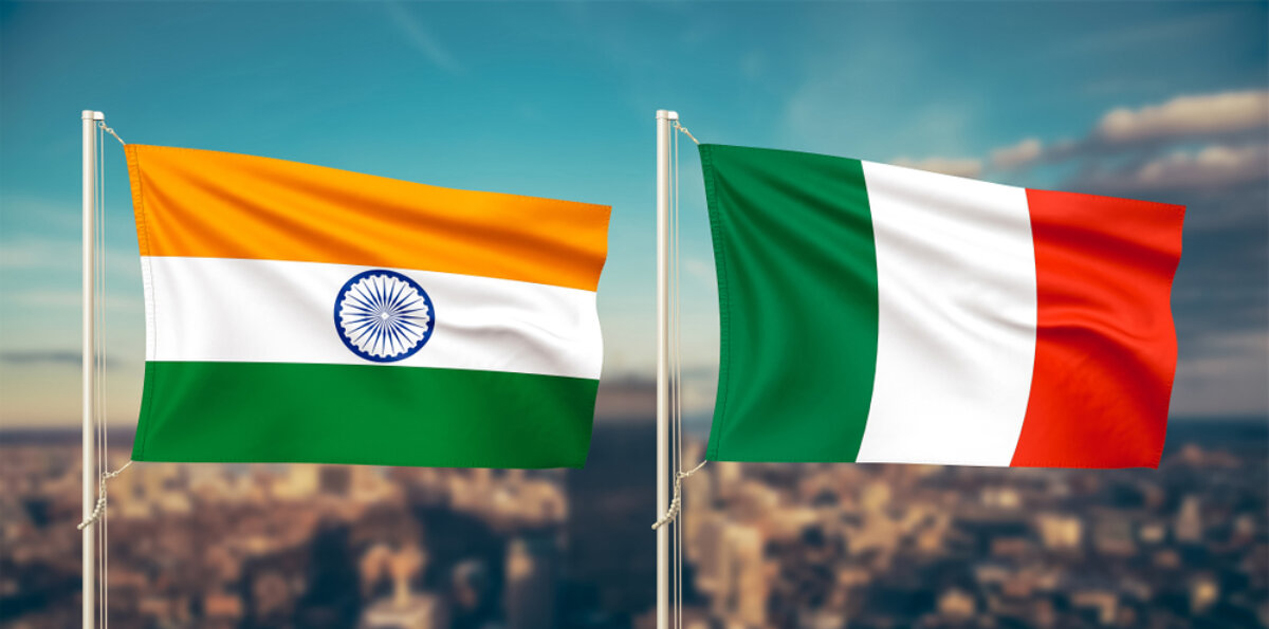
As a crucial landing point for the India-Middle East-Europe Corridor (IMEC), Italy is looking to expand trade relations [3] with India. The Mediterranean country has appointed a special envoy [4] for IMEC, and signed a Memorandum of Understanding to broaden defence cooperation. Overall bilateral trade was over 14 billion euros in 2025, and the aim is to increase this to 20 billion euros [5] by 2029. Presently, the trade balance is in India’s favour (9 billion euros [6] worth of exports to Italy against 5 billion euros of imports from Italy). The Italian chamber of commerce in India is the second-largest [7] of any European Union country. In March 2024, the Italian government launched an export promotion programme targeted at non-EU markets. India and Japan were two focus countries of the programme. Italian companies were encouraged to contact a dedicated unit [8] within the initiative, which could advise them about how to internationalize their operations.
Such positive developments notwithstanding, there needs to be an understanding of the challenges that Indian migrants face in Italy, if they are to serve as cultural bridge-builders and help strengthen relations between these two friendly countries. Merely ignoring the difficulties of economic integration could lead to disingenuously over-emphasizing the many positive aspects of the Indo-Italian relationship in order to compensate for its slowness in reaching full potential.
Although Italy reportedly hosts the ‘largest Indian diaspora in continental Europe [9]’, a sizeable proportion of this diaspora is in low-paid jobs. Around 80% perform manual work. Their average education level is thought to be lower than that of other migrants [10] from outside the EU. Access to a middle-class lifestyle is challenging. Professional guilds often limit membership to those with credentials that require a past record of long-term residency. The number of work permits issued to foreigners is capped. Thus, an estimated 67% of all non-EU migrant [11]s in Italy (not just Indians) end up overqualified for whatever jobs they are working in. This high number might be compared against an EU-wide average of 40%. White-collar employment tends to be concentrated with Italians, since it usually requires fluency in the Italian language.
A 2018 study [12] about Indian migration to Italy and Spain found that members of the Indian diaspora in these two Mediterranean countries often did not plan to settle there permanently, but hoped to eventually move on to English-speaking Western countries. Consequently, they made few efforts to integrate. Being engaged in blue-collar work while posing few demands on the welfare state, they were not perceived as a threat to public order and not prioritized for policy attention. Underinvestment in language training, by both the migrants and the host society, thus served as a barrier to socio-economic mobility, a situation which though not ideal, is tolerable for all.
Italy has a saturated labour market: ‘for every young foreigner who comes to settle in Italy, nearly nine young Italians leave [13]’. An estimated 35% [14] of working-age Italians under the age of 30 are willing to move overseas in search of better wages or job opportunities. Those jobs that exist locally are not necessarily ones that Italians or highly skilled Indian immigrants would choose. Sectors with chronic labour shortages include logistics, care, agriculture and construction. Manpower for these is sourced partly from the country’s migrant population, including asylum-seekers. Lacking access to the job market, people with a migration background end up working in low-prestige jobs under precarious terms of employment. One view holds that ‘the only possible integration is the integration within exploitation [15]’. Having a steep gradient between locals and migrants in an overheated job market acts as a safety valve for social tensions. It ensures that the majority native-born Italian populace does not feel too discontented with its own political system for struggling to improve economic prospects for the next generation of workers.
Italy’s Indian-origin population grew from a base of asylum-seekers during the 1980s to include both skilled and unskilled migrants during the 1990s. In 1991, there were less than 4200 Indian nationals in Italy. By 2023, that number had grown to over 167,000. More than 70% [16] of the diaspora is thought to be of Punjabi origin. Indians tend to be reasonably well-integrated in Italy, with their resilience and strong work ethic being appreciated. Punjabi Jat Sikhs who toil in the fields of northern and central Italy are known as ‘bergamini’, meaning cowherds. More than thirty years ago, it was their forebears who helped rescue the Italian cheese industry, specifically, Parmesan production, as local Italian youth quit farming [17] in favour of white-collar jobs in cities.
Racism specifically directed against Indians features less than in other Western countries, such as the US, but occasional incidents [18] have been reported over the years. Whether these are motivated by cultural hostility, or are cases of opportunistic attacks [19] against vulnerable foreigners, is difficult to say. Although racism does exist against Africans [20], this does not seem to have affected Indian workers. Quite why, it is unclear. One possible explanation – that India is more distant from Italy than Africa, and potentially less likely to be a source of illegal migration – might only be partially valid. At the start of the Covid pandemic, there were claims of anti-Chinese bias [21] in Italy, which might have as much to do with the large size of the Chinese diaspora (roughly 300,000 individuals [22]) as with public fear over the ‘Asian’ origins of the virus. It may be that as the size of the Indian-origin population in Italy grows, more cases of bias targeting Indians might occur.
What is concerning is the large presence of Indians in the agricultural sector, a line of work which easily lends itself to labour exploitation [23]. Under a system called ‘caporalato [24]’ (loosely referring to ‘forced labour’), farm workers are given nominal contracts and then paid a portion of the agreed amount. The rest is consumed in debt repayment, if they had to borrow money in order to find work placements, or in living costs that remain opaque. They work under the control of gang-masters who recruit cheap, casual labour on behalf of wealthy farm owners. Although the system was outlawed in 2016, allegations have been made that powerful commercial interests enable it to continue unofficially. Pressure on the Italian agricultural sector by transnational supply chains of large retailers [25], as well as rising fertilizer prices and water scarcity, can sometimes force farm owners to stay competitive through exploitation of their workforce.
Economic necessity drives large numbers of Punjabi farm workers to emigrate to Italy, where if they are lucky, they might earn almost six times [26] as much as at home. A lot depends on their mode of entry to the country. Short-term seasonal visas are one option, but the prospect of being classed as ‘illegal’ upon the visa’s expiry forces many workers to accept less than ideal conditions in order to remain in Europe. For those who enter Italy through irregular routes, using people-smugglers, the situation is even more grim as they are afraid to report exploitative employers to the authorities.
Roughly 20% [27] of the Indian-origin workforce in the Pontine Marshes, a fertile tract of reclaimed land 40 kilometers south of Rome and a major food-producing region, are thought to have used the services of people-smugglers. Overall, nearly one out of four farm workers in Italy are thought to be working illegally, making them easy prey for the so-called ‘agromafia’. Academic research suggests that the ‘caporalato’ system yields annual profits to the tune of. 25 billion euros [28]
In 2017, an estimated 43% of Sikh farm workers [29] in Italy did not speak Italian. To cope with the physical pain of long hours of exertion, some took opioids with their morning tea. Four years later, the same conditions of drug abuse reportedly existed. A doctor was arrested for prescribing a painkiller to over 200 Indian workers. The drug presumably was used to numb their pain and allow them to work longer hours. Anecdotally, Indian farm labourers have spoken of discrimination (being allowed 20 minutes [27] for a lunch break compared to their Italian colleagues, who get an hour) and also of physical threats and verbal abuse by overseers. In one of the most outrageous cases, in June 2024 an Indian worker died after his arm was caught in a harvesting machine and severed. A member of the farm’s management attempted to evade responsibility for the incident by dumping the body, plus the severed arm, at the worker’s place of residence. This case attracted considerable media attention and brought the issue of migrant rights back into. the public sphere [30]
Notwithstanding the above, growth in India-Italy business relations can only be a good thing. It would raise the bilateral relationship above the current salience played by cheap labour, and lead to skills and knowledge exchanges. Indian entrepreneurs have established companies [31] in Lombardy, a region in northern Italy which serves as the country’s fashion and finance hub. The potential for further investment is considerable: while 700 Italian firms [32] operated in India as of 2023, the number of Indian firms in Italy just two years prior was a relatively meagre 42 [33]. Strengthening political and strategic ties through employment-generated ventures could make Italy one of India’s most valuable partners in Europe and by extension, among the Western community of nations.
Yet, neglecting cultural integration would make Indian-origin businessmen and their employees vulnerable to the kind of populist backlash which has been targeting Indian Americans lately. An Indian-owned business which is seen as a vehicle for enabling migration into an already over-crowded job market would become a target of resentment. To ensure that Indians are welcomed or at least, not perceived as invasive towards the host society’s norms, it is necessary to sensitize Indian workers, particularly those with higher levels of education, to Italian customs and traditions.
By instilling a degree of awareness of what makes Italians, or indeed any other host population, proud of their country’s heritage, and tutoring new arrivals in how to show respect to the host’s cherished values, diaspora Indians can potentially leapfrog over political controversies. Otherwise, even as the number of Indians in Italy rises, due to a recent initiative by the Italian government to boost migration by nearly 500,000 workers [34] over a three-year period, the Indian diaspora will be caught in a cultural equivalent of the middle-income trap: Unable to transition from low-prestige, low-wage work to high-visibility, high-salary work without attracting local hostility. In the long run, it is necessary for India to be an equal partner of Italy, not merely an exporter of exploitable labour. For this, the level of integration in Italian life by Indian workers must incrementally rise.
(The paper is the author’s individual scholastic articulation. The author certifies that the article/paper is original in content, unpublished and it has not been submitted for publication/web upload elsewhere, and that the facts and figures quoted are duly referenced, as needed, and are believed to be correct). (The paper does not necessarily represent the organisational stance... More >>
Related Stories
 India
India
News Live: Watch Times Now Live Streaming | Live News India, World, Politics, Sports News
11 hours ago
 India
India
"More than a rockstar": Indian diaspora in Oslo eagerly awaits PM Modi's arrival
11 hours ago
 India
India
Global Indian Diaspora Alliance (GLO
11 hours ago
 India
India
What is Operation Tiger? The MP ‘rebellion’ rocking Shiv Sena
3 days ago
 India
India
India: Why a country of 1.4 billion is not in the football World Cup
3 days ago
 India
India
News Live: Watch Times Now Live Streaming | Live News India, World, Politics, Sports News
3 days ago
 India
India
Indian outrage over US killing of sailors mounts as leaders attend G7 summit
4 days ago
 India
India
Grateful for your concern about Indian diaspora: PM Modi to Canadian PM | He invited PM Modi to visit Canada | Inshorts
4 days ago