
From ‘Pakistani’ to ‘Bangladeshi’: How BJP reframed its politics of fear
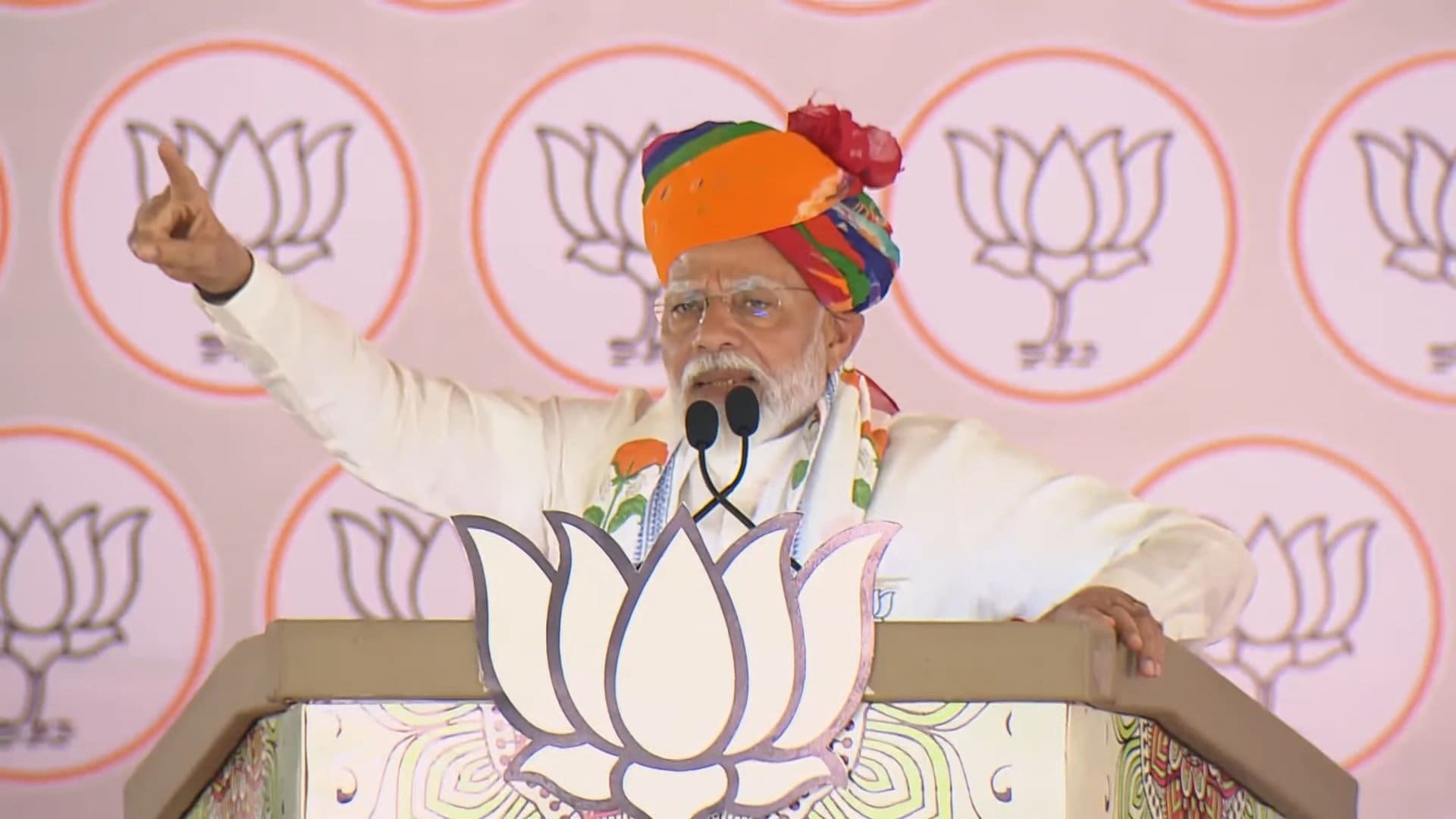
The dust has barely settled on Operation Sindoor, yet India’s ruling Bharatiya Janata Party has already pivoted its political machinery eastward towards Bangladesh and the spectre of “illegal migration.” This is not a reactive shift. It is a calculated move.
For the better part of two decades, Pakistan was the indispensable villain in India’s nationalist political theatre. The word itself became a rhetorical weapon, deployed in election rallies, television studios, and WhatsApp forwards with a reliability that bordered on ritual. Slogans like “Ghar mein ghus ke marenge”, “We will enter their homes and strike” became anthems of a muscular nationalism that delivered electoral dividends in 2019 and again in 2024. The western frontier, with its unresolved tensions and periodic crises, was the BJP’s most bankable political asset.
But something has shifted. In the weeks since Operation Sindoor, India’s military strikes in May 2025, following the Pahalgam attack — a quiet but unmistakable reorientation has taken place. Pakistan is no longer centre stage. The cameras, the political speeches, and the machinery of India’s formidable BJP communications apparatus have turned their gaze eastward towards the border with Bangladesh, and towards the figure of the ghuspetia: the alleged illegal migrant. To understand why, one must first reckon honestly with what Operation Sindoor did and did not achieve politically.
A Diplomatic campaign that fell short
Following the Pahalgam attack and the subsequent military operation, the Indian government launched an ambitious multi-continent diplomatic offensive. All-party parliamentary delegations were dispatched to capitals across North America, Europe, the Middle East, Africa, and Asia, tasked with presenting India’s case: that the attack was orchestrated by Pakistan-based terrorist groups, and that India’s response was measured and targeted.
The effort was not without merit, and it demonstrated India’s desire to shape the international narrative on cross-border terrorism. But the results were, at best, modest. Most governments continued to view the India–Pakistan confrontation as a bilateral dispute. More damagingly for New Delhi’s messaging, the international media landscape was dominated by two competing narratives: the role of Washington in brokering a ceasefire, and the emerging debate over Chinese military involvement in the conflict. India’s carefully constructed counter-terrorism framing was drowned out.
Meanwhile, Pakistan moved deftly in the post-conflict period. Leveraging its strategic position during a period of escalating tensions between the United States and Iran and the wider instability gripping the Middle East, Islamabad succeeded in repositioning itself internationally as a credible regional actor. Far from being isolated, Pakistan emerged from the crisis with its diplomatic standing arguably strengthened. For the BJP, this presented a problem. The terrorism narrative, the axis on which so much of its national security politics had turned since 2014, had run its course as a reliable mobilising tool.
An old playbook, a new frontier
The BJP and the broader Hindutva movement have always understood that nationalist politics requires a credible external threat and a vulnerable internal enemy. For years, Pakistan provided the former; Indian Muslims, repeatedly cast as suspects by association, provided the latter. The Ram Mandir issue, another cornerstone of the Hindutva political project, reached its symbolic conclusion with the temple’s inauguration in Ayodhya. Another pillar of the nationalist agenda had served its purpose.
With the 2029 general election on the horizon, the party faces what might be called a nationalist vacuum. The tested repertoire of terrorism, Pakistan, the mosque-temple binary has either been exhausted or is too geopolitically dangerous to exploit. A renewed escalation with Pakistan, in a context where American attention is consumed by the Iran crisis and the Strait of Hormuz, risks triggering consequences that cannot be controlled.
Bangladesh offers a way out. The alleged presence of millions of “illegal Bangladeshi migrants” in India, particularly in West Bengal and Assam, is a narrative with enormous elasticity. It simultaneously invokes sovereignty, demographic anxiety, economic grievance, and, crucially, religious identity. It can be localised for state elections and nationalised for general ones. It has no foreseeable resolution. And it maps neatly onto a global political moment in which immigration has become the defining wedge issue from Washington to Warsaw.
The architecture of disenfranchisement
What makes this political project particularly alarming is the institutional infrastructure being built to sustain it. The mechanism at its centre is the Special Intensive Revision, or SIR, an electoral roll revision process implemented across Bihar, West Bengal, and Assam. The scale of deletions from voter rolls is striking, roughly six million names in Bihar, an estimated nine million in West Bengal, and hundreds of thousands of so-called “D-voters” (doubtful voters) in Assam.
Individually, electoral roll revisions are a routine administrative exercise. But the cumulative pattern here is difficult to read as coincidental. Critics, including opposition parties, civil society organisations, and electoral rights advocates, have raised serious concerns that the SIR process is being used selectively, targeting communities that are disproportionately Muslim, Bengali-speaking, or from marginalised social groups.
More troubling still is what has followed these deletions. Reports from West Bengal and Bihar indicate that individuals removed from electoral rolls have also been deemed ineligible for state welfare programmes, including ration cards and direct benefit transfers. The policy rationale offered is the prevention of fraud and duplication. But the practical effect is to strip people of social protections on the basis of their electoral status, a conflation of voting eligibility with citizenship rights that legal scholars have described as deeply problematic.
The final move in this sequence is the most politically consequential: the systematic effort to blur the distinction between a D-voter, a category that can include genuine Indian citizens facing documentation challenges and an “illegal immigrant.” Through social media, mainstream television, and coordinated political messaging, the two categories are being merged in the public imagination, particularly across northern India. Deleted from voter rolls, cut off from welfare, and recast as foreign infiltrators: this is how twenty million people are being slowly transformed, in the political narrative at least, from citizens into suspects. And gradually, it has become a political slogan in eastern India: “Detect, delete, and deport.”
There is a global dimension to this that should not be overlooked. BJP strategists have watched carefully as immigration became the dominant political issue across Western democracies, the force that reshaped elections in the United States, drove Brexit in the United Kingdom, and turbocharged the far right across continental Europe. They have noted how governments in the Global North have built border walls, conducted mass deportations, and stripped welfare entitlements from migrants, often with broad public support and minimal international censure.
The lesson drawn is a stark one: if the West can pursue aggressive immigration politics and face little sustained pushback from the international human rights architecture, why should India be different? The rhetorical cover is ready-made. India is not targeting Muslims; it is defending its borders. It is not disenfranchising citizens; it is cleaning up electoral rolls. The language of “pushback” and “infiltration” already in common use in European political discourse gives Indian nativist politics a veneer of global normalcy.
The call by West Bengal BJP leader Suvendu Adhikari to “teach Bangladesh a lesson like Israel did in Gaza” represents the extreme end of this spectrum — a statement that drew condemnation but also, disturbingly, a measure of political impunity. It is a signal of where the rhetoric could travel if left unchecked.
India is a democracy of extraordinary complexity, home to nearly 1.5 billion people, hundreds of languages, and a constitutional framework built on the promise of pluralism. The communities now in the crosshairs of this political project, Bengali Muslims, Assamese minorities, and impoverished migrants who may or may not hold the right documents, are among the most marginalised in the country. They are poorly positioned to mount a legal or political defence against a state apparatus mobilised against them.
The international community has, on the whole, been reluctant to engage critically with India’s internal politics, partly out of respect for its democratic credentials and partly out of strategic interest in the country’s growing global weight. But the systematic manufacture of statelessness, the deliberate construction of a class of people who can be denied rights, welfare, and belonging, is not a domestic matter that can be quarantined from international concern. The BJP has found its new frontier. The question is whether anyone, inside India or beyond it, is paying close enough attention.
Mehebub Sahana is a researcher specialising in decolonial politics, caste, and climate justice, with a focus on South Asia. The views expressed in this article are the author’s own.
Related Stories
 India
India
Why India is prioritising stability over federalism in Sri Lanka's politics
13 minutes ago
 India
India
PM Modi sees India’s space startups as a magnet for global talent
1 hour ago
 India
India
‘Vote
6 hours ago
 India
India
Centre forms panel to finalise 'permanent political solution' to Gorkha issue
12 hours ago
 India
India
India news: Gandhi's notes sold for $1.7 million at auction
17 hours ago
 India
India
Inside BJP’s 10-point Vande Mataram resolution: ‘No vote bank' politics, cites Mahatma Gandhi’s ‘anti
20 hours ago
 India
India
'Against communal pressure, appeasement and vote-bank politics': BJP's Vande Mataram salvo at Congress over two
22 hours ago
 India
India
The Cost of Cash Transfers: India’s Welfare Dilemma
23 hours ago