
From idea to startup: Entrepreneurial spirit drives Watson College faculty
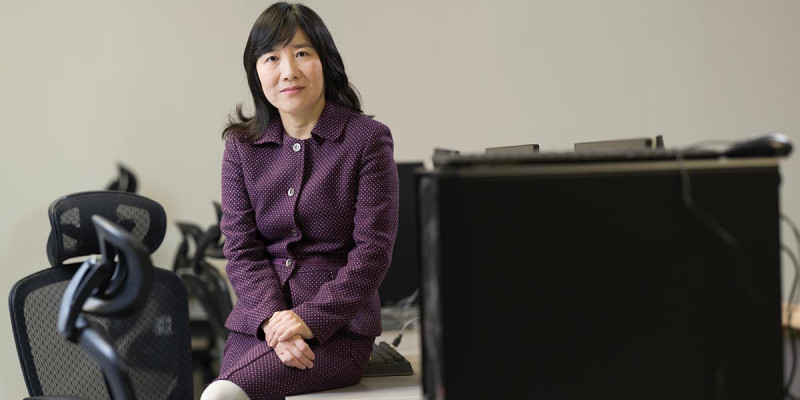
From idea to startup: Entrepreneurial spirit drives Watson College faculty
Juggling academics with enterprise requires new skills and time management
Before becoming a professor, Nancy Guo worked as a doctoral student with NASA. Her job was to predict which parts of NASA’s robust satellite system were most likely to fail, so engineers could fix problems before they began.
Anticipating failures proved troublesome. Combing through every single line of the millions of lines of code would take years to finish. Devising AI models that would do just that — pinpoint which components were most likely to fail in deployment — was the basis of her project.
The same principles eventually became the foundation of Guo’s next venture: a startup company with software targeting cancer cells rather than glitches in code.
“This is perfectly aligned with cancer metastasis or patient treatment response,” Guo says, “because you don’t know how they’re going to respond. You don’t know which tumor will metastasize, so we have to use available data to predict that.”
Guo, now a Professor of Empire Innovation at Watson College’s School of Computing, is one of several faculty members who juggle academics with enterprise. She’s seen projects through each stage of their lifecycle: inception, middle age, then conclusions.
“There is an end to every project. Eventually, when it’s mature, that’s the time you have to think about a different direction, because there is nothing more to research from an academic point of view,” Guo says. “That is the phase when entrepreneurship should kick in.”
Guo founded her company, SOSTOS, in 2020 following a grant from the National Institutes of Health. Now staffed by former students, SOSTOS continues Guo’s longtime dream to better understand human bodies through computational science. It targets lung and breast cancer, screening patient data and medical records to help doctors determine better treatment possibilities beyond current options.
“You don’t always have access to resources or manpower to analyze all the data,” she says. “Those are the critical gaps we want to fill.”
Startups are the accumulation of years’ worth of work, but they can also offer glimpses into promising shifts in the field. That, at least, is what Associate Professor Scott Schiffres from the Department of Mechanical Engineering sees with his company, ChipAdd.
Schiffres is now on leave from the University, backed by funding and mentorship through the highly competitive Activate Fellowship, to pursue his technology full throttle. His work improves the cooling capabilities of microchips by 3D-printing structures directly onto the devices, rather than using bulky heat sinks.
This comes in time for the AI boom: AI chips are consuming as much power as an electric cooktop, over an area the size of a credit card, while racks the size of a closet are consuming as much energy as 500 American households. Data centers can use as much energy as major cities.
“Liquid cooling used to have lots of resistance from industry experts, but now it is well-established. What we’re doing is the next step,” Schiffres says. “That might seem a little bit crazy now, but we have conviction that it’s going to be very important for the market in the future.”
But while building a company from nothing is already tough, balancing that with the rigors of academia is tougher. For Professor Tara Dhakal, a faculty member in the Department of Electrical and Computer Engineering and director of the Center for Autonomous Solar Power (CASP), seeing the bigger picture helps him shoulder the task.
“The most rewarding part is knowing that you are doing something that can have a huge impact. The research doesn’t just disappear. When you conduct research, you train students, they earn their PhDs or master’s degrees, and they go to work and serve society,” Dhakal says. “The impact is always there. But when something developed in your lab evolves into a product that can also serve society, that is an incredibly fulfilling feeling.”
Dhakal founded his company, Pinwheel Solar, in 2022. It specializes in flexible solar cells that can be placed on practically any surface. Compared to your average solar panels on the roof, these cells are far lighter and can be easily transported anywhere. This technology uses the mineral perovskite and can be manufactured in miles at a time, a process that only requires 100 degrees Celsius to produce, while silicon cells conventionally require more than 1,000 degrees.
These innovations aim to improve some aspects of our lives, from our health to homes. Pitching them to investors, however, can be wildly different from writing them on paper.
“In academia, you want to share everything and talk about the research,” Schiffres says. “With startups, your know-how and technical data are your value when you talk to others, so you’ve got to be a little different with how you communicate.”
Pitching is only the beginning. Startup leaders must navigate tricky patent laws and raise enough funds to stay afloat.
But while taking the leap into entrepreneurship might feel bruising, it isn’t impossible.
“There’s a learning curve, but there’s help, too,” Dhakal says.
For Guo, help came not only from accelerator and governmental programs like the National Science Foundation’s I-Corps, but also from her students. Her former pupils have landed jobs in the pharmaceutical industry or achieved tenure at other universities. But Guo sees startups as another logical, albeit unique, opportunity for students who have already spent much of their academic careers training to conduct research.
“It used to be that everyone wanted to go to Google, Microsoft, or Meta. Now, they have to think about other options,” she says. “And then there is this option for students: Why don’t you continue developing your own products?”
Just as it took a little convincing for Guo to start a company, persuading her students to follow her also took some work. Beyond landing the science and funding, the challenge of talent recruitment taught Guo valuable lessons in the spirit of trying.
“The first questions are, ‘What is the solution? Can I do it? How can we do this?’ instead of, ‘Can I find someone else to do this?’” she says. While Schiffres’ entrepreneurial journey has sharpened his skills in evaluating the economic impact of his technology and communicating with different audiences, he sees it as a two-way street.
“I also think it’s going to help me teach in the future, too, because I have all these experiences of dealing with real engineering, manufacturing, and business challenges — connections that I can bring to the future,” he says.
For those interested in starting their own ventures, Guo says leaving the lab is the most important part. Once in the field, however, it can be hard to get the lab out of your head. Dhakal’s biggest challenge in the entrepreneurial world wasn’t dealing with lawyers or picky venture capitalists, but managing his time while mentoring doctoral students, running CASP, and leading his own company.
Last year, he shut down his computer and attended a meditation camp to clear the noise. He did not speak for 10 days, awakening each morning to the crash of a gong, then straining his back while meditating in silence. He met many people with whom he’d compare his progress, wondering how they could sit so straight without hurting like he was.
At the end of the camp, the man he’d spent more than a week meditating beside told him he was impressed by Dhakal’s discipline the whole time, too. It reminded him of an early lesson he learned from starting
a company: What matters is not the perfect result or success but enjoying the journey — whether that’s 10 days of backaches and silence or four years and counting running Pinwheel Solar.
“In the early stage, it is tougher — but at the same time, it’s exciting. You need to be excited about it. But now I’m a little bit more experienced,” Dhakal says. “Let me try what I can do without worrying too much about the end result. If you keep thinking about whether you’ll be successful, it can become stressful. Just give your best and honest effort, and take it as a fun ride. See where it goes.”
Related Stories
 Business
Robot factories and hypersonic missiles: JPMorgan Chase’s first $5 billion of defense investments
1 week ago
 Business
Police say a car has hit an Australian lawmaker, critically injuring her; the driver was arrested
1 week ago
 Business
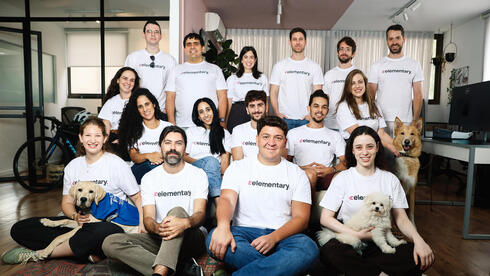
Boomi acquires Israeli startup Elementary for $43 million
1 week ago
 Business
Mega chicken farm expansion plan withdrawn
1 week ago
 Business
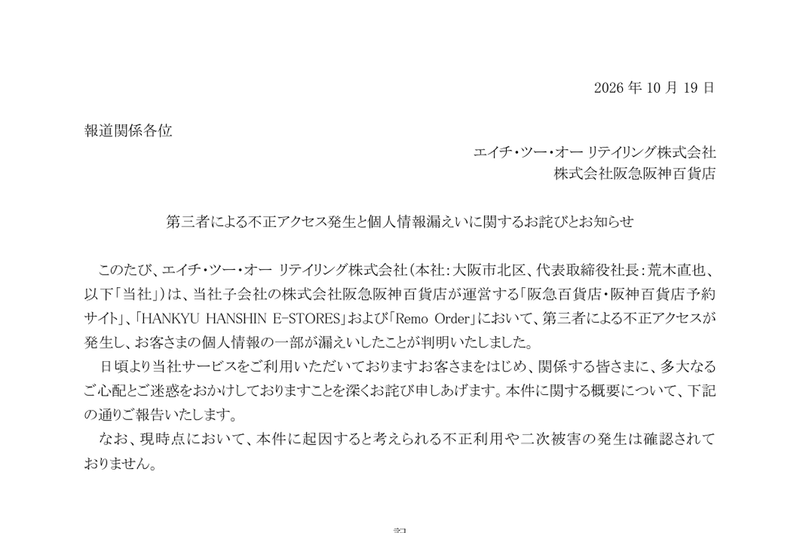
Data Breach at Hankyu Hanshin Department Store Common ID System Affects Nearly All 1.26 Million Members
1 week ago
 Business
Global Startup EXPO and Nippon Startup Awards 2026: METI Showcases Japan's Deep
1 week ago
 Business
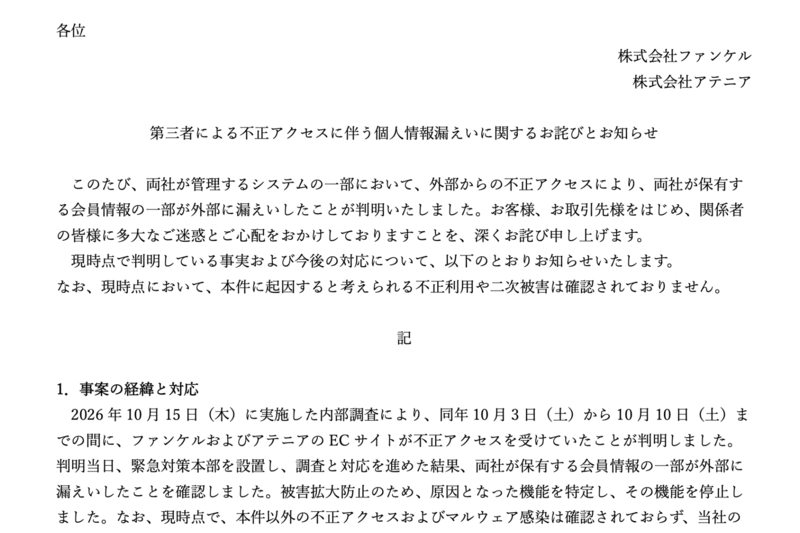
FANCL and Attenir Suffer Data Breach Affecting 780,000 Customers, Exposing Addresses, Names, Phone Numbers
1 week ago
 Business
DeepSeek Quietly Ships V4.1-Flash
1 week ago