
Founders scale AI study app to $13M revenue

Editorial analysis: Rapid productization using large language models and generative tools remains a high-leverage path for very small teams, but it often shifts work from feature design to validation, monitoring, and technical debt management. Practitioners watching similar startups should track where time and budget flow after initial traction: towards data pipelines, testing, or cleanup.
Business Insider reports that childhood friends Rudy Arora and Sarthak Dhawan launched an AI study app in January 2024 and scaled it quickly, reaching roughly $13 million in revenue by age 21, per the interview. Business Insider reports the product was generating almost $500,000 in monthly revenue by March 2025. The article says both founders left college at the end of their sophomore year to run the company full time and that they told Business Insider they view using AI to write code as powerful but accompanied by costs.
Founders' account and direct detail Business Insider quotes the founders describing the app's origin as a personal need for better class notes and a project that snowballed into a business. The piece includes first-person remarks such as, "The goal wasn't to build something we'd drop out of college for," and recounts the decision to go full time at the end of their sophomore year, as told to Business Insider.
Editorial analysis - technical context: Startups that lean on generative AI to accelerate development typically trade faster iteration for increased burden in three areas: validation of model outputs, reproducible training/data pipelines, and long-term maintainability of AI-assisted code. These are industry-wide observations, not claims about the founders' internal engineering choices.
For practitioners: Pay attention to instrumentation and testing around model-driven features, invest early in human-in-the-loop checks where correctness matters, and track unit-economics at the feature level rather than only headline revenue. Observers of small AI teams should also note hiring patterns: early hires often prioritize ML ops, data engineering, or product reliability after initial product-market fit.
public disclosures or interviews that provide the app name, revenue breakdowns by product or cohort, how much of the stack is third-party LLM APIs versus in-house models, and whether the company publishes technical notes on validation or safety approaches. Business Insider is the source for the founder interview and the revenue and timing figures cited above.
This is a notable founder-success story showing how generative AI enables rapid monetization for tiny teams, which is interesting to practitioners but not a technical breakthrough or sector-changing event. Freshness is current, so small negative adjustment applied.
Practice interview problems based on real data
1,625 SQL & Python problems across 15 industry datasets — the exact type of data you work with.
Related Stories
 AI News
Artificial Intelligence As It Once Was
47 minutes ago
 AI News
South African AI Startup Verascient Raises $1.2m to Scale Enterprise Platform
1 hour ago
 AI News
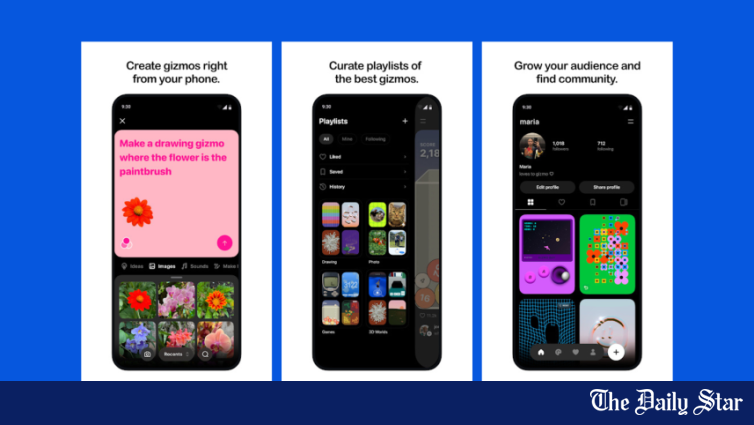
Meta rolls out AI game
1 hour ago
 AI News
UK and Ukraine sign AI defence partnership
1 hour ago
 AI News
Google's AI Chip Business Is Booming. Why Gemini 4 Matters More For Google Stock.
1 hour ago
 AI News
Australia's music industry bans AI
1 hour ago
 AI News
AI cost scrutiny is a win for LegalTech
2 hours ago
 AI News
Building the Data Foundation for AI
2 hours ago