
FIFA gives Jarell Quansah two-game ban for red card, would miss England’s World Cup semi
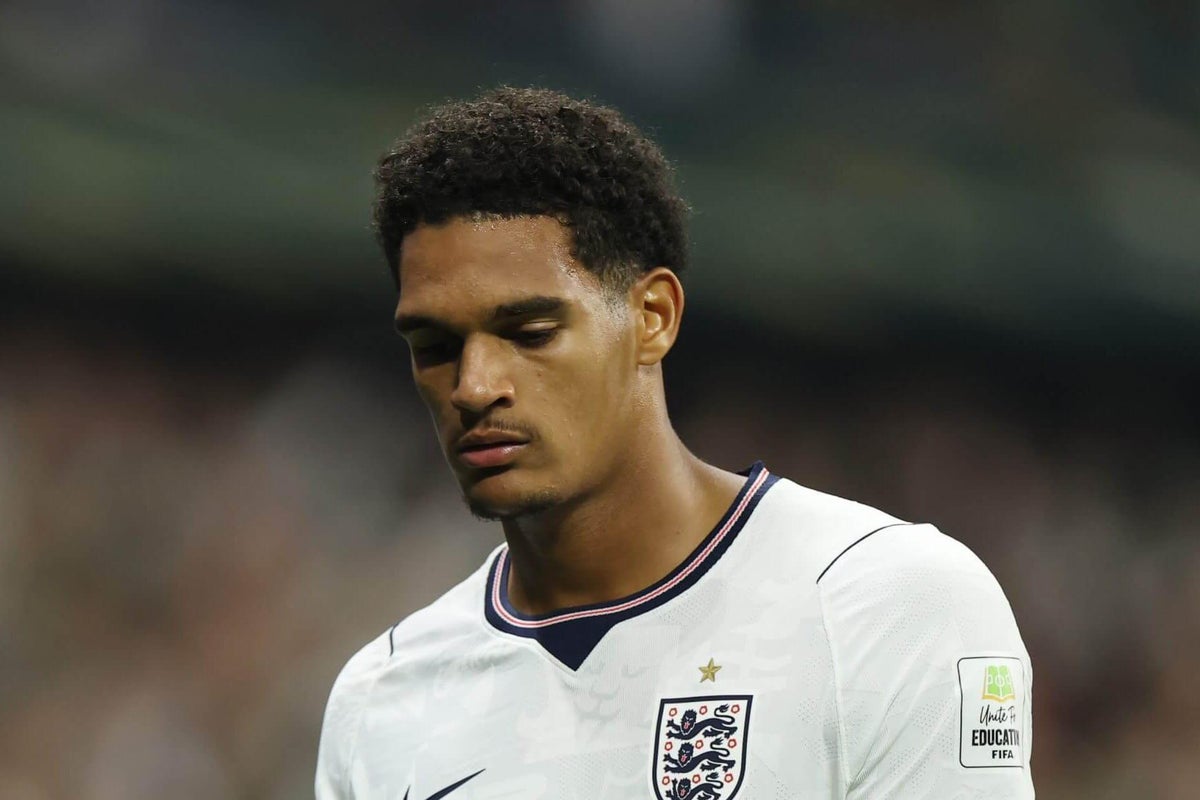
England’s Jarell Quansah has been given a two-match ban for the red card he received during England’s round-of-16 win over Mexico.
Quansah, 23, was sent off in the early stages of the second half in England’s 3-2 win over Mexico on Sunday night, his second appearance and start of the tournament, following a video assistant referee review.
Under FIFA’s rules, any World Cup sending-off offence is accompanied by a ban for the team’s next game, according to Article 10.5 of the tournament regulations.
But FIFA confirmed in a statement on Thursday, two days before England’s quarter-final against Norway, that the defender will also be banned for his country’s semi-final, if they advance.
“The suspension will be served in the upcoming match(es) of the representative team of England in the FIFA World Cup 2026 and in accordance with art. 69 of the FIFA Disciplinary Code,” a FIFA statement said.
There is no mechanism in FIFA’s rules for the 2026 tournament for teams to appeal against red cards, but the English FA had been considering its options over the sanction. The FA also cannot appeal Quansah’s two-game ban, handed down by FIFA’s independent disciplinary committee.
Sources briefed on the proceedings told The Athletic that the FA was strongly engaged throughout the process, making the point that it felt the VAR protocol was not correctly followed. Sources added the FA wanted the fact that the on-pitch referee was shown a still image of Quansah’s challenge first, before a video replay — football’s rules state that officials should primarily be shown incidents in normal speed, but that freeze frames can be used to determine to point of contact — used as mitigation, but that the organisation accepted that a two-game ban was likely under FIFA’s general disciplinary rules.
Bayer Leverkusen’s Quansah had started two games at right-back for England at the World Cup, filling in for the injured Reece James. His absence leaves Djed Spence as the only fit natural right-back in England’s squad, with James having missed the last three matches due a hamstring issue.
The French Football Federation had also approached FIFA over rescinding Michael Olise’s yellow card during their last-16 win over Paraguay, but that booking has been upheld. A yellow card in their quarter-final against Morocco would rule Olise out of the semi-final, should France qualify.
That followed the controversial FIFA decision that allowed Folarin Balogun to play for the United States against Belgium despite his red card in the round before.
The striker had been sent off in the USMNT’s win over Bosnia and Herzegovina, but FIFA controversially confirmed his subsequent one-game ban would be suspended for a year. Balogun started the Belgium game and the U.S. lost 4-1.
It later came to light that U.S. President Donald Trump had called FIFA president Gianni Infantino to ask for a review of Balogun’s ban, leading to the Belgian FA challenging his eligibility to “defend football in general — its integrity and its ethics”, head coach Rudi Garcia said in a news conference.
England take on Norway in their quarter-final in Miami on Saturday.
Analysis: The right decision, but where is the consistency?
At surface level, Quansah’s two-match ban is entirely uncontroversial. It was a clear red card for violent conduct, a reckless tackle on Mexico’s Jesus Gallardo. A two-match ban, on top of being sent off, seems proportionate.
The controversy stems from FIFA’s decision last Sunday to allow Balogun to play in their round-of-16 match against Belgium despite a red card in their previous game against Bosnia and Herzegovina.
FIFA did not rescind Balogun’s red card or overturn the suspension. It took the extraordinary step of suspending the ban for a probation period of one year, thus clearing him to play against Belgium. If FIFA had simply rescinded Balogun’s red card on the basis of wrongful dismissal, it would have made more sense and caused less controversy.
The sense of outrage felt by many within football — not just the Belgian Football Federation and European’s football governing body UEFA — grew when it emerged that Trump had called Infantino direct to request a review. Trump confirmed as much on Monday.
Infantino has maintained that the Balogun decision was taken solely by what he calls “the independent FIFA disciplinary committee”, adding that the committee’s independence is “essential to the credibility and integrity of football — and this must always be respected”.
Has trust in the credibility and integrity of FIFA’s disciplinary processes been enhanced by its handling of the Balogun case — or indeed previously when it amended its rules which allowed Cristiano Ronaldo to play in Portugal’s opening game of the World Cup despite a red card in their penultimate qualifying campaign against Ireland last November?
Related Stories
 World
World
Wisconsin elections officials issue guidance for handling federal agents at polls
41 minutes ago
 World
World
Barack Obama tells Glasgow audience drift towards extremism 'not inevitable'
41 minutes ago
 World
World
Midnight: Echoes of the Worldcore Overview
41 minutes ago
 World
World
Pentagon will not livestream execution of Fort Hood shooter: Trump
1 hour ago
 World
World
Richmond, B.C., restaurant crowned North America's best by industry group
1 hour ago
 World
World
Midterm campaigns are asking, where's the beef? And how much does it cost?
2 hours ago
 World
World
Canadian women’s rugby team looks to topple world champion England on home soil
2 hours ago
 World
World
Trump cancels plan to livestream execution following global condemnation
2 hours ago