
Entertainment, Expanded: Cinema Entertainment Centers Redefine an Exhibition Standard
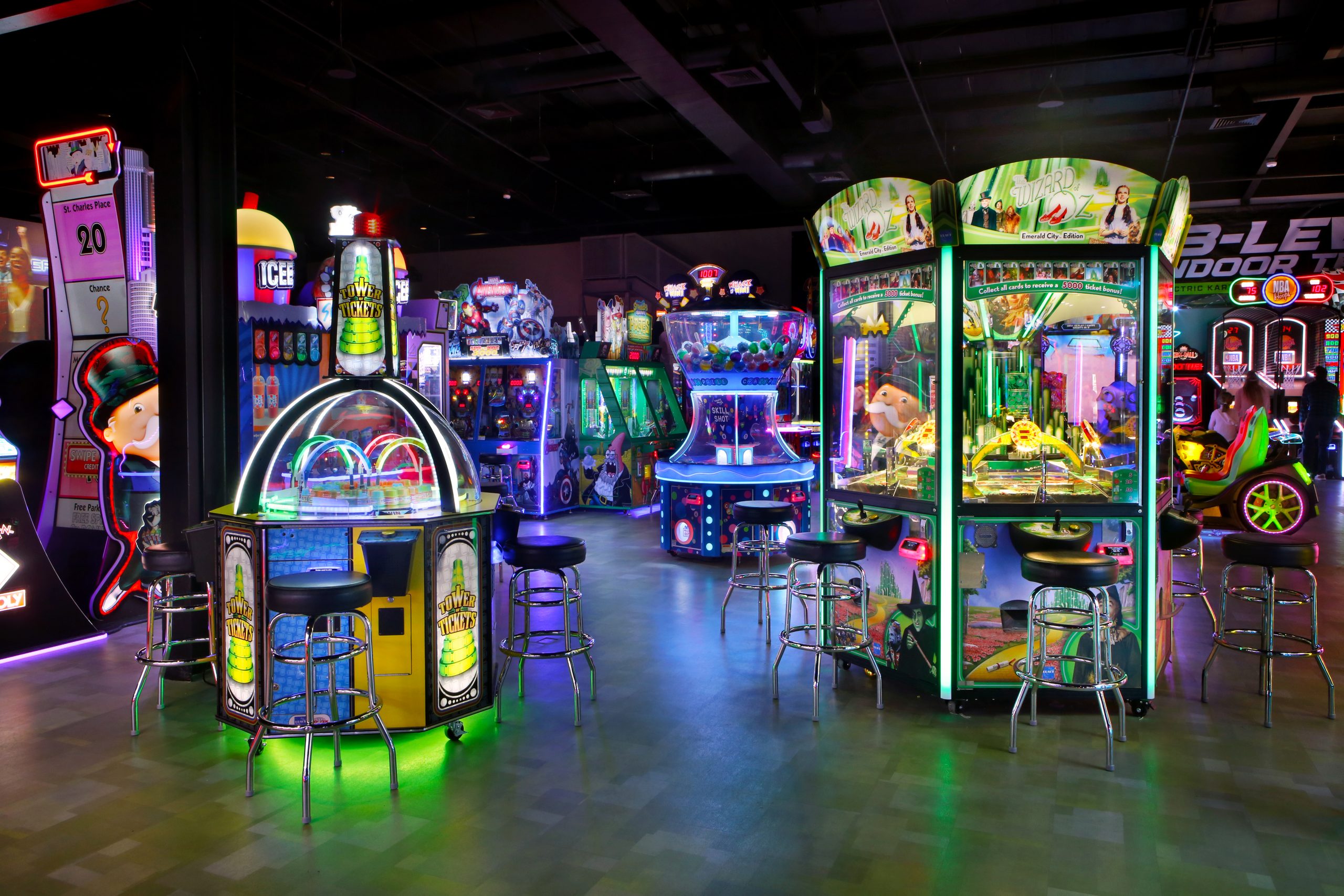
Since the dawn of the exhibition industry, cinema owners have been looking for ways to bring customers through their doors. Now regarded as essential to the cinema experience, things like air conditioning and concessions were once hot new amenities to expand audiences and further establish cinemas as a focal point in communities and American culture. Late in the 20th century, the dine-in cinema increased the industry’s purview, letting customers enjoy “dinner and a movie” under one roof. On the heels of that innovation, and springing from the same geographical location, the great state of Texas, comes one of the newest and fastest-growing categories in North American cinema exhibition: the cinema entertainment center (CEC).
Six years after first covering the emerging exhibition category in an August 2020 feature on the origins of the CEC (“The Next Big Thing: The Rise of Cinema Entertainment Centers”), Boxoffice Pro checks back in with some of the major players in the space to see how the concept has evolved.
With chains like Cinergy Entertainment, ShowBiz Cinemas, Evo Entertainment, and FatCat Entertainment among its earliest domestic innovators, the CEC incorporates various entertainment amenities into the cinema complex. The extensive customizability of the concept—bowling and arcade games are two of the most common CEC features, with other options including kart racing, escape rooms, and mini golf, plus dining options and spaces for private events—is reflected in the fact that, though Boxoffice Pro uses “cinema entertainment center,” there is no industry-standard term for this type of venue. They can be referred to as family entertainment centers, social entertainment centers, or simply location-based entertainment.
Regardless of the specific term, CECs are blossoming, having expanded beyond concept-specific chains to pop up in the portfolios of major domestic exhibitors. It’s easy to see why: Demand among consumers for unique experiences is higher than ever, and several years of industry-wide turmoil, with the pandemic and subsequent labor strikes limiting the number of films available for release, serve as a sharp reminder of the dangers of relying on a single content source.
B&B Theatres opened its first CEC in 2018 and has invested in several since, attesting to the benefit of having multiple entertainment options under one roof. “The movies create a built-in, recurring refresh for our entertainment audiences,” said Paul Farnsworth, executive director of communication and content at B&B Theatres. “Leveraging the excitement of a new release to promote our non-theatrical concepts is a major component of our branding, awareness, and marketing. Our creative department is dedicating more time and resources than ever before toward eventizing all aspects of the entertainment space, focusing on private events and parties, themed events, one-off activations, and timebound offers.”
By their very nature, CECs require a lot of space, which largely limits their viability to areas without sky-high real estate costs and explains why they, like dine-in cinemas, got their start in Texas. One of the first chains dedicated to CECs—which they call social entertainment centers (SECs)—is Dallas-based Cinergy Entertainment Group, which opened its first location in 2009 and now operates 11 locations across Texas, Oklahoma, North Carolina, and Illinois. Over the course of its expansion, Cinergy has found that a market is a strong fit for a social entertainment center if it “has enough households with the spending power and convenient access to make the center part of their regular entertainment routine,” said Traci Hanlon, Cinergy’s chief marketing officer. “You have to look beyond the city’s population to the surrounding communities and how far people will realistically travel to visit. Where guests live, how easily they can reach you, and what other businesses compete for their entertainment spending all matter.”
When considering expansion into a new market, an abundance of existing entertainment options can be a red flag. “If a market is saturated with similar concepts, it can be difficult to differentiate the guest experience,” said Dan Fonseca, executive director of technical services at Santikos Entertainment, which opened its first CEC, Santikos Casa Blanca in San Antonio, Texas, in 2019. At the same time, said Hanlon, “A lack of competition deserves investigation, too. It can indicate an opportunity, but it can also indicate insufficient demand. The market has to support the business after the novelty wears off.”
Another chain with a proven record of keeping CECs thriving over the long haul is leading Canadian exhibitor Cineplex, which in 2009 opened its first Xscape Entertainment Centre, an arcade with video and interactive games inside a theater. Now, the chain boasts 85 Xscape Entertainment Centres, plus 19 entertainment centers spread across three brands: The Rec Room, Playdium, and Cineplex Junxion. “A strong market for a CEC starts with the right mix of demographics, density, and demand drivers,” said Kevin Watts, Cineplex’s executive vice president of national operations. “We look for communities with a strong family base, young adults, and groups looking for social experiences, as well as areas that can support repeat visits for birthday parties, date nights, corporate events, team outings, and casual nights out.” This spreads customer demand more evenly than is possible with a traditional cinema, which is beholden to a release slate that clusters blockbusters during the summer and holidays.
A venue that provides such a varied roster of experiences requires the right physical location, whether an existing site ready for refurbishment or something newly built. “The right location needs to be in a high traffic area that is easy to access; supported by retail, restaurant, or entertainment traffic; and large enough to accommodate a broad mix of attractions, games, food and beverage, and an event space,” said Watts, citing “visibility, accessibility, and co-tenancy” as key factors in site selection.
“Bigger is not always better,” cautioned Santikos’ Fonseca. “In a traditional theater, the guest journey is relatively straightforward: ticketing, concessions, and then the auditorium. A CEC requires us to think more broadly about how guests move through the entire space, ensuring that attractions are visible, intuitive to find, and easy to access. Every square foot must serve a purpose … Earlier in our evolution, aesthetics sometimes took priority over functionality. Today, we give equal weight to creating spaces that are visually appealing, operationally efficient, and designed around the guest experience.”
For Cinergy, too, experience in the CEC (or SEC) space has led to refinement in how the space is presented. “Our earlier locations taught us that adding attractions is only the beginning. Layout determines whether guests discover and use them,” said Hanlon. “We also learned that a CEC requires expertise across several distinct businesses. Movies, bowling, games, and restaurants each have different staffing, training, and maintenance needs. Those lessons inform newer locations like Midland Tall City, where premium cinema and a multilevel electric Speedway each give guests a reason to visit. The opportunity is to make those experiences work together while operating each one well.”
In the world of CECs, crafting a stellar guest experience without sacrificing operational efficiency has an additional wrinkle. Cinemas get new movies every week, keeping content fresh and encouraging repeat visits. While certain amenities common to CECs like laser tag and bowling are more or less evergreen, entertainment activities that are faddish today can wane in popularity tomorrow, and arcade games, particularly those tied to specific movies or franchises, can grow stale. (Having an arcade game based on 2009’s Terminator: Salvation gathering dust in a corner, for example, is not a good look. NYC moviegoers, IYKYK.)
“Different attractions have different useful lives, so the timing needs to reflect how guests use them,” said Hanlon. For Cinergy, that includes an annual review of attractions, after which games are refreshed or swapped out with games in other locations. At Santikos, games are also rotated out “at least once a year, keeping the experience fresh for frequent guests while controlling costs,” said Fonseca. “Every two to three years, we evaluate new purchases and replace lower-performing machines.” All decisions are based on data and research.
Cineplex monitors “play patterns and guest preferences to keep the mix current, balancing new technology and trending experiences with nostalgic favorites that continue to perform well,” said Watts. But Cineplex also keeps their lineup fresh through an emphasis on live programming, “from comedy shows and bands to special events that give guests different reasons to visit beyond games and attractions,” said Watts. “At the same time, we continue to reinvest in our existing locations by introducing new games, testing new concepts, and layering in larger attraction updates where they make sense.”
Per Cinema United’s 2026 Cinema Investment Report, North American theater owners have reinvested $2.7 billion in their cinemas over the past two years, with some of that money going towards major circuits opening their first CECs. Texas-based Cinemark, the third-largest exhibitor in North America, opened their first two CECs, Gamescape by Cinemark, in 2026. In 2025, Megaplex Theatres opened their first CEC in South Jordan, Utah, as part of the Daybreak master-planned community. Luxury exhibitor Emagine Entertainment’s renovation of a Batavia, Illinois multiplex added a semi-private “high-roller room” with bowling, pool, shuffleboard, and a private bar. Harkins Theatres opened their Norterra BackLot location, featuring bowling, VR experiences, an arcade, and a sports bar, in Phoenix, Arizona, in 2025.
At B&B Theatres, six CECs across six states are in various stages of development, highlighting the chain’s belief in the concept’s staying power. “For 95-plus years, we were (fairly exclusively) a movie theater company,” said Farnsworth. “We are now evolving into a cinema-centric entertainment provider. That new identity requires a shift in focus and intent, and that involves learning new skills and proficiencies. At the end of the day, however, we still work in the greatest industry on the planet, and we’re excited for the opportunities that are ahead!”
Related Stories
 Entertainment
Weekly quiz: Which music icon's house did Miley Cyrus get married at?
1 hour ago
 Entertainment
Why Bengali movie Sadhak Bamakhyapa is being pushed again and again due to Bollywood movies
1 hour ago
 Entertainment
Sony AATH Brings Bengali Cinema Premieres Every Sunday
11 hours ago
 Entertainment
BBC Introducing Live showcases up-and
12 hours ago
 Entertainment
DJ gets lucky after finding lost Daft Punk mixtape
12 hours ago
 Entertainment
Bhopal Weekend Events: Harrdy Sandhu Concert, Hockey Finals, Comedy Shows And So Much More
12 hours ago
 Entertainment
What's in Cinemas: Nov. 26
14 hours ago
 Entertainment
The best credit cards for entertainment spending
17 hours ago