
Emergency doctors are leaving or reducing hours in face of 'hopeless' ER crisis: survey
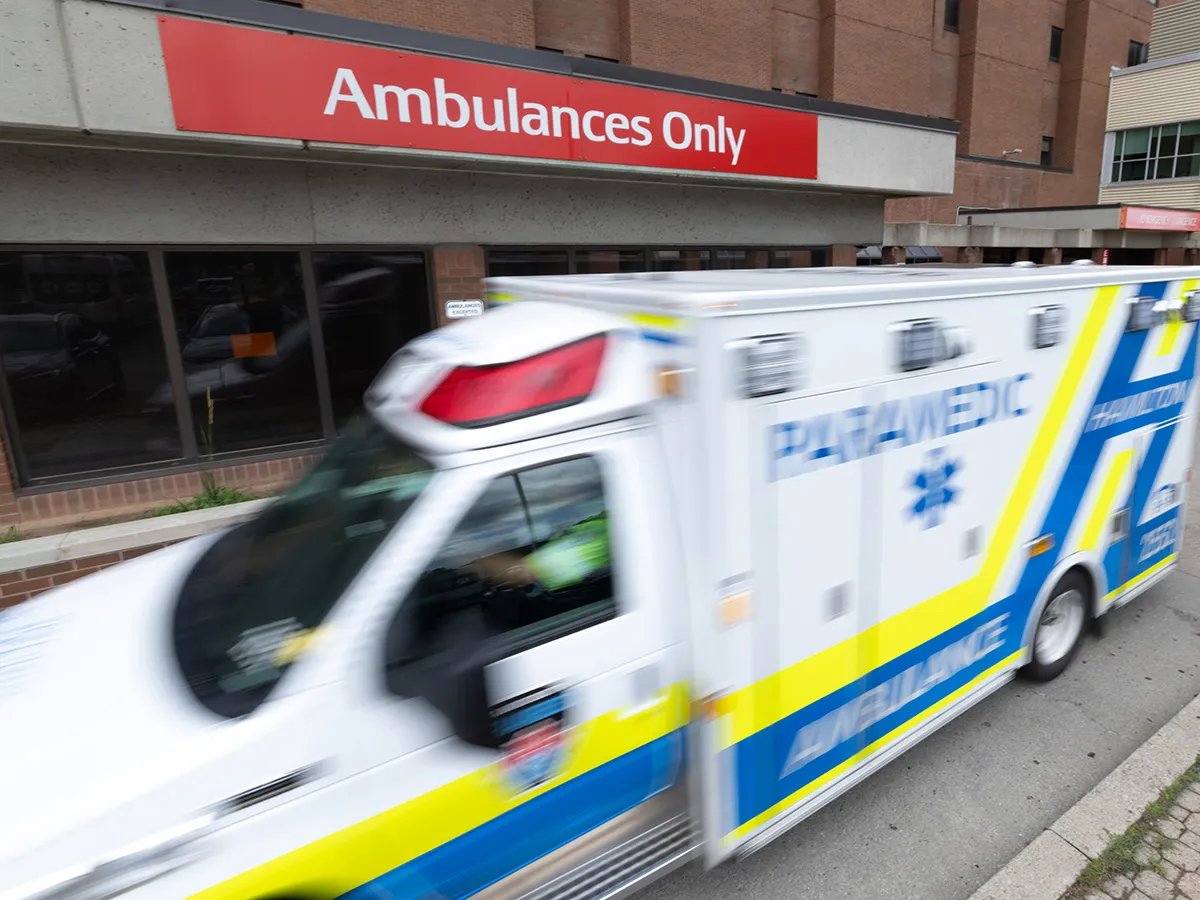
Canada’s emergency doctors are feeling demoralized and defeated by a “broken” health system and one in 10 are exiting the profession, two bleak trends threatening to worsen the country’s ER crisis, according to a new study.
For many emergency doctors, “the future of emergency medicine was hopeless, with no possibility of recovery,” the authors wrote, describing moral distress and burnout that’s risking patient safety.
“All burnout dimensions levels” were high among doctors who responded to a survey, levels that remain “substantively unchanged” since the height of the COVID pandemic, when early tidal waves of seasonal respiratory viruses collided with COVID, pushing emergency rooms to the brink.
Today, the country’s ERs are struggling with growing patient loads, record overcrowding and dangerous wait times, with hundreds of thousands of people languishing 14 hours or more in emergency every year.
Doctors have warned that people with life-threatening conditions that need time-sensitive treatments, like drugs to break up clots and restore blood flow to the brain, are increasingly at risk, and the longer people wait, the more their condition deteriorates. People are being examined in chairs in waiting rooms and packed corridors. More people are leaving emergency rooms without being assessed by a doctor — a phenomenon administratively dubbed “left-without-being-seen” that increases the risk of death within seven days.
The new study looked at emergency physician burnout rates in December 2020, burnout rates reported by the same doctors in September 2022 and, more recently, in January 2025.
The response rate for the most recent iteration was 410 out of 615 doctors from across Canada who initially enrolled in the study.
Of the 410, 41 said they had left emergency medicine — 10 had retired; 25 shifted to a different area of practice and six left clinical medicine, meaning they stopped treating patients altogether.
Some simply left “to preserve their sanity,” said first author Dr. Kerstin de Wit, an emergency physician at Kingston Health Sciences Centre.
Of the 351 remaining doctors who completed the full survey (18 didn’t and were excluded from further analysis), 163 of them (46 per cent) scored high on emotional exhaustion, and 193 (55 per cent) scored high on depersonalization, a phenomenon that makes people less empathic, more detached and aloof. It’s a recognized human response to burnout.
“The unfortunate side effect is that the patient doesn’t feel they’re being heard as well, or they leave the emergency department feeling there was no sympathy for their condition,” said de Wit, a professor of emergency medicine and Canada Research Chair at Queen’s University.
Related Stories
 Canada
All smiles in Strasbourg but uncertainty clouds Canada’s EU membership plan
26 seconds ago
 Canada
Ottawa mayoral candidate charged for alleged death threats against Doug Ford and Mark Sutcliffe
28 minutes ago
 Canada
Hundreds of Iranian families in limbo as Canada labels their mandatory military service ‘inadmissible’
28 minutes ago
 Canada
As Carney's popularity soars, Conservatives weigh what to do about their own leader
28 minutes ago
 Canada
CTV News in the Arctic: Why Canada has shifted focus up north
28 minutes ago
 Canada
Canada tightens study visa rules, Indian students must show higher funds
29 minutes ago
 Canada
Canada’s Carney embraces EU associate membership proposal
1 hour ago
 Canada
PM Carney to deliver remarks at caucus meeting in Ottawa today
1 hour ago