
Progress at the Coast: The emerging startup scene in Wilmington, North Carolina
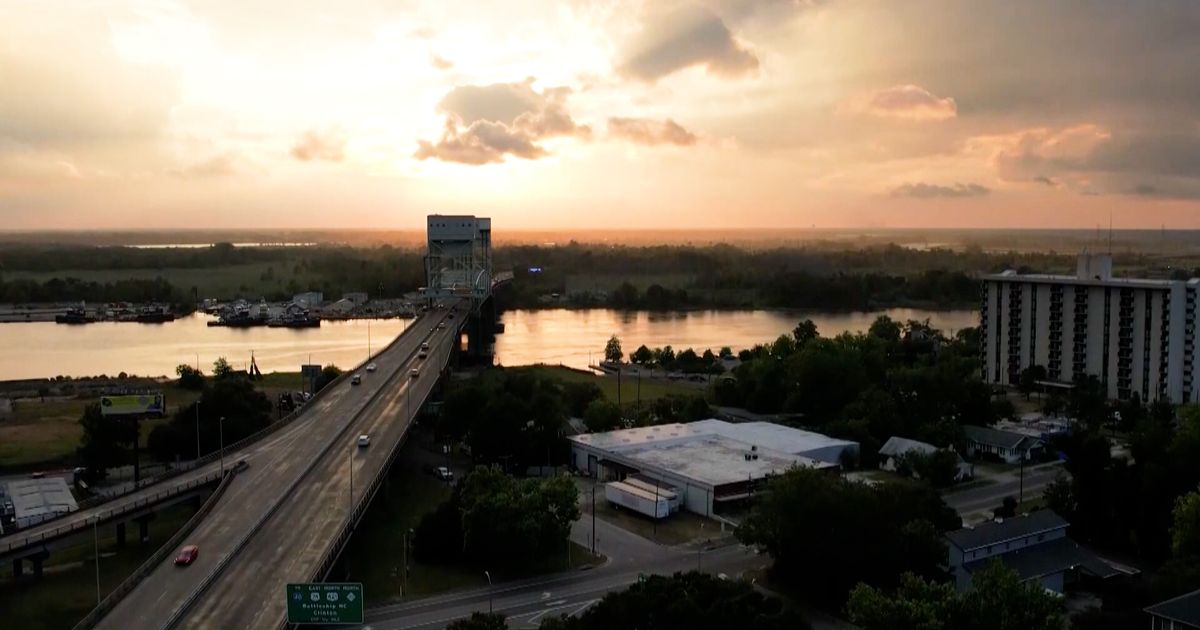
I have been spending a lot of time at the beach lately, without actually spending any time on the beach. A couple of weeks ago, I was in Myrtle Beach, South Carolina, watching eight startups take the stage at the conclusion of a new accelerator program.
The following morning, I squeezed into an unusually crowded 1 Million Cups gathering, part of an entrepreneurial community that has been deliberately assembling itself over the past several years. I wrote about the transformation happening in Myrtle Beach previously here.
Last week I headed back to the Atlantic, this time to Wilmington, North Carolina. And there is even more happening there.
On Thursday, roughly 300 entrepreneurs, investors and ecosystem leaders packed Cape Fear Community College's Union Station for the fourth annual Investor Buzz-In, organized by the Network for Entrepreneurs in Wilmington, better known as NEW. The event has become something of a coastal version of a venture capital conference: startup pitches mixed with investor "reverse pitches," panel discussions, conversations and, perhaps most importantly, a lot of people meeting one another. Organizers describe it as the only venture capital conference in North Carolina east of Raleigh. This year's event sold out.
The panels were populated by investors from across NC and out of state, all recognizing that there is deal flow to be had at the coast. And the scene is industry-diverse, and there were notable rock-star founders in the room. Among the startups that pitched during the day, I saw:
● RCOAST - Dr. Christy Swann brought her experience building sensors used to analyze Mars back to Earth, with novel machine learning techniques that tie to seasonal lidar-based coastal mapping. RCOAST informs coastal mitigation projects, the insurance industry and other stakeholders of the multi-billion dollar coastal erosion industry. She’s just closed a $945k pre-seed round and is selling to clients from NC to Texas.
● Skillmaker - Robin Cowie was the creator of The Blair Witch Project and architected significant growth of the Madden video game franchise before choosing Wilmington for his latest venture. He’s created immersive reality environments to train automotive repair workers and inked a national deal with Napa Auto Parts. Blending film and storytelling to build the workforce of the future.
● Predicate - Dr. Morris Nguyen was a practicing doctor and saw repeated issues for his patients that he believed could be solved with AI. Predicate, NC TECH’s Data Innovation Company of the year last year, is building the intelligence layer to bring together and understand all your wearable biometric data with real-time contextual analysis and natural language processing. They’re running trials on 5 continents, all from a Wilmington HQ.
There is a temptation to look at an event like this and declare that Wilmington has suddenly become an entrepreneurial city. True: it has become a startup hub. But there is nothing particularly sudden about it.
The Overnight Success That Took More Than a Decade
Jim Roberts has been one of the people beating this drum for a long time. He arrived in Wilmington in 2013 to lead the newly established Center for Innovation and Entrepreneurship at UNC Wilmington. He later founded NEW and Wilmington Angels for Local Entrepreneurs, or WALE. Looking back at Wilmington's entrepreneurial landscape before that period, Roberts has recalled that there simply wasn't much organized startup advocacy, and not many people in the room.
The contrast with today is striking. NEW now describes a community encompassing more than 1,000 entrepreneurs. Its monthly startup events reportedly average around 170 attendees. UNCW's CIE, under the leadership of Heather McWhorter, operates mentoring programs, startup programming and a weekly 1 Million Cups gathering championed by Jack Fleming. Angel networks and investment organizations including WALE, VentureSouth and Cape Fear Ventures have added pieces of a local capital infrastructure.
But Wilmington also has something that many communities trying to manufacture an entrepreneurial ecosystem don't have: examples of what success actually looks like.
Live Oak Bank, founded in Wilmington in 2005, became more than a successful bank. It helped create a concentration of financial technology expertise that subsequently produced companies including nCino and Apiture. The three companies collectively have hired more than 1,000 UNCW graduates, according to NEW's accounting of the ecosystem, creating precisely the sort of experienced technical and operational workforce from which additional companies can emerge.
And then there is Vantaca. The Wilmington software company grew out of a local property-management business whose founder couldn't find software capable of doing what he needed. So his team built it. Last October, Vantaca announced a minority growth investment of more than $300 million at a valuation of $1.25 billion. Wilmington now has another unmistakable demonstration that a significant technology company can not only start here, but remain here while scaling nationally.
Those stories matter for reasons that extend beyond jobs or valuations. Successful entrepreneurial ecosystems recycle. An employee learns how to scale a company, then joins another. An executive becomes a mentor. A founder becomes an angel investor. Engineers leave established companies to start their own. Customers become sources of ideas. Investors who made money once become willing to take another risk.
Over time, knowledge, talent, relationships and capital begin circulating through a place rather than merely passing through it. That is when entrepreneurial activity starts becoming an entrepreneurial ecosystem.
Which brings us back to the room at Investor Buzz-In. When Roberts held the inaugural event in 2023, he reported attracting 53 investors representing more than $1 billion in capital. By last year's event, nearly 300 people from 15 states gathered in Wilmington. Last week’s fourth edition again filled the 300-person venue.
The important number isn't 300. It is the number of people in those 300 who didn't have to be there.
Investors have plenty of places to spend a Thursday. Many of North Carolina's venture firms are headquartered several hours away in the Triangle or Charlotte. Investor Buzz-In is meaningful because some of those people increasingly consider Wilmington worth the trip.
Virginie Raphael runs the Full Circle Fund out of New York. She has led a successful career in investing, including being an early investor in Uber’s SEED round as they were trying to legalize their disruption of the entrenched taxi industry. She has already invested into the Wilmington ecosystem and described that she joined the event with knowledge that there is regional depth and breadth to continue to explore.
Her example is important because entrepreneurship and entrepreneurial ecosystems aren't quite the same thing. Entrepreneurs can exist almost anywhere. Ecosystems develop when the infrastructure surrounding those entrepreneurs becomes dense enough that starting and scaling a company becomes progressively easier. And infrastructure doesn't always look like infrastructure
The Infrastructure You Can't See
I've been thinking and writing about this a lot lately. In Myrtle Beach, I watched a community deliberately build an entrepreneurial ecosystem from relatively modest pieces: a municipal coworking facility, recurring gatherings, an accelerator, mentors, founder networks and organizations willing to convene people repeatedly. None of these investments individually transforms a regional economy.
Their power comes from accumulation. A meetup leads to a relationship. A relationship leads to an introduction. An introduction leads to a customer. A successful entrepreneur mentors another founder. An investor who traveled to town for one event comes back to see another company.
Eventually the flywheel begins turning a little faster on its own.
Wilmington is considerably further along that curve. It has a university entrepreneurship center that dates to 2013. It has recurring founder gatherings. It has angel networks. It has experienced technology executives. It has successful companies producing talent. It has entrepreneurs who can point to local examples of companies that scaled. And increasingly, it has connections into the larger capital networks elsewhere in North Carolina and beyond.
I heard repeatedly during the day from founders, investors and stakeholders that moved to Wilmington not just for the beach, but for this ecosystem. Absolutely the beach is a draw. But Robin Cowie could have built his company anywhere. He chose Wilmington over California because of the collaborative culture here versus a more cutthroat culture he saw in Santa Cruz, the other city he considered.
Richard Stroupe vacationed on the NC coast as a kid. Moving here after a long career with the CIA and defense sectors, including founding and exiting his own companies was appealing. But it is the entrepreneurial energy that sealed the deal to move from DC to NC and to form Cape Fear Ventures to invest further in the ecosystem.
It is great to have great founders, mentors and investors in your back yard. These are all parts of what I’ve called institutional infrastructure. But there is another lesson embedded here that economic-development organizations sometimes overlook. You don't necessarily have to own all of your infrastructure.
Wilmington sits roughly two hours from the Research Triangle. That proximity allows its entrepreneurs to tap into investors, accelerators, research institutions and statewide organizations without having to recreate every one of them locally. NEW explicitly describes this as an ability to "borrow" infrastructure from the Triangle while building Wilmington's own capabilities at the coast.
Investor Buzz-In is almost a physical manifestation of that strategy. Instead of asking every Wilmington entrepreneur to drive to the capital, the Buzz-in brings some of the capital to Wilmington.
Momentum Is Not the Finish Line
This is where the Wilmington story becomes particularly interesting to me. The question is no longer whether entrepreneurship can happen here. Live Oak, nCino, Apiture, Vantaca and a growing collection of younger companies have settled that question.
The more interesting question is what Wilmington builds next. There are indications that the ecosystem remains thinner than the turnout at events might suggest. Local investors have said that more local capital needs to be activated. Others have pointed to the need for greater concentrations of investable companies before larger numbers of professional investors can justify spending significant time here.
UNCW's Heather McWhorter has said the CIE's physical space is routinely full and that the community needs additional places for entrepreneurs to gather. Roberts himself has pointed to gaps in specialized professional services for startups including more incubators and accelerators.
Those are second-order problems. They’re the kinds of problems that begin appearing because the first layer of infrastructure is working. Thom Ruhe, CEO of NC IDEA asked panelists about what is still missing in the ecosystem. Who should be at these events that are not yet participating? What activities, organizations or people could help take the current momentum and launch it into exponential growth?
The responses were consistent. While some city officials were in the room, there is a lack of broader support from the state and federal government. Economic development at that level still seems focused on recruitment of existing companies from other places, rather than building from within. Ruhe shared research from the Kauffman Foundation that found the economic impact of a successful startup is at least 3 generations. In other words, companies grown in place tend not to be recruiting targets by other states or regions during their first ~50 years.
Supporting entrepreneurial growth is a far stronger economic strategy than recruitment, with much higher dividends back into the community.
This may be the moment when Wilmington has an unusually important choice to make. Entrepreneurial ecosystems can reach a certain level organically. Founders find one another. Successful companies attract talent. People like Roberts spend years connecting people who ought to know one another. Universities create programs. Investors begin paying attention.
But eventually, momentum creates demand for more durable institutions.
That can mean additional early-stage capital and better mechanisms for activating local wealth. It can mean more accelerator and commercialization capacity. It can mean specialized professional services that understand venture-backed companies. It can mean physical spaces where founders, researchers, investors and experienced operators encounter one another routinely rather than occasionally.
Most importantly, it means treating these things as economic infrastructure rather than extracurricular activities for entrepreneurs. Roads help goods move. Broadband helps information move. Airports help people move. Entrepreneurial institutions help ideas, talent and capital move.
Wilmington has reached the point where enough of all three are circulating that the results are becoming difficult to dismiss. I can’t wait to see what comes next.
Related Stories
 Business
‘They immediately took me in:’ how one American entrepreneur found startup success in France
56 minutes ago
 Business
🪦 The startup helping startups die
2 hours ago
 Business
The second-market test for receivables (Sponsored)
4 hours ago
 Business
A Quiet Revolution
4 hours ago
 Business
Embattled B.C. Conservative leader says she's 'not going anywhere' amid election speculation
6 hours ago
 Business
Questions over £4.5m space centre funding approval
6 hours ago
 Business
Winnipeg Jets suspend Connor Hellebuyck after he fails to report to training camp
7 hours ago
 Business
What’s the customer’s problem? The things politicians and founders have in common
9 hours ago