
Digging into history: Archeology student investigates World War II internment camp

Digging into history: Archeology student investigates World War II internment camp
Madison Cardiel worked this summer at Amache National Historic Site under the Institute for Field Research
As a Binghamton University anthropology student with a focus on archeology, Madison Cardiel put some of what she learned into action this summer at the Amache National Historic Site, a former World War II Japanese internment camp in Colorado.
After explaining the different fields of anthropology, she shared the details of her four-week stay investigating the site under the Institute for Field Research.
“At Amache, we were basically learning the skills of archaeology as well as doing some work with museum studies,” Cardiel said. “We spent a lot of our time doing ground surveys, in which we walked across residential blocks in a long line and stopped to record whatever we saw on the ground. The artifacts we found when doing this included things like children's marbles, tin cans modified to be used as tools like buckets, various ceramics, fragments of sake jugs and other glass bottles, and more. My favorite artifact found during the survey was a nail-polish bottle that still had peach-colored paint in it.”
In addition to her careful use of trowels to excavate, Cardiel’s anthropology work included a variety of community work. She was part of an open house at the site and a local museum, which allowed her to teach visitors about the project she had become part of.
She was also able to speak with many townspeople, as well as descendants and survivors of Amache. Despite how long ago World War II seems, Cardiel met a woman who attended preschool at the internment camp and still remembered it.
Cardiel found the opportunity with the Institute for Field Research because Binghamton has “a really good anthropology program. I think there were a lot of really helpful resources on this campus. For example, I received funding through campus initiatives to attend my field school. I received an Archaeological Institute of America scholarship, but I also got help from Harper Edge and the Fleishman Career Center to fund going there, so that was really awesome.”
She is especially grateful for the support from her professors, and the appreciation is mutual.
According to Distinguished Professor of Anthropology Ruth M. Van Dyke, “Madison is one of the most intellectually curious, hard-working, and passionate undergraduates whom I have had the pleasure to advise. Madison has been doing graduate-level work since her sophomore year, and she will graduate in four and a half years with both a BA and an MA in anthropology. I am delighted that Madison has developed a passion for historical archaeology.
“Madison is currently working on a thesis project in my lab, analyzing an assemblage of glass from a 19th-20th century Alsatian immigrant household in Texas. Historic archaeology helps us learn about the people whose histories are not written down. The glass analysis that Madison is doing will help us to date archaeological features on the site and to chart changes in the occupants' cultural identities and economic circumstances over time.”
Distinguished Professor and Director of the Public Archeology Facility Laurie Miroff added, “Madison stands out as a mature, articulate individual driven by a remarkable intellectual curiosity. She brings immense enthusiasm to the field of archaeology, focusing her research on collaborative practices, decolonization, and cultural resource management.”
But how exactly did Cardiel’s interest in archeology develop? And how does she plan to turn it into a career?
“I love excavation. I love being outside. I love digging in the dirt,” she said. “What I want to do is cultural resource management. In the United States, there are laws protecting heritage sites, so if you're trying to do any sort of development or construction with government funds or on government land, you usually need to bring in archaeologists to come in, do a survey of the land, and make sure there's nothing culturally significant there that could be destroyed by the process. If there is, you have to figure out a plan to preserve it.”
This may seem like an extremely niche field, but in reality, the cultural resource management industry is the largest employer of archeologists in the U.S. by a wide margin, with many of those jobs coming from the Department of Transportation and the Bureau of Land Management.
Given her accomplishments in both academics and extracurricular activities, along with a clear career path in front of her, she offers her perspective on student success at Binghamton University.
Along with pursuing opportunities that come your way, “you also need to take time for yourself, and you need to appreciate the college experience as it goes by, because it goes by really fast, and you really do want to avoid getting burnt out," she said. "Prioritize self-care because that can get lost in being super-involved.”
Related Stories
 World
World
Gabby's monster performance fires France to historic Final
25 minutes ago
 World
World
World Athletics Ultimate Championship: Jakob Ingebrigtsen withdraws from Josh Kerr showdown
25 minutes ago
 World
World
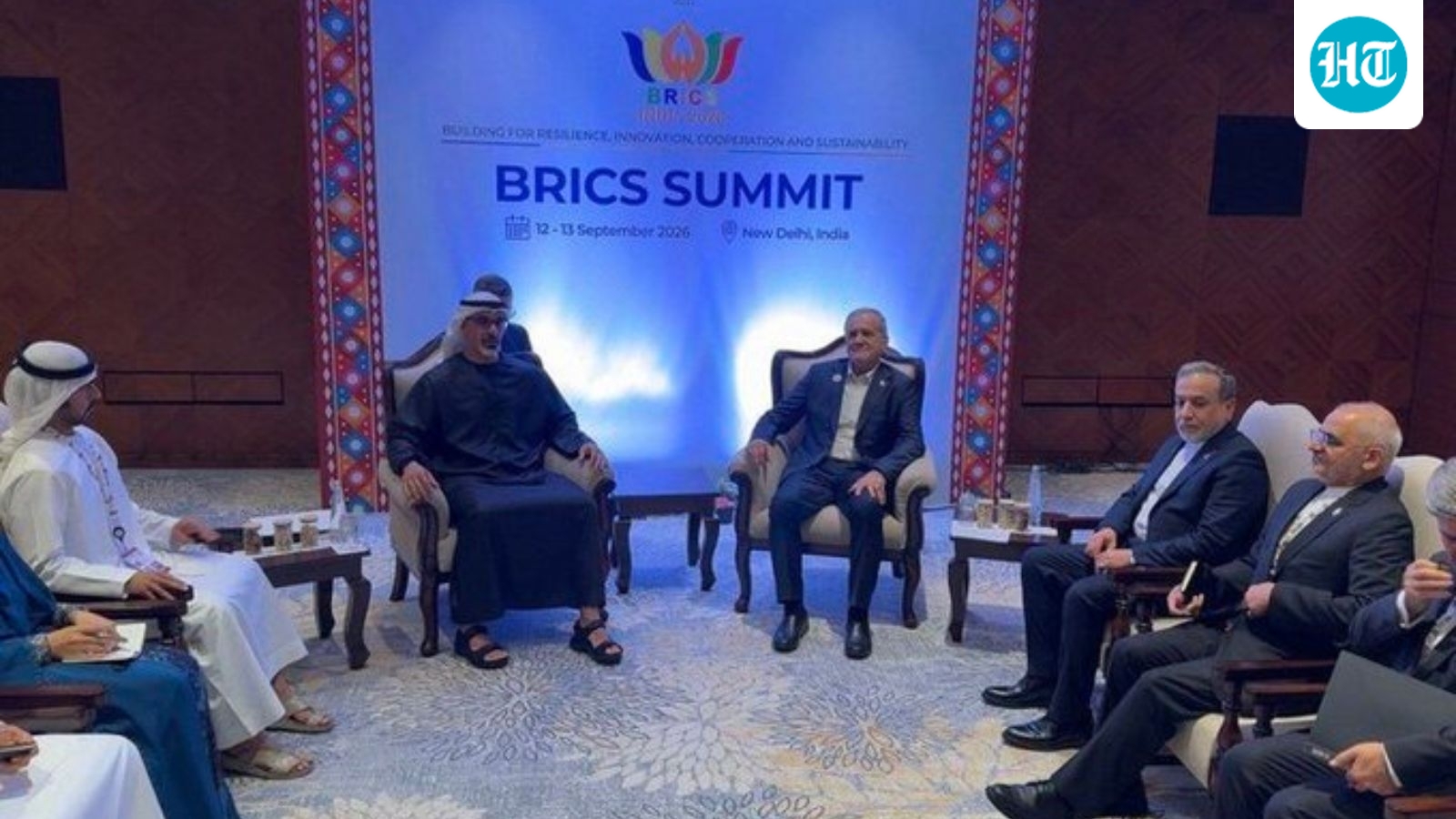
Iran President, UAE Crown Prince meet on BRICS sidelines, back joint statement urging restraint in West Asia war | World News
26 minutes ago
 World
World
Caruana: Gukesh Can Turn His Form Around 'At Any Moment'
1 hour ago
 World
World
World of Warcraft: Forever What’s Next Panel Recap
1 hour ago
 World
World
Inside USA's FIBA Women's World Cup winning streak
2 hours ago
 World
World
Kitaguchi peaks to perfection to win javelin on Budapest return
2 hours ago
 World
World
South Africa 43
3 hours ago