
Communities share feedback on Yukon’s MMIWG2S+ strategy
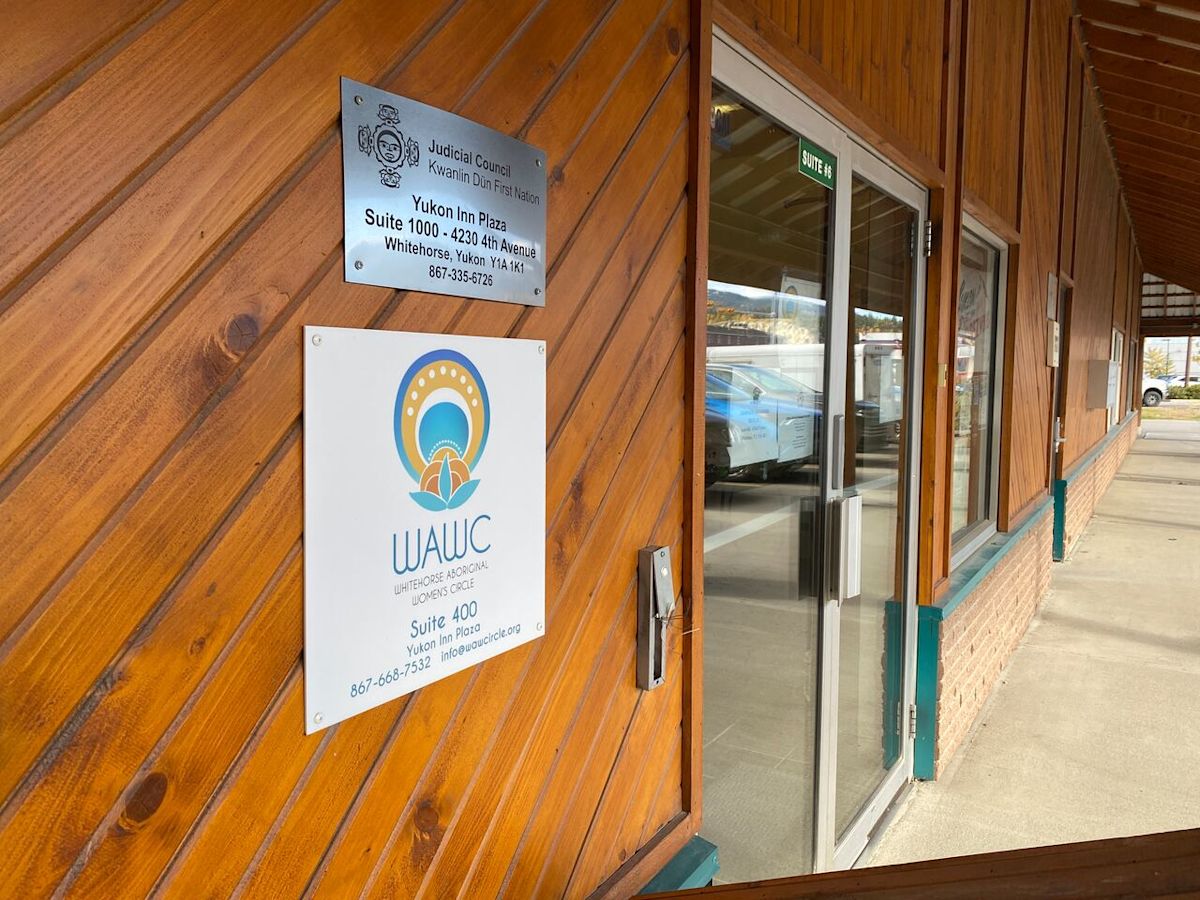
The Whitehorse Aboriginal Women's Circle (WAWC) is sharing feedback from northern communities on the Yukon's strategy to address violence against Indigenous women, girls, and two-spirit people.
The organization visited 14 communities across the Yukon and northern B.C. earlier this year to hear what residents think about the calls to action and a pathway forward.
"A lot of the more isolated communities have felt very left out from all of this work and giving them a voice in this I think was just really empowering," said Amber Taylor-Fisher, the grief loss and recovery support worker and trainer for WAWC.
The feedback from the community tours will be outlined in a "What We Heard" report and guide not only the organization's work, but provide direction for the implementation phase of the broader strategy.
The territory's Missing and Murdered Indigenous Women, Girls, Two-Spirit (MMIWG2S+) strategy was released in 2020, and an implementation plan was presented in 2023.
The strategy and its implementation plan doesn't belong to one government or one group, but was instead designed as a "whole-of-Yukon" approach, according to Sierra van der Meer, deputy minister of the Yukon's Women and Gender Equity Directorate.
"There are a variety of jurisdictions that people have and in order to truly make change, everybody needs to be working together," she said.
A number of partners across the Yukon are contributing in a variety of ways to the activities listed in the MMIWG2S+ strategy calls to action, said van der Meer.
Each community had different priorities when it came to implementing the strategy, explained Natalie Taylor, the executive director at WAWC. Some were far ahead in terms of justice and wanted to focus on providing land-based healing, while others were focused on community safety measures, she added.
But Taylor said there were some common through-lines that highlighted a persistent colonial cultural divide.
"There is still a fundamental disconnect between colonial infrastructure and systems and Indigenous communities," she said.
For cultures deeply rooted in oral tradition, a 50-page written document may not seem "approachable," she said.
And in some communities, there is also a literal colonial divide.
Communities in northern B.C. that have close ties to Yukon communities told Taylor-Fisher they lack support. They can't access Yukon resources, and being so far north in B.C. means they don't always have access to that province's resources either.
And even among Yukon communities there can be a lack of resources, she said.
One immediate action item for WAWC is to build on its relationship with the RCMP.
The group said that one thing they heard in many communities is that residents believe a person can only be reported missing to police at least 24 hours after they were last seen. But according to Taylor, that's not true.
"So clearly we're missing messaging there," she said.
"We want to work collaboratively within our justice partners to maybe do some work moving forward."
While the WAWC heard personal stories from those with first-hand experience of violence against women, as well as those who have lost family members, Taylor-Fisher says what surprised her most was the fervor of the Yukoners – both Indigenous and non-Indigenous – who showed up to speak to them.
Considering the size of the communities they visited, the turnouts were huge, she explained.
She says it's clearly an issue that "touches each one of us as Indigenous people."
"If it's not a family member, it's somebody that we grew up with, somebody that we know," said Taylor-Fisher.
Yet, they saw a diverse group fill each community session.
"Everybody can be a part of reconciliation, of being an ally, of being a part of this strategy and implementation plan," she said.
Related Stories
 Community
How policing, social services can respond to wastewater data, drug trends in Saskatchewan
3 hours ago
 Community
Canine conundrum: This N.L. biologist has ideas on what these animals could be
7 hours ago
 Community
‘Refusing to meet Trump was an easy no’: Colin Kaepernick on being ‘blackballed’ for taking the knee, racism, and why he’s still ready to play
13 hours ago
 Community
Sask. celebrates Culture Days for 16th year
18 hours ago
 Community
Over $370K raised for 81-year
1 day ago
 Community
Yom Kippur shooting outside Canadian synagogue was 'hate
2 days ago
 Community
Yukon government struggling to keep rural health centres open
2 days ago
 Community
Boy, 14, charged with 2nd
2 days ago