
China's Alibaba bans Anthropic AI for employees after 'distillation attack' accusation
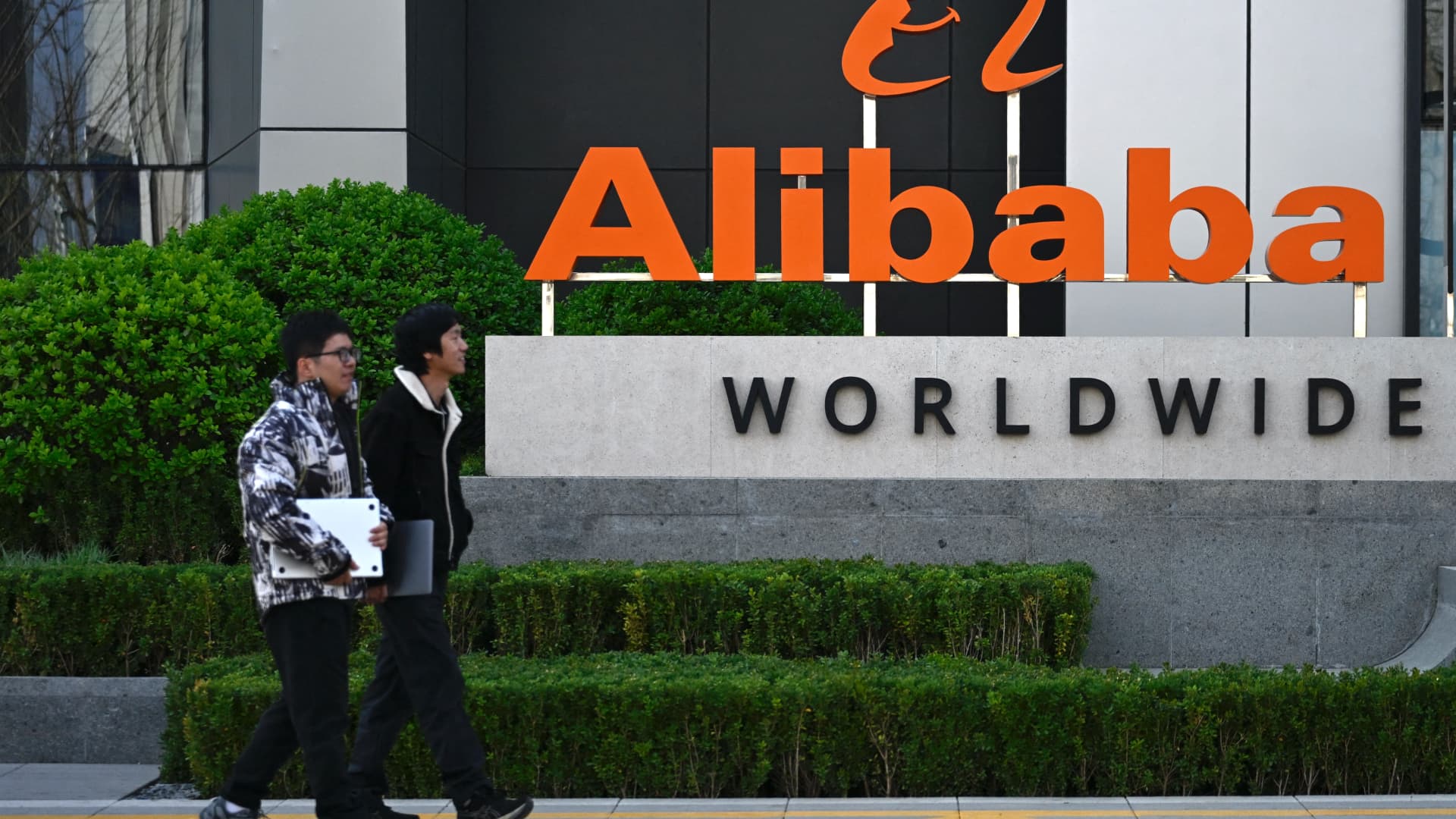
Alibaba will ban employees from using Anthropic's artificial intelligence tools for work purposes as of July 10, citing concerns that the U.S. company has back-door security risks, CNBC confirmed on Monday.
The Chinese e-commerce giant has put Anthropic's Claude Code on a high-risk software list, according to people familiar with the matter, who asked not to be named in order to discuss internal operations.
Alibaba's move follows Anthropic's decision in June to send a letter to the U.S. Senate Committee on Banking, Housing, and Urban Affairs, blaming the Chinese tech titan of "brazenly" and "illicitly" attempting to extract its AI capabilities. Anthropic accused Alibaba of carrying out "the largest known distillation attack" on it to date.
Anthropic's terms of service dictate that Chinese companies and other "adversarial nations" are banned from using its models.
Alibaba employees are required to uninstall all Anthropic models and agent products and instead use the Chinese company's own AI assistant, Qoder, the people said.
Alibaba and Anthropic both declined to comment.
The ban comes amid a wave of online blowback in China against Anthropic as posts on Reddit and GitHub outlined the use of hidden code meant to detect if users might be based in the country.
The Financial Times reported Friday that Anthropic is moving to close loopholes that have allowed Chinese companies to bypass restrictions and access Claude through third countries.
The UK newspaper cited sources as saying Chinese fintech group Ant "had provided employees with corporate Claude accounts that were accessed through the company's intranet, which is connected to its Singapore-based entity."
The FT reported that TikTok parent company ByteDance "does not facilitate access to Claude," but did start a reimbursement program that allows engineers to expense personal subscriptions. The engineers can access those subscriptions on virtual private networks.
Ant and ByteDance declined to comment on the Financial Times report.
ByteDance's reimbursement policy, unveiled on April 2, is meant to encourage staffers to "experience and learn" about a wider range of AI products to enhance their skills, a person familiar with the matter told CNBC. The person asked not to be named in order to discuss internal policies.
Related Stories
 AI News
Bill Gross bets AI can help mass
6 days ago
 AI News
Nigeria records 93% rise in AI micro
6 days ago
 AI News
The Italian gelato maker using AI to invent new flavours
6 days ago
 AI News
Closing the Gap Between Agentic CX Pilots and Production
6 days ago
 AI News
New Brunswick data centre debate highlights cross
6 days ago
 AI News
How to Structure an AI Agent Referral Fee Agreement Between Startups
6 days ago
 AI News
No, AI didn’t delete a Swedish reality TV series
6 days ago
 AI News
There is no AI in Armageddon. Artificial intelligence is a tool, not an apocalypse
6 days ago