
China, U.S. Must Manage AI Risks Together
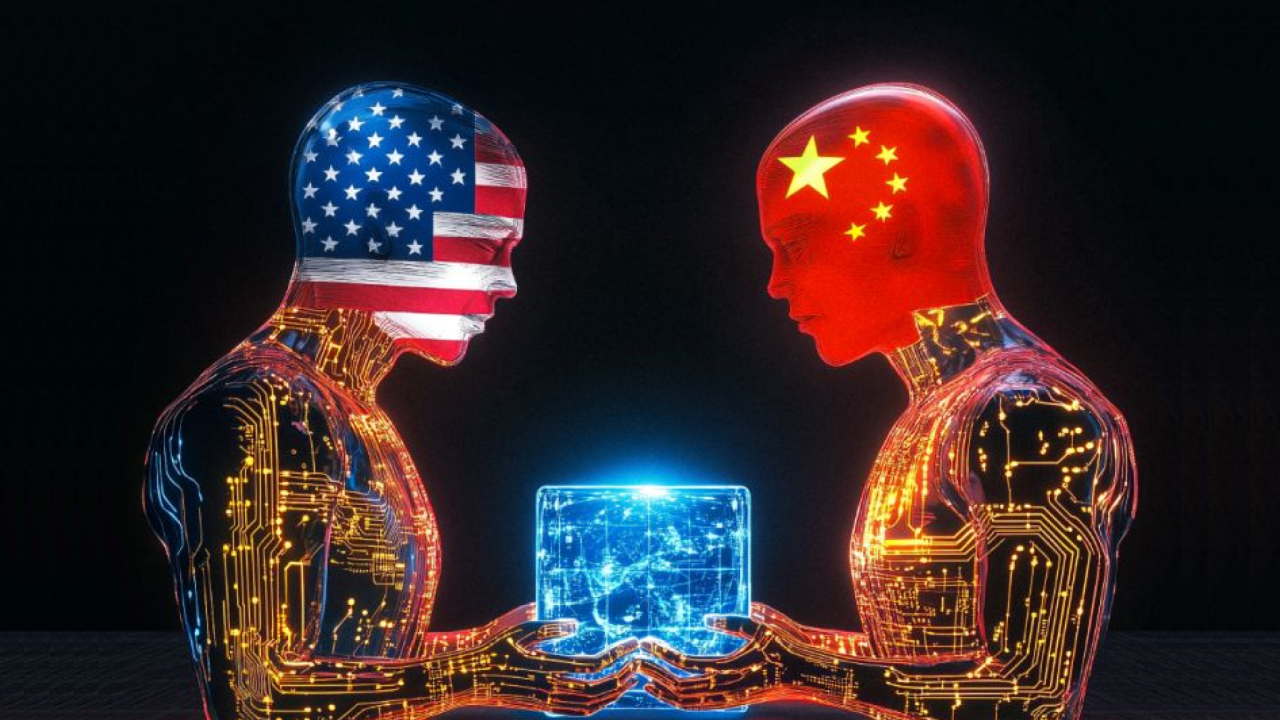
The challenges posed by the development of artificial intelligence are no longer hypothetical. They are already a reality. Viewing AI solely through the lens of competition could cause China and the United States to miss opportunities to coordinate and address shared risks.
Chinese President Xi Jinping’s upcoming state visit to the United States has drawn global attention. A central issue could be how the two countries manage their growing competition in artificial intelligence.
Since the start of his second term, U.S. President Donald Trump has moved aggressively to put a broad U.S. artificial intelligence strategy into action, rolling out policies ranging from data center construction to controls on the export of AI technologies across the technology stack. He has also repeatedly said that the United States must win the race in artificial intelligence against China.
AI, widely seen as one of the most transformative general-purpose technologies of the 21st century, is reshaping industries and accelerating technological innovation. It has also emerged as a critical factor in the geopolitical competition between major powers. In this sector, Chinese companies and research institutions are rapidly closing the technical space with their American counterparts, and the performance gap between the two countries’ frontier models is narrowing.
In recent years, both countries have made significant advances in cutting-edge AI technology, producing a growing number of powerful foundational models with massive numbers of parameters, including Mythos from the American company Anthropic and Kimi K3, the latest model from the Chinese company Kimi.
Chinese open-source models, in particular, have been gaining ground around the world, helped by their strong performance and relatively low cost. Stanford University’s 2026 AI Index Report also found that China had surpassed the United States in the number of highly cited AI papers and that it leads in the number of AI-related patents.
The competition over artificial intelligence is closely tied to questions of military capabilities and national security. A new national security strategy issued by the Trump administration says the United States must preserve its edge in advanced military and dual-use technologies, particularly in areas such as artificial intelligence, quantum computing and autonomous systems, all of which will shape the future of military power.
The United States has undoubtedly moved fastest in applying artificial intelligence to the military, and has already used the technology in combat. In January, the U.S. Department of War released its AI strategy, which calls for the military to become an “AI first” fighting force. Through initiatives such as Swarm Forge, the strategy seeks to integrate AI into the military’s “kill chain,” the sequence of steps involved in identifying and striking a target.
Image of live swarm demonstration powered by Auterion, the leading swarm prime.
The Trump administration’s military operations against Venezuela and Iran this year both made extensive use of AI technologies and support provided by companies such as Palantir. American policymakers are concerned that China could use its rapid technological advances in open-source AI models to gain an advantage in the future competition over military capabilities.
The China-U.S. competition in artificial intelligence is entering a more intense phase, as Washington’s strategic concerns about China continue to grow. Owen Daniels, a researcher at Georgetown University’s Center for Security and Emerging Technology, has argued that the competition is no longer simply about which country can achieve the next technological breakthrough but is increasingly about which country can exert greater influence over the global AI ecosystem. The United States, he said, needs to develop reliable alternatives to China’s foundational models by making high-performance American open models widely accessible, thereby reducing the risk that developers and researchers around the world will become locked into China’s technology stack.
In addition, Secretary of State Marco Rubio has emphasized that there can be no compromise when it comes to winning the AI race. The United States, he said, must maintain an “absolute advantage” in artificial intelligence to promote prosperity and protect its economy and national security.
Yet viewing artificial intelligence solely through the lens of competition could cause China and the United States to miss opportunities to coordinate and address shared risks. In fact, the two countries face a common challenge in preventing the misuse of artificial intelligence.
Recently, The New York Times and other American news organizations reported on incidents involving autonomous attacks by AI agents, including systems developed by OpenAI. Anthropic has said it discovered that unidentified actors were using its advanced models in efforts related to biological weapons research. The company’s Mythos model also has powerful capabilities for identifying software vulnerabilities, potentially making development of malicious software more efficient. AI agents associated with OpenAI have demonstrated the ability to work together, deceive humans, automatically link different stages of an attack and carry out highly complex hacking operations.
These incidents have alarmed experts in the American A.I. field, some of whom have called for greater attention to the risk of “human extinction.”
The rapid development of artificial intelligence and AI agents is fundamentally changing the nature of cyberattacks. The line between offense and defense is becoming increasingly blurred, while tracing the source of an attack and assigning responsibility is becoming more difficult.
For example, a U.S. company called Calif recently used advanced AI models to develop the Weworm virus and launched a large-scale autonomous attack on WeChat, the Chinese messaging platform. Although the company’s business is primarily focused on identifying security vulnerabilities, the episode is likely to heighten China’s vigilance toward similar attacks originating in the United States.
Chen Yixin, China’s minister of state security, wrote recently in China Cyberspace, an official Chinese magazine, that advanced models such as “Cyber” (GPT-5.5-Cyber), developed by American technology companies, have significantly lowered the technical barriers and costs involved in carrying out cyberattacks. He warned that they pose serious risks to China’s critical information infrastructure.
During Trump’s state visit to China in May, he and Xi reached an important understanding on launching a new round of government-to-government dialogue on artificial intelligence. There were also hopes that China and the United States, the world’s two leading AI powers, could engage in substantive discussions on how to establish guardrails for artificial intelligence and prevent advanced models from being misused by malicious actors.
Yet in recent weeks, the United States has intensified its focus on what it calls China’s “adversarial distillation” of American AI models and has threatened sanctions against Chinese companies involved. Washington may see such measures as a way to gain leverage in negotiations with Beijing, but it risks undermining the atmosphere of bilateral government-to-government dialogue on AI. China is unlikely to agree to enter such a dialogue as a party being put on trial, nor is it likely to accept U.S. policy measures pursued in the name of “AI safety” that would impede the development of China’s artificial intelligence industry.
In short, the major risks and challenges posed by the development of artificial intelligence are no longer hypothetical; they are a current reality. As recursive self-improvement, or RSI, becomes more widely used, advanced AI models are likely to grow more powerful, while AI agents could become more dangerous. AI safety is therefore an issue that China and the United States must take seriously. Even if they find it difficult to reach comprehensive arrangements for cooperation, they should move quickly to take action based on their minimum common understanding.
Related Stories
 AI News
AI adoption, reskilling key to future growth: Industry leaders
1 hour ago
 AI News
What is an "AI swarm," and why is it giving tech experts nightmares?
1 hour ago
 AI News
AI is advancing fast. Women are being left behind in the workforce and leadership.
1 hour ago
 AI News
Canadian province sues OpenAI over Tumbler Ridge mass shooting
2 hours ago
 AI News
China's Alibaba unveils new powerful chip and ambitious AI model plans
2 hours ago
 AI News
Fintech giant Ant Group restructures Alipay around AI agents to drive growth
2 hours ago
 AI News
DeWitt Humor: I trust rabid squirrels more than I trust artificial intelligence
2 hours ago
 AI News
Founder Of The Week: Aaro Angerpuro
3 hours ago