
China Turns to ‘AI Communism’ to Drive Its Next Industrial Revolution
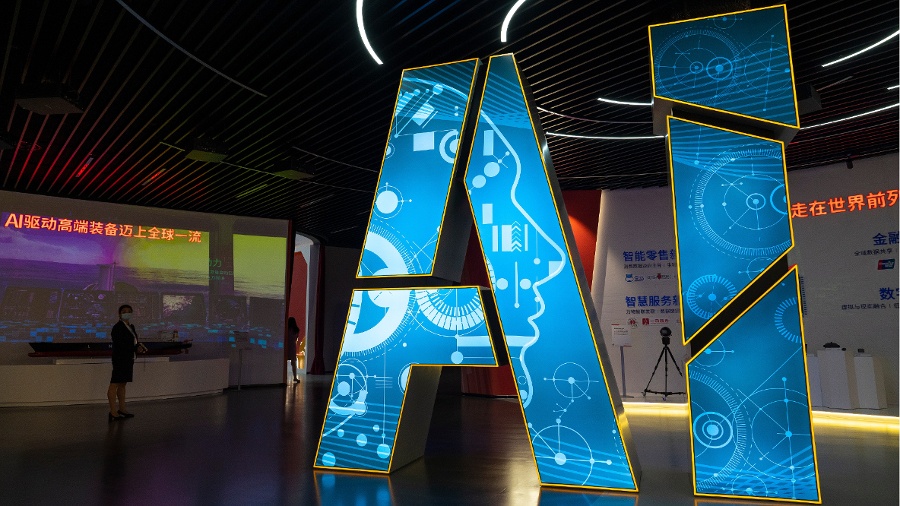
China is seeking to reshape its economy through a state-directed artificial intelligence strategy, according to a July 25 analysis published by the UK’s The Telegraph. Rather than relying primarily on market forces, Beijing is positioning AI, robotics, and automation at the center of its next industrial transformation as it attempts to move beyond the traditional “Made in China” manufacturing model.
The report, titled “Xi’s ‘AI communism’ sparks new era for Made in China” argues that China’s approach differs fundamentally from that of Western economies. Instead of allowing private companies to drive innovation, the Chinese government sets long-term priorities, directs investment, and coordinates resources to accelerate the integration of artificial intelligence across the country’s manufacturing base.
According to The Telegraph, this centralized strategy could strengthen industrial productivity and speed the adoption of new technologies. At the same time, it reflects a broader shift in which artificial intelligence is increasingly viewed not merely as a commercial innovation, but as a strategic asset in global economic and geopolitical competition.
From ‘Made in China’ to ‘AI manufacturing’
China’s rise as the world’s leading manufacturing hub was built on inexpensive labor, extensive supply chains, and large-scale industrial production. That formula, however, is becoming harder to sustain as demographic pressures, higher wages, and the reorganization of global supply chains erode some of the country’s long-standing competitive advantages.
Beijing sees artificial intelligence as a way to offset those challenges. Under Xi Jinping, policymakers have promoted the concept of “new quality productive forces” (新质生产力), encouraging the use of AI, robotics, automation, and other advanced technologies to modernize factories and increase productivity. The strategy also identifies sectors such as artificial intelligence, new energy vehicles, and advanced manufacturing equipment as central to China’s next phase of economic development.
You are now signed up for our newsletter
Check your email to complete sign up
The country has already emerged as a global leader in several high-tech industries, including electric vehicles, batteries, drones, and industrial robotics. Yet The Telegraph argues that what distinguishes China’s technological push is not simply the success of individual companies, but the central government’s role in steering innovation through industrial policy, state-backed financing, and long-term strategic planning.
‘AI communism’: State-driven technology development raises Western concerns
The Telegraph uses the phrase “AI communism” to describe the heavily state-directed nature of China’s artificial intelligence strategy.
Whereas AI development in the United States is led mainly by private-sector companies such as OpenAI, Google, Microsoft, and Meta, Beijing plays a far more direct role in shaping the industry. It relies on industrial policy, state-backed investment, local government funding, and regulation to steer research, deployment, and commercial adoption.
China is also seeking to coordinate government agencies, technology companies, and manufacturing supply chains so that AI systems can be introduced rapidly and applied on a broad scale.
Supporters say this centralized model gives China the ability to mobilize capital, infrastructure, data, and political support more quickly than market-led systems. Critics, however, warn that close coordination between the state and industry could subordinate technological development to government priorities, turning AI into not only a driver of economic growth but also a tool of political administration and geopolitical competition.
Some Western analysts warn of AI’s role in expanding state capacity
Kyle Chan, a China technology analyst and fellow at Princeton University, has argued that Beijing views artificial intelligence as a transformative technology that should be integrated throughout the economy and society. In a Brookings Institution discussion, he said China is seeking to apply AI not only in manufacturing and research, but also in education, health care, biotechnology, and government services.
That broad strategy has placed semiconductors, technical standards, and international influence at the center of the growing technological rivalry between China and the United States. Washington has tightened restrictions on exports of advanced AI chips and related equipment in an effort to limit China’s access to leading-edge computing power. Beijing, meanwhile, has stepped up investment in domestic semiconductor production and other technologies intended to reduce its reliance on Western suppliers.
Chinese companies are also promoting domestically developed AI models and applications abroad as they seek a larger share of the global technology market. The Financial Times has reported that Chinese developers are closing the gap with their American counterparts in some areas.
For Western policymakers, the competition is therefore about more than which country develops the most advanced systems. It also concerns which government and companies will exert greater influence over the technical standards, commercial practices, and governance frameworks that shape the global AI industry.
Governance risks behind AI raise concerns
The Telegraph argues that Beijing is building an artificial intelligence system shaped by national strategy, with the state coordinating investment, data, industry, and regulation to accelerate AI adoption across manufacturing and public administration.
That approach could help China preserve its industrial competitiveness as labor costs rise and demographic pressures intensify. At the same time, it has prompted concern about how the same technologies could be used within China’s political system.
Critics warn that artificial intelligence may serve purposes beyond factory automation and economic growth. Facial recognition, large-scale data analysis, digital identity systems, and intelligent surveillance platforms could also strengthen the government’s ability to monitor individuals and manage society.
Human rights organizations and Western policymakers argue that these risks are heightened by the absence of independent oversight and transparent safeguards. They fear that expanded use of AI could give the state greater access to personal information and more powerful tools for tracking behavior.
The concern also extends beyond China’s borders. As Chinese companies export digital infrastructure and AI-enabled systems, critics say Beijing could promote a model of technology governance that places national security and social stability above privacy, individual autonomy, and political accountability.
The U.S.–China AI rivalry is therefore no longer limited to semiconductors, computing power, or the performance of competing models. It increasingly reflects a broader contest over how artificial intelligence should be governed and whether it should primarily expand human choice or strengthen the administrative power of the state.
As AI becomes more deeply embedded in economies and public institutions, the outcome of that competition could shape not only which countries lead technologically, but also the rules governing data, surveillance, civil liberties, and digital life around the world.
Related Stories
 AI News
AI in mental health
46 minutes ago
 AI News
While hacking attacks using artificial intelligence (AI) are spreading beyond the financial sector a..
49 minutes ago
 AI News
Dev used AI agents and more than 500 billion tokens to rebuild Call of Duty: Modern Warfare 2's source code
1 hour ago
 AI News
AI latest update: Why are New York Times, Agence France
1 hour ago
 AI News
Pocock slams AI inquiry as political ‘stitch
2 hours ago
 AI News
Artificial Intelligence: Should We Personalize the Machine?
2 hours ago
 AI News
Letters to the Editor: Is AI our friend?
3 hours ago
 AI News
The Crucial Responsibilities Doctors Must Never Offshore to AI
3 hours ago